
The number of U.S. government requests for data on Google users for use in criminal investigations rose 29 percent in the last six months, according to data released by the search giant Monday. More
The number of U.S. government requests for data on Google users for use in criminal investigations rose 29 percent in the last six months, according to data released by the search giant Monday. More
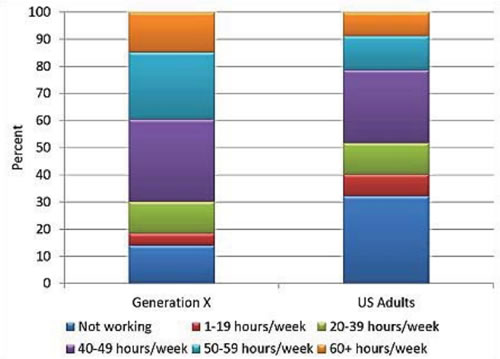
Generation X, the much maligned “slackers” born of the baby
boomers, turned out not to be angst-ridden lazy bums after all.
In fact, according to the Longitudinal Study of American Youth at the
University of Michigan, they’re actually hard working, active, balanced
and – gasp – happy people:
The LSAY has released its first quarterly report on the 4,000 young
adults who have participated in the study since 1987 and who continue
to complete an annual survey. Generation X is widely defined as individuals
who were born between 1961 and 1981 and who are today between 30 and
50 years of age. LSAY participants are between 36 and 40 years old and
represent the middle segment of Generation X.In broad terms, young adults in Generation X may be said to be
active, balanced, and happy. They have completed more formal education
than older American generations, work longer hours, and most report
that they are satisfied with and enjoy their work. Two-thirds of LSAY
participants have minor children at home and report that they engage
in a wide variety of child-parent activities at home and through the
child’s school. These young adults read a lot of material (after
all, the Internet is the world’s largest reading machine) and
often attend plays, concerts, and sporting events. By subtraction, they
may sleep fewer hours than previous generations.
Link – via USA
Today | The Report
[PDF]
See original article:
Study Proved that Gen X Aren’t Slackers

Our friend Gareth Branwyn (editor-in-chief of Make Online) has written a wonderful and detailed “Skill Builder” article on tabletop gaming.
In the early aughts, I ran a popular and well-regarded tabletop wargame modeling and converting site called 40K Konversions. It was dedicated to all forms of modeling related to the Warhammer 40,000 universe. For those who don’t know, “conversions” are wargame miniatures that have been altered in some way, from swapping legs or heads to creating whole new figures by parts swapping, sculpting on new features, and so on. Unfortunately, my site is no longer accessible. I went through my articles from the site and have put together some of the best tips and tricks that I published.
Skill Builder: Tabletop Gaming — Modeling Tips and Tricks


Read the original post:
Tabletop gaming: modeling tips and tricks

This was hinted at when HTC announced its HTC Rhyme and we saw Dropbox installed as a pre-loaded app, but now HTC has confirmed it. Future buyers of HTC Android phones get a useful 5GB of free Dropbox storage space. More

Parasites are raising an army of zombie wasp queens to do their bidding, and it’s a good thing that these parasites aren’t more ambitious,
10-25-11 – Happy Haloween in tech land!


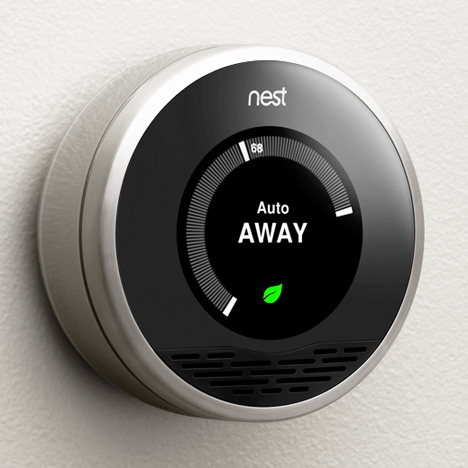
Today marks the launch of Silicon Valley startup Nest Labs‘ Learning Thermostat, a device that is exactly what it sounds like and much more: a thermostat that learns from user behavior to create a custom heating and cooling schedule. Company founders Tony Fadell and Matt Rogers—who spearheaded the design and engineering of the iPod, respectively—found it “unacceptable… that the device that controls 10 percent of all energy consumed in the U.S. hadn't kept up with advancements in technology and design.”
According to the U.S. Department of Energy and Lawrence Berkeley National Lab, the annual energy bill for a typical single-family home is approximately $2,200, with heating and cooling (HVAC) accounting for approximately half of the bill. The programmable thermostat, developed in the 1970s, promised to help people conserve energy, but 89 percent of owners rarely or never set a program (source: ACEEE, 2010). The devices are simply too complicated. In fact, Energy Star revoked its certification of all thermostats in 2009 when it became apparent that people weren’t actually engaging with programmable thermostats to reach their proper functionality.
Nest addresses the programming problem through a combination of sensors, algorithms, machine learning, and cloud computing. Nest learns behaviors and preferences and adjusts the temperature up or down accordingly, making you comfortable when you’re home and saving energy while you’re away. Nest also provides people with tips and information to help them make energy-saving choices.
Thus, the Nest Learning Thermostat sets new standard for climate control: while the device learns continuously throughout its lifetime, the first week of operation is purely a schedule acquisition period. The UI/UX is vaguely iPod-like in its intuitiveness: rotate the (brushed aluminum) outer ring in either direction to adjust the temperature.


Wi-Fi connectivity allows for remote control via network devices—i.e. laptop, smartphone or tablet—as well as metrics and syncing with weather.

Along with requisite temperature sensors, the Nest is also equipped with activity and ambient light detectors so it knows when you’re home, so a (secure) mobile app also allows for even remoter control.

The popular Linux distribution Ubuntu recently finalized its move to the new Unity interface, while other Linux distributions are moving to the new GNOME 3 shell. Both interfaces are remarkably different than the Linux environments you’re used to, but remarkably similar to one another. So which one is better for you? We delve down and uncover the differences between each. More


