Two US startups break solar efficiency records, aim to light up your life

Two US startups break solar efficiency records, aim to light up your life

Two US startups are breaking solar efficiency records in their quest to bring clean, cost-effective, eco-friendly energy to a power grid near you. Alta Devices, based in Santa Clara, CA, has achieved a 23.5 percent efficiency rating with its standard solar panel, while Semprius, a Durham, NC company, has achieved a rating of 33.9 percent with its concentrated photovoltaic offering — besting the previous records of 22.9 percent and 33 percent, respectively. Interestingly enough, both outfits chose to utilize a new material to construct their sun-sopping cells: gallium arsenide. The material, while more expensive, is better suited for absorbing the sun’s energy, especially when compared to silicon, the cheaper element typically used. Alta and Semprius are looking to proliferate solar power by further refining the technology, making its price per kilowatt equivalent to that of fossil fuels without the use of government subsides. Here comes the sun…

Two US startups break solar efficiency records, aim to light up your life originally appeared on Engadget on Wed, 08 Feb 2012 14:35:00 EDT. Please see our terms for use of feeds.

Permalink | sourcePhysOrg | Email this | Comments

See the article here:
Two US startups break solar efficiency records, aim to light up your life

Set Gmail as Your Browser’s Default Email Client with a Simple Hack [Gmail]

Sick of mailto: links in your browser opening Outlook or Mail.app whenever you click them? You can tackle this problem with extensions or through other means, but Googler and HTML5 guru Paul Irish offers a simple, no-add-ons-required approach. Here’s how it works: More »


View post:
Set Gmail as Your Browser’s Default Email Client with a Simple Hack [Gmail]

ReactOS 0.3.14 Released With Improved Networking Stack

An anonymous reader wrote in with news of the latest release of ReactOS, a project to create a complete reimplementation of Windows. The highlights of this release are the integration of a new network stack based upon lwIP, the ability to build using Microsoft’s C compiler, and Wifi support. There are a few options for trying it out (emulator image and a livecd amongst others) and source code over at Sourceforge.


Share on Google+

Read more of this story at Slashdot.

View article:
ReactOS 0.3.14 Released With Improved Networking Stack

U.S. Navy Receives First Industry Built Railgun Prototype

Zothecula writes “Two years after BAE Systems was awarded a US$21 million contract from the Office of Naval Research (ONR) to develop an advanced Electromagnetic Railgun for the U.S. Navy, the company has delivered the first industry-built prototype demonstrator to the Naval Surface Warfare Center (NSWC) Dahlgren. The prototype launcher is now being prepared for testing which is scheduled to take place in the coming weeks.”


Share on Google+

Read more of this story at Slashdot.

More:
U.S. Navy Receives First Industry Built Railgun Prototype

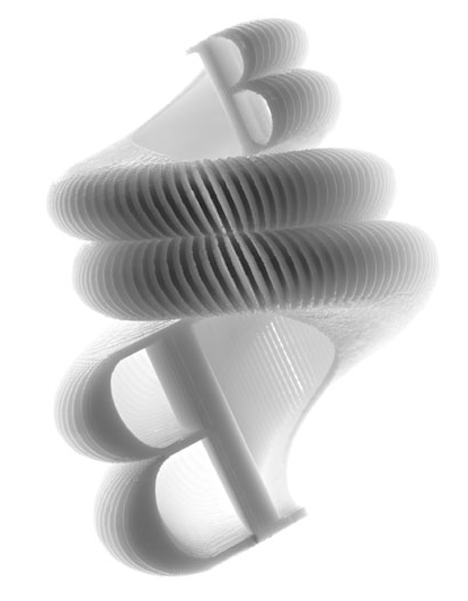
Arkitypo: A 3D History of Typography

Arkitypo1.png

London-based Johnson Banks is an identity and branding company that delves into print and even 3D work on occasion. Their latest 3D experiment resulted in Arkitypo, a 3D alphabet that tells the history of typography. “Each letterform is different, each in turn interprets its own alphabet.” For example, “A” is for Aksidenz Grotesk, a forerunner of Helvetica. It was “part of a family of early sans-serifs called ‘grotesques’…for this design a condensed weight is ‘fractalized,’ turning a grotesque into a thing of beauty.”

Each letter is methodically researched and many of the resulting forms are quite beautiful. Take the “B,” an uppercase Bodoni B spiraling out of the form of a Baskerville B like a snail shell. “Baskerville and Bodoni are usually judged as two separate typefaces, but Giambattista Bodoni modeled his famous font on John Baskerville’s…The key difference is that the thicks and thins are in turn thicker, and thinner.”

(more…)

Read more here:
Arkitypo: A 3D History of Typography

New Technique Promises Much Faster Hard Drive Write Speeds


MrSeb writes “Hold onto your hats: Scientists at the University of York, England have completely rewritten the rules of magnetic storage (abstract; full paper paywalled). Instead of switching a magnetic region using a magnetic field (like a hard drive head), the researchers have managed to switch a ferrimagnetic nanoisland using a 60-femtosecond laser. Storing magnetic data using lasers is up to 1,000 times faster than writing to a conventional hard drive (we’re talking about gigabytes or terabytes per second) — and the ferrimagnetic nanoislands that store the data are capable of storage densities that are some 15 times greater than existing hard drive platters. Unfortunately the York scientists only detailed writing data with lasers; there’s no word on how to read it.”


Share on Google+

Read more of this story at Slashdot.

Read More:
New Technique Promises Much Faster Hard Drive Write Speeds