Amped Wireless launches dual-band 10,000 square feet router, now no wall is safe

Image

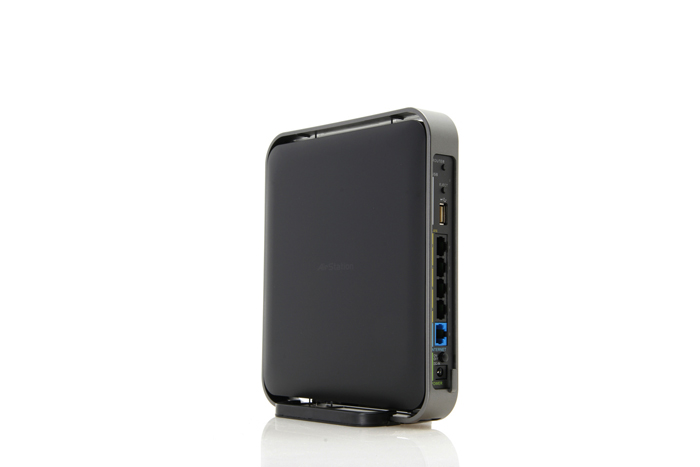
High-power wireless maven Amped Wireless has finally filled that conspicuous dual-band gap in its lineup with the R20000G router. Promising to cover the same 10,000 square feet that its predecessor, it’ll flit between the 2.4GHz and 5GHz bands to ensure you can catch unbroken video around your house on the go. Beside the five ethernet jacks you’ll find a USB 2.0 port for adding some network storage and the company’s usual raft of features. It’s available for $180 on Amped’s website from today, and should be arriving on store shelves shortly.

Continue reading Amped Wireless launches dual-band 10,000 square feet router, now no wall is safe

Amped Wireless launches dual-band 10,000 square feet router, now no wall is safe originally appeared on Engadget on Mon, 14 May 2012 12:00:00 EDT. Please see our terms for use of feeds.

Permalink | | Email this | Comments

Link:
Amped Wireless launches dual-band 10,000 square feet router, now no wall is safe
Dawn of a new wireless: first 802.11ac router available today

Enlarge / Buffalo’s 802.11ac router is the first you can actually buy.

Texas-based networking company Buffalo announced its first 802.11ac wireless router and wireless media bridge are available today for retail purchase. The two networking products are backwards compatible with 802.11n devices, but also feature the latest ac wireless standard.

Earlier this year, Buffalo promised the arrival of this next-generation router in the summer, but last month Netgear announced its similar router would be arriving in May. Today, it looks like Buffalo hustled enough to be able to call “first.”

The 802.11ac standard has not yet been ratified by the IEEE, so none of your current phones, tablets, or laptops will be able to automatically benefit from the 1.3 Gpbs wireless promised in this router. But as dongles and devices with compatible WiFi chips become available over the next year, your 802.11n router gets an automatic upgrade to an 802.11ac router, so to speak.

Read more on Ars Technica…


Link:
Dawn of a new wireless: first 802.11ac router available today

Intel sets sights on 5nm chip; already gearing up fabs for 14nm production

Intel sets sights on 5nm chip; already gearing up fabs for 14nm production

Ivy Bridge, Intel’s first generation of chips to use the 22nm fabrication process, is hardly out of the gate, and yet talk has already turned to the company’s next manufacturing technologies. According to Xbit Labs, which got its hands on some telltale slides, Paul Otellini et al. have the roadmap for 10nm, 7nm and 5nm processes locked down, and the company is preparing fabs in the states and Ireland to make chips using the 14nm fabrication method. Given that timeframe, Intel says 10nm chips will ship in 2015, with work on 5nm technology beginning that same year. While the slides in question look legit — and that timeline matches previous reports — we’re not sure just when these mystery slides first made the rounds. Alas, we’ll have a good few years to sort 5nm fact from fiction.

Intel sets sights on 5nm chip; already gearing up fabs for 14nm production originally appeared on Engadget on Mon, 14 May 2012 10:12:00 EDT. Please see our terms for use of feeds.

Permalink TechEye | sourceXbit Labs | Email this | Comments

Read the article:
Intel sets sights on 5nm chip; already gearing up fabs for 14nm production

Intel caught out using cheap thermal paste in Ivy Bridge?

Intel caught out using cheap thermal paste in Ivy Bridge?

For all the good stuff it brings, Ivy Bridge has also been running a little hotter than reviewers and overclockers might have liked — and that’s putting it mildly. A few weeks back, Overclockers discovered a possible culprit: regular thermal paste that sits between the CPU die and the outwardly-visible heatspreader plate. By contrast, Intel splashed out on fluxless solder in this position in its Sandy Bridge processors, which is known have much greater thermal conductivity. Now, Japanese site PC Watch has taken the next logical step, by replacing the stock thermal paste in a Core i7-3770K with a pricier aftermarket alternative to see what would happen. Just like that, stock clock temperatures dropped by 18 percent, while overclocked temperatures (4GHz at 1.2V) fell by 23 percent. Better thermals allowed the chip to sustain higher core voltages and core clock speeds and thereby deliver greater performance. It goes to show, you can’t cut corners — even 22nm ones — without someone noticing, but then Apple could have told you that.

Intel caught out using cheap thermal paste in Ivy Bridge? originally appeared on Engadget on Mon, 14 May 2012 05:03:00 EDT. Please see our terms for use of feeds.

Permalink TechPowerUp | sourcePC Watch (Japanese) | Email this | Comments

More:
Intel caught out using cheap thermal paste in Ivy Bridge?

MacBook Pro and iMac with next-gen Ivy Bridge processors crop up on benchmarks (update)

Image

Yup, Apples are bound to flow beneath the Ivy Bridge at some point, but how much of a performance boost will they deliver? If you’re happy to hold onto a little skepticism, then two unexpected appearances on the Geekbench site could offer some early answers. The first purports to be an unknown ‘MacBookPro9,1’ laptop powered by an Ivy Bridge Core i7-3820QM running at 2.7GHz, which achieved a benchmark of 12252 — that’s around 17 percent better than a current equivalent Core i7 15-inch or 17-inch MacBook Pro. The second benchmark comes from an ‘iMac13,2’ running off Intel’s next-gen Core i7-3770 desktop chip clocked at 3.4GHz, which only merits a score of 12183 because it’s hobbled by 4GB of RAM. If you exclude memory and compare only the CPU integer and floating point scores, then you’re looking at a roughly nine percent gain over a current 27-inch iMac with a 3.4Ghz Core i7-2600 processor. Now, these benchmarks could be faked, or represent non-final hardware, but the motherboard codes look valid (see the source links) and they generally tally with what we’ve come to expect from Ivy Bridge: a healthy oar-stroke forwards, but nothing that would frighten the fish.

Update: 9to5Mac has done some digging and come up with a few more interesting tidbits about the upcoming MacBook Pro refresh. For one, code pulled from the Mountain Lion beta appears to indicate that the Ivy Bridge machines will boast USB 3.0 and a new GPU in the NVIDIA GeForce GT 650M. The site also claims that the laptops will be slimmer than the current gen, a rumor that’s we’ve been hearing for quite some time now.

MacBook Pro and iMac with next-gen Ivy Bridge processors crop up on benchmarks (update) originally appeared on Engadget on Mon, 14 May 2012 08:49:00 EDT. Please see our terms for use of feeds.

Permalink CultofMac, MacRumors | sourceGeekbench (1), (2), RevoGirl’s Blog, 9to5Mac | Email this | Comments

Taken from:
MacBook Pro and iMac with next-gen Ivy Bridge processors crop up on benchmarks (update)

700,000 CA social services records lost—on microfiche

The California office of In-Home Supportive Services, which provides health support to elderly and disabled people, reported on Friday that the personal records of some 700,000 caregivers and care recipients were either lost or stolen.

But this data loss was not due to a server breach, or some complex phishing attack—instead, the Social Services office said that Hewlett Packard, which manages the data controlled by the office, notified the IHSS of the breach after a physical package containing microfiche with thousands of entries of payroll data went missing from a damaged package shipped by U.S. Postal Service to the State Compensation Insurance Fund in Riverside, CA.

As the package arrived damaged and incomplete, it’s unclear whether the information was lost or stolen, but the state has launched an internal investigation and notified law enforcement in the hopes of resolving the issue, according to the Los Angeles Times. “The possibly compromised information, dating from October to December 2011, for 375,000 workers included names, Social Security numbers and wages. For 326,000 recipients, state identification numbers may be at risk,” the LA Times reports. The In-Home Supportive Services office is also sending out hundreds of thousands of letters to potentially affected parties.

Read more on Ars Technica…


More:
700,000 CA social services records lost—on microfiche

Wireless, photovoltaic retinal implants could recharge sight

Enlarge / Prototypes of goggle-implant systems are already being tested.

In some forms of blindness, including age-related macular degeneration, most of the eye is perfectly fine. The cells of the retinal that convert light into electrical pulses may die off, but the cells that support them, including the nerves that process these signals and relay them to the brain, are still intact. This raises the prospect that the eye’s infrastructure can be used to help restore vision. Stimulate the remaining neurons in response to light, and they’ll happily take the signals and feed them into the visual centers of the brain.

There are a number of ways of going about this, but one of the more promising is some form of retinal implant. These devices can take incoming light, convert it into an electrical signal, and feed that directly into the neurons within the retina. The problem right now is that these things are bulky and complex, requiring wires, external power sources, and the like. In this week’s Nature Photonics, researchers report on a novel method to get rid of some of the complexity: implant a photovoltaic device directly into the retina.

This doesn’t entirely eliminate the complexity, but it makes the most important parts—the ones that reside inside the retina—significantly simpler. It also eliminates their need for an external power source. The idea is appealingly easy. Photovoltaic devices work by converting light energy into free electrons, producing a current. By injecting that current into the appropriate layer of the eye, it’s possible to use it to stimulate the nerves that were normally receiving signals from the retina’s light-receptive cells.

Read more on Ars Technica…


See the article here:
Wireless, photovoltaic retinal implants could recharge sight

Future U: The stubborn persistence of textbooks

Future U is a multipart series on the university of the 21st century. We will be investigating the possible future of the textbook, the technological development of libraries, how tech may change the role of the professor, and the future role of technology in museums, research parks, and university-allied institutions of all kinds.

Future U

Textbooks are a thing of the past, says the common wisdom. Well, the common wisdom of the Technorati maybe. The problem with that thinking is that the number one publisher in the world is Pearson, a textbook publisher, who brought in $7.75 billion in 2009.

Pearson, as Tim Carmody noted in a January Wired article, owns 50 percent of the Financial Times, as well as the number two trade house: Penguin. The second largest textbook publisher, McGraw-Hill, owns Standard and Poor’s. To say textbooks are big business is like saying bullets are ouchie.

So writing the obituary for textbooks would be putting the cart before the horse. But pretending like they are not changing their shape, if not their nature, is to proclaim, from one’s buggy, that automobiles are a passing fad.

Read more on Ars Technica…


Visit link:
Future U: The stubborn persistence of textbooks

Hands-on with five antivirus apps for the Mac

So Mac invulnerability to malware is a myth, at least according to security researchers from Kaspersky Lab. And although such a blunt statement may be a blow to the ego of some Mac users, it remains true. Security researchers from all walks have long argued that it was only a matter of time before the Mac became popular enough that virus, malware, and spyware makers would come calling, and the recent Flashback scare has only served as a reminder that overconfidence precedes carelessness. Especially when it comes to technology.

The Flashback flare-up happened less than a year after another malware spike, which came in the form of fake antivirus app Mac Defender. Though neither incident ended up infecting every single Mac, they both showed that malware on the Mac is ever-so-slowly inching its way into our public consciousness. “Market share brings attacker motivation,” Kaspersky Lab told the press last month, and Mac market share is definitely on the rise.

Is it time to begin installing antivirus software on our Macs? We leave that up to you to decide for yourself, but given the spike in questions we’ve been receiving about which antivirus software is the best, we thought we’d take a look at a handful of the most well-known apps out there for Mac users. Your mileage may vary, but here are our impressions of five different antivirus packages after installing and using each one. In no particular order:

Read more on Ars Technica…


Taken from:
Hands-on with five antivirus apps for the Mac

The 30 Best Features of Windows


Barence writes “PC Pro has picked out its 30 best features of Windows 8. Its countdown includes features such as the revamped Task Manager, the option to run ISOs and VHDs natively, and Windows To Go, which allows you to take a portable installation of Windows 8 with you.” They’ve also listed ten features they’d like to see added to Windows 8, “including the return of the Start button on the desktop, virtual desktops and one-click sharing of optical drives.”


Share on Google+

Read more of this story at Slashdot.

Read the original:
The 30 Best Features of Windows