 The story of a New York man who was wrongly accosted by federal agents serves as a cautionary tale about the importance of safeguarding wireless networks against intruders.
Read More:
Pornography raid underscores Wi-Fi risks
The story of a New York man who was wrongly accosted by federal agents serves as a cautionary tale about the importance of safeguarding wireless networks against intruders.
Read More:
Pornography raid underscores Wi-Fi risks

Metal fans in Botswana have cultivated a fashion sense that wouldn’t be entirely out of place in your favorite 1980s Mad Max knock-off. Kalahari metalheads combine a cowboy aesthetic with lots of leather for an idiosyncratic, end-times-warrior look. More
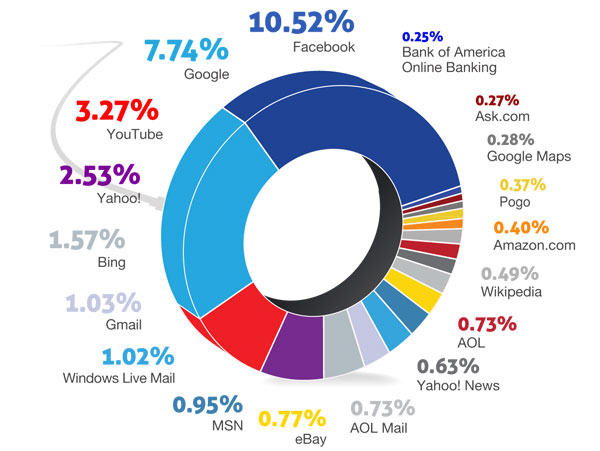
Servers don't run themselves. It takes juice—the electric kind—to keep the internet live, storing data and connecting visitors to websites, online services and social networks.
The social media giant Facebook, for example, has nine third-party data centers in the US, with plans to build a tenth in Oregon. Current estimates are that Facebook uses 60,000 servers to help its more than 500 million members reconnect with people they didn't even like in high school.
The company's data centers range from from 10,000 square feet to more than 35,000 square feet, and their energy use is enormous. The average leased data center uses between 2.25 megawatts of power and 6 megawatts of power. This could provide electricity for one month to somewhere between 1,730 and 4,615 homes.
With their new data center, however, Facebook aims to lift a little of its guilt, saving approximately 2.5 million kilowatt hours per year with efficiency measures. They'll save the company $230,000 and reduce carbon emissions by more than 1,000 tons. Yahoo has also increased energy efficiency, using hydroelectric power. Google is thought to have 36 data centers, and the company claims they are among the most energy efficient in the world.
Click the pic above to see the full graphic.

Chart created by PEER 1 Dedicated Hosting


Read More:
Datacenter power use visualized

Okay, so the pic only shows one child seat on this new power-assisted bike from Panasonic, but the designers reckon you can fit another one on the back. It’s called the Gyutto and it packs some nifty technology to make it safe for a trio. For a start, to prevent the bike toppling when you park up, the kickstand activates a lock on the handle bar, making the front wheel rigid. And to keep you travelling in the right direction up a steep hill, the 8Ah lithium-ion battery delivers some high-torque power assist, good for 36km on a single charge — better than some others. Talking about steep, the price will work out at around $1,780 (including the two child seats) when the bike is released in Japan on May 23rd. The same money will get you a Mini version with smaller (20-inch) wheels. It’s a lot to spend on a couple of ungrateful rugrats, but at least you won’t have to pump those pedals so hard.
Panasonic’s Gyutto e-bike has room for two, actually even three originally appeared on Engadget on Mon, 25 Apr 2011 07:19:00 EDT. Please see our terms for use of feeds.

AT&T's new cell tower can fit in a suitcase, help restore networks after natural disasters originally appeared on Engadget on Mon, 25 Apr 2011 10:37:00 EDT. Please see our terms for use of feeds.
I’ve seen this effect at the Magic Kingdom in Disney World (they also do it at Disneyland) and thought it was cool, but some of these examples Mashable put together are even more impressive. My favorite of the bunch is the projection on the Kharkov State Building in the Ukraine (above).
View original post here:
10 Amazing Examples of Projection Mapping
At this very moment I’m sitting in an Ottawa pub waiting for a friend and I’m eating some Thai Indian curry out of a bowl when I stumbled upon this absolutely incredible design for a bowl that will change the way all bowls are made from now on.

There’s no reason to say goodbye to a good pair of headphones just because the wires are starting to separate from the headphone casing. With a dash of Plasti Dip, a small paintbrush, and a little time, you can seal up your headphone cables like new. More
 The scientific community has spent a decade exploring ultrasound as a means of breaking through the blood-brain barrier — a layer of tightly-packed cells that surround the brain‘s blood vessels, making it difficult for doctors to deliver chemotherapy and other treatments to cancer patients. Thus far, though, most ultrasound-based techniques have relied upon complex and often costly equipment, including MRI machines and infusion pumps. But researchers at a startup called Perfusion Technology think they may have come up with a less invasive, more cost-effective alternative — a new headset designed to deliver low-intensity ultrasound therapy to the entire brain over the course of extended treatment periods. This approach differs markedly from most other methods, which typically target smaller areas of the brain with high-intensity ultrasound doses. As with most other potential breakthroughs, however, Perfusion’s technique still needs to undergo some major testing. The company has already conducted several tests on animals, but the last time a similar method was tried on humans, many subjects ended up suffering from excessive bleeding. And that doesn’t sound good at all.
Startup’s headset will bathe your brain in ultrasound, might help fight cancer, too originally appeared on Engadget on Sun, 24 Apr 2011 15:16:00 EDT. Please see our terms for use of feeds.
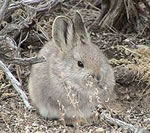 Ah, here’s a bit of wonderful news apt for Easter: rare pygmy rabbits have pulled back from the brink of extinction and are now being reintroduced back to to the wild:
First, captive-bred rabbits will be moved to a six-acre enclosure to develop the foraging and burrowing habits needed to survive in the wild while protected from hungry predators. Step by step, the rabbits will move to smaller enclosures while they adjust to the wild, with individual rabbits being released as they become acclimatised.
Newborns will be better-equipped to deal with the wild than their parents raised in captivity, so those pygmies that give birth in the enclosures will have their offspring released before they adapt to human interaction.
Paws’ crossed, the Columbia Basin will soon once more be home to a pile of mini-bunnies.
Read More:
Pygmy Rabbits Reintroduced to the Wild