“The FDA considers eating raw sprouts on the same level of…

“The FDA considers eating raw sprouts on the same level of risk as eating raw beef — not medium rare burgers, raw beef,” writes Adriana Velez at The Stir.

At least 22 people have been killed, and thousands more infected, by a virulent strain of E. coli that’s sweeping through Europe, in what’s being called the “deadliest E. coli outbreak in modern history.” The outbreak is a result of a particularly toxic strain of the bacteria, and German and European Union officials have yet to pinpoint its source — though cucumbers and organic sprouts farms have been suspected. Could something like this happen in America?

Photo: CC BY Dottie Mae

More here:
“The FDA considers eating raw sprouts on the same level of…

Sony’s PS3 claims the lead in Netflix streaming, adds VOD from Best Buy’s CinemaNow

Sony planned the PlayStation 3 from the start as a movie playing powerhouse, but it may not have predicted so many would end up using it for Netflix streaming. CEO Jack Tretton just hit the stage at the company’s E3 keynote to announce it is the leading Netflix streamer, accounting for 30% of the video watched on the service. While this is somewhat surprising maybe it shouldn’t be — consoles far outpace other TV connected streamers in install base, and between the Xbox 360, Wii, and Sony’s box, the PS3 is the only one that lets you watch without an additional subscription and in HD. Also announced is a new partnership bringing video on-demand movies from the Best Buy-owned CinemaNow service. With any luck, the retail giant will add a subscription element or partner with Redbox and make this interesting, but until then it’s just another footnote on the list of providers currently offered on the PS3.

Continue reading Sony’s PS3 claims the lead in Netflix streaming, adds VOD from Best Buy’s CinemaNow

Sony’s PS3 claims the lead in Netflix streaming, adds VOD from Best Buy’s CinemaNow originally appeared on Engadget on Mon, 06 Jun 2011 20:37:00 EDT. Please see our terms for use of feeds.

Permalink

New Spacesuits Could Have In-Helmet Display

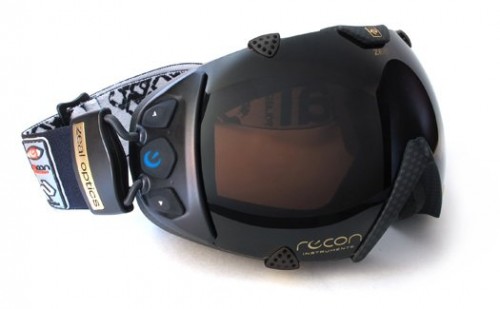
It’s hard to believe that NASA is using the same space helmets they pretty much used for the Apollo missions. However now it seems they could be close to an upgrade and space walkers could be reading text off of the inside of their helmet.

Vancouver-based Recon Instruments, maker of GPS-enabled ski goggles with in-goggle displays tucked in the peripheral, is sending its technology to NASA for potential inclusion in the next generation of spacesuit helmets in which mission critical information and checklists could appear right before astronauts eyes. NASA’s spacesuit designers have been toying with the idea of an in-helmet displays for a while now, and considering that spacewalking astronauts currently rely on paper checklists taped to their arms, such a display represents a pretty big technological leap forward.

Link

Follow this link:
New Spacesuits Could Have In-Helmet Display

Comparative analysis of leaked Sony and Gawker passwords

While it’s pretty awful that a million Sony users’ passwords and 0.25 million Gawker passwords were published online, it has made for an interesting comparative analysis of the weaknesses in password protection, a subject near and dear to many security researchers’ hearts.

Troy Hunt has published one such analysis, and it’s a fascinating read, full of real, verifiable stats about the problems users have managing their passwords (for example, 67% of users with accounts on both Sony and Gawker used the same password for both).


In short, half of the passwords had only one character type and nine out of ten of those where all lowercase. But the really startling bit is the use of non-alphanumeric or characters:

Yep, less than 1% of passwords contained a non-alphanumeric character. Interestingly, this also reconciles with the analysis done on the Gawker database a little while back.

A brief Sony password analysis

(via Some Bits)


Read the article:
Comparative analysis of leaked Sony and Gawker passwords

CERN traps antimatter for long enough to do serious science on it


Earlier this year, a research collaboration at CERN announced that it had created a few dozen atoms of antihydrogen, the antimatter equivalent of the more familiar hydrogen atoms. These anti-atoms were kept in existence for just under 200 milliseconds before they annihilated in collisions with the container walls. Now, the same team is back with the announcement that it has created hundreds of atoms of antihydrogen, some of which were kept around for over 15 minutes—long enough to start contemplating doing some serious science with them.

The trap used to catch the antihydrogen is the same one used in the last experiment. It uses superconducting magnets to keep the antiatoms away from the container walls, taking advantage of the tiny magnetic moment created by the spatial distance between the antiproton nucleus and the positron (antielectron) orbiting it. The differences are so tiny that the trap will only work if the antihydrogen has an energy of 50μeV (micro electron Volt), which makes for quite a challenge, since the antiprotons start the process at 3keV. The big increase in the number of trapped atoms has largely come about through better ways of slowing down and cooling the starting materials.

Read the rest of this article...

Read the comments on this post


Continued here:
CERN traps antimatter for long enough to do serious science on it

ASUS MS248B 24-inch display does it all with one cable, thank you USB 3.0

USB-powered monitors started out small but are finally getting big enough to serve as a main display. The 24-inch ASUS MS248B is brought to life with a single cable courtesy of USB 3.0’s extra current and bandwidth. What’s more, this is achieved with few compromises: the LED monitor is just 16.5mm (0.66-inches) thick, does 1080p with a 2ms response time and has a 10000000:1 contrast ratio (although this last spec requires the usual seasoning). Some extras did have to be thrown overboard to bring power consumption down — there’s no additional USB or audio ports, webcam, card reader or ability to daisy-chain. But then, how much could you achieve with a mere 9W?

ASUS MS248B 24-inch display does it all with one cable, thank you USB 3.0 originally appeared on Engadget on Mon, 06 Jun 2011 15:43:00 EDT. Please see our terms for use of feeds.

Permalink

Apple details iCloud’s digital storage and syncing, free 5GB of storage


As promised, Apple unveiled its new digital storage and syncing service iCloud at the Worldwide Developer’s Conference today. iCloud integrates with a number of apps on both iOS devices and Macs to sync content like pictures, documents, and music between devices, and will provide 5GB of storage free to all users. A sub-feature related to iTunes, called iTunes Match, will allow users to store and handle an unlimited number of songs via Apple’s iCloud for $24.99 per year.

Steve Jobs noted that, because PCs are no longer the digital hub of activity they once were, users often have content like music, videos, and pictures spread across multiple devices. Now Apple wants to move the content base into the cloud, where all devices, including iPod touches, iPads, iPhones, and Macs (but not Apple TVs) can access it.

Read the rest of this article...

Read the comments on this post


View original post here:
Apple details iCloud’s digital storage and syncing, free 5GB of storage