Researchers can keylog your PC using your iPhone’s accelerometer


Researchers at Georgia Tech and MIT have developed a proof of concept to demonstrate that it is possible to record a computer user’s keystrokes using an iPhone 4’s accelerometer. The researchers developed a method to accurately translate the vibrations from typing on a keyboard picked up by the device’s accelerometer when placed on a desk near a PC. Though they warn that hackers could potentially use their method to eavesdrop on a user’s keystrokes, they believe the actual threat is quite low.

The method, detailed in a paper titled “(sp)iPhone: Decoding Vibrations From Nearby Keyboards Using Mobile Phone Accelerometers,” works by interpreting pairs of keystrokes in successive order. According to principal researcher Patrick Traynor, assistant professor at Georgia Tech’s School of Computer Science, the method can't reliably pinpoint single keystrokes. But by characterizing the successive strokes as left-right, right-left, left-left, or right-right, and then whether the pair is nearer or further away form the device, the pairs can be statistically analyzed to represent probably letter pairs. Then those pairs can be compared to a dictionary.

Read the rest of this article...

Read the comments on this post

More:
Researchers can keylog your PC using your iPhone’s accelerometer

Android 4.0 Ice Cream Sandwich now official, includes revamped design, enhancements galore

Google has taken the stage in Hong Kong to make the next version of Android OS, nicknamed Ice Cream Sandwich, a thing of reality. Better known as Android 4.0, the update offers a massive redesign to the user interface and adds a plethora of new features. Some of the highlights include an NFC-enabled feature called Android Beam, offline search in 7989*33Gmail, new lock screen features and a fancy unlocking method called “Face Unlock,” which uses facial recognition to ensure strangers can’t use your phone without permission. Ice Cream Sandwich also includes enhancements in almost every native app within Android itself. The SDK is already available for Android 4.0, and the update itself will make its first public appearance on the Samsung Galaxy Nexus, also unveiled tonight. After the break, we’ll cover all of the nitty gritty details, along with some excellent screenshots below. So come along, why won’t you?

Continue reading Android 4.0 Ice Cream Sandwich now official, includes revamped design, enhancements galore

Android 4.0 Ice Cream Sandwich now official, includes revamped design, enhancements galore originally appeared on Engadget on Tue, 18 Oct 2011 22:25:00 EDT. Please see our terms for use of feeds.

Permalink

Android 4.0 Ice Cream Sandwich now official

Google has taken the stage in Hong Kong to make the next version of Android OS, nicknamed Ice Cream Sandwich, a thing of reality. Better known as Android 4.0 appears to offer a massive redesign to the user interface and adds a plethora of new features. So here’s what’s new: first, we’re seeing a new notification menu, as well as NFC-enabled Android Beam, video snapshots and an improved task manager. ICS also includes a fancy unlocking method called “Face Unlock,” which uses facial recognition to ensure strangers can’t use your phone without permission. Ice Cream Sandwich also includes enhancements in almost every native app within Android itself. After the break, we’ll cover all of the nitty gritty details.

Developing…

Check out all the action on our liveblog happening right now!

Continue reading Android 4.0 Ice Cream Sandwich now official

Android 4.0 Ice Cream Sandwich now official originally appeared on Engadget on Tue, 18 Oct 2011 22:25:00 EDT. Please see our terms for use of feeds.

Permalink

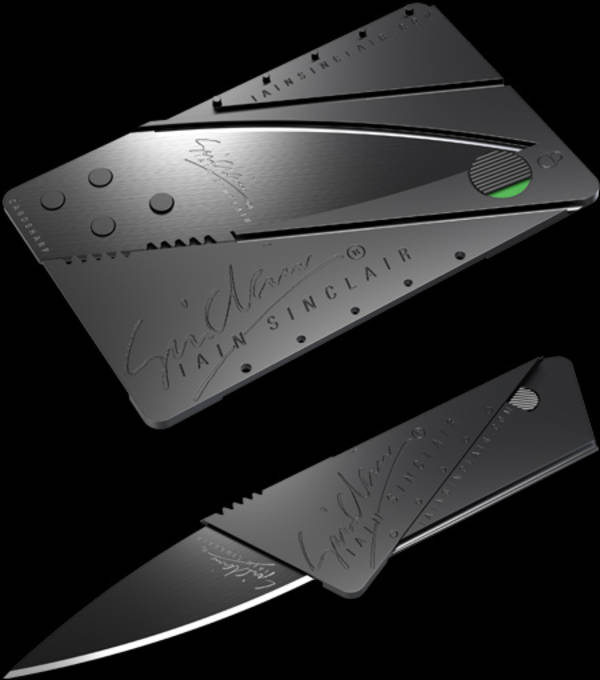
Folding utility knife that fits in your wallet

The CardSharp 2 from Iain Sinclair is a folding utility knife that turns into a credit-card object when it’s not in use, suitable for storing in your wallet. It’s a clever little design, unlike a lot of credit-card tools that leave you with a rectangle of plastic in one hand and a tool in the other, the “card” folds around to become the handle.

(via Red Ferret)


Follow this link:
Folding utility knife that fits in your wallet

Ultra HDTV technical standards agreed on, more pixels is a good thing

The high-definition pride of your living room may not want to hear it, but it looks like ultra high-definition TV (or UHDTV) has now taken another step towards reality. While shop-floor products remain years away, experts in the ITU Study Group on Broadcasting Service have made several agreements on technical standards for your (next?) next TV purchase. Increasing pixel count in future sets is also expected to improve viewing angles on glasses-free 3D, which needs more dots to work its lenticular magic. 33 megapixels sounds like it should be enough to work with.

Ultra HDTV technical standards agreed on, more pixels is a good thing originally appeared on Engadget on Tue, 18 Oct 2011 15:25:00 EDT. Please see our terms for use of feeds.

Permalink