Qualcomm’s Snapdragon S4 flexes its imaging muscle (video)

Qualcomm's Snapdragon S4 flexes its imaging muscle (video)

While we already know that Qualcomm’s Snapdragon S4 will offer a quad-core variant, incorporate LTE and use a 28nm manufacturing process, the company posted an article to its media blog ahead of Mobile World Congress showcasing the new features provided by the chipset’s Image Signal Processor. You’re likely familiar with some of the imaging functionality available in Qualcomm’s existing Snapdragon processors — technology like Scalado‘s Rewind (pictured above) which we’ve covered before. The new SoC cranks things up a notch with support for up to three cameras (two in the back for 3D plus one front-facing), 20-megapixel sensors and 1080p HD video recording at 30fps. In addition to zero shutter lag, the Snapdragon S4 includes proprietary 3A processing (autofocus, auto exposure and auto white balance) along with improved blink / smile detection, gaze estimation, range finding and image stabilization. Rounding things off are gesture detection / control, augmented reality and computer vision (via Quacomm’s FastCV). Want to know more? Check out the source link below, then hit the break for video demos of the S4’s image stabilization and gesture-based imaging chops.

Continue reading Qualcomm’s Snapdragon S4 flexes its imaging muscle (video)

Qualcomm’s Snapdragon S4 flexes its imaging muscle (video) originally appeared on Engadget on Sat, 18 Feb 2012 23:32:00 EDT. Please see our terms for use of feeds.

Permalink | sourceQualcomm | Email this | Comments

See the original post:
Qualcomm’s Snapdragon S4 flexes its imaging muscle (video)

VLC 2.0 'Twoflower' Released For Windows & Mac


Titus Andronicus writes “Years in the making, the major new release of VideoLAN’s media player has better support for multicore processors, GPUs, and much, much more. From the announcement: ‘Twoflower has a new rendering pipeline for video, with higher quality subtitles, and new video filters to enhance your videos. It supports many new devices and BluRay Discs (experimental). Completely reworked Mac and Web interfaces and improvements in the other interfaces make VLC easier than ever to use. Twoflower fixes several hundreds of bugs, in more than 7000 commits from 160 volunteers.'”


Share on Google+

Read more of this story at Slashdot.

Follow this link:
VLC 2.0 'Twoflower' Released For Windows & Mac

iPhone 4 antennagate class-action lawsuit settled, owners to receive $15 or a free case (update)

According to CNET, a class-action lawsuit over the iPhone 4’s troublesome antenna, aka Antennagate, has been settled. The planned resolution will net US residents who bought one and presumably either $15 in cash or (another?) free bumper case. CNET quotes co-lead counsel Ira Rothken (who, by the way, also represents Megaupload) saying that he believes the settlement is “fair and reasonable”, affecting some 25 million people who will be notified by email and through print ads in USA Today and Macworld. Once they’ve received the heads up, they can go to www.iPhone4Settlement.com (not up and running yet) to register their claims. When the issue first came to light back in 2010 Apple suggested holding it differently before saying it would tweak its signal display formulas and, eventually, offering the free cases. Hopefully for the company and its users, this resolution puts the issue — which is not a problem on the new 4S — to bed.

Update: We spoke to an Apple representative who confirmed that the settlement is for those customers who chose not to take a free case or return their phone back in 2010. It looks like holding out didn’t get you much more than the option to take $15 cash instead, but we’ll simply consider it a much-needed opportunity to reflect on the International Year of Biodiversity that was.

iPhone 4 antennagate class-action lawsuit settled, owners to receive $15 or a free case (update) originally appeared on Engadget on Fri, 17 Feb 2012 22:54:00 EDT. Please see our terms for use of feeds.

Permalink | sourceCNET, @rothken (Twitter) | Email this | Comments

Visit site:
iPhone 4 antennagate class-action lawsuit settled, owners to receive $15 or a free case (update)

The Pentagon’s Real-Life Project ‘Avatar’: Same as the Movie, but With Robots Instead of Aliens [Defense]

Soldiers practically inhabiting the mechanical bodies of androids, who will take the humans’ place on the battlefield. Or sophisticated tech that spots a powerful laser ray, then stops it from obliterating its target. More »

See the original article here:
The Pentagon’s Real-Life Project ‘Avatar’: Same as the Movie, but With Robots Instead of Aliens [Defense]

iPhone 4 antennagate class-action lawsuit settled, owners to receive $15 or a free case

According to CNET, a class-action lawsuit over the iPhone 4’s troublesome antenna, aka Antennagate, has been settled. The planned resolution will net US residents who bought one and presumably either $15 in cash or (another?) free bumper case. CNET quotes co-lead counsel Ira Rothken (who, by the way, also represents Megaupload) saying that he believes the settlement is “fair and reasonable”, affecting some 25 million people who will be notified by email and through print ads in USA Today and Macworld. Once they’ve received the heads up, they can go to www.iPhone4Settlement.com (not up and running yet) to register their claims. When the issue first came to light back in 2010 Apple suggested holding it differently before saying it would tweak its signal display formulas and, eventually, offering the free cases. Hopefully for the company and its users, this resolution puts the issue — which is not a problem on the new 4S — to bed. We haven’t received any response from Apple regarding the case just yet but we’ll let you know if we do.

iPhone 4 antennagate class-action lawsuit settled, owners to receive $15 or a free case originally appeared on Engadget on Fri, 17 Feb 2012 22:54:00 EDT. Please see our terms for use of feeds.

Permalink | sourceCNET, @rothken (Twitter) | Email this | Comments

Read the article:
iPhone 4 antennagate class-action lawsuit settled, owners to receive $15 or a free case

Lytro video camera ‘a possibility’, would need more processing muscle

While we impatiently await a Lytro to call our own — or at least rigorously review — it looks like the light field technology could be used for video. Ren Ng, CEO of Lytro and the man behind the camera’s focus-dodging optical wizardry, mentioned that the main barrier between the curious camera lens and video recording is the amount of processing power required to manipulate all that fully-lit input. He also mentioned that Lytro is continuing to develop the wireless connectivity within the device, something that wasn’t fully baked during our hands-on. If it’s a processing power issue, those incoming quad-core smartphones might be able to help squeeze some video out of that f/2.0 lens…

Lytro video camera ‘a possibility’, would need more processing muscle originally appeared on Engadget on Fri, 17 Feb 2012 17:36:00 EDT. Please see our terms for use of feeds.

Permalink | sourceTechCrunch | Email this | Comments

More here:
Lytro video camera ‘a possibility’, would need more processing muscle

Anonymous Antisec hackers break into and bring down FTC website


Members of Anonymous’ “Antisec” collective struck a Web server of the Federal Trade Commission’s Bureau of Consumer Protection early on February 17, hacking into and defacing the sites hosted on it.

“The Bureau of Consumer Protection’s Business Center website and the partnership site NCPW run by the Federal Trade Commission were hacked earlier today,” FTC spokesperson Cecelia Prewett said in an official statement sent to Ars. “The FTC takes these malicious acts seriously. The sites have been taken down and will be brought back up when we’re satisfied that any vulnerability has been addressed.”

The log of the hack, a cut-and-paste from a shell session on the Red Hat Enterprise Linux server, shows the server’s directories, the user account names and encrypted passwords stored in its etc/shadow file, and the MySQL databases running on the server. The contents of two of the tables posted in the log dump include the contents of a table with the account names, e-mail addresses, and hashed passwords of what appears to be the users of the server’s installations of Drupal and WordPress.

While the websites belong to the FTC, they weren’t running in a government-owned data center. According to the IP address data for the server, it was hosted by Media Temple in Culver City, California, and it appears its sites were set up for the FTC by the public relations firm Fleishman-Hilliard. Spokespeople for Fleishman and Media Temple could not be reached by Ars for comment.

Based on the claims of the Anon Antisec member who posted the log of the attack to Pastebin.com, the attack was motivated by the FTC’s failure to step in to stop Google’s changes in its privacy policy, and by the US government’s support of ACTA. In the statement, the Anon threatened that “If ACTA is signed by all participating negotiating countries…We will systematically knock all evil corporations and governments off of our internet.”

Read the comments on this post

Follow this link:
Anonymous Antisec hackers break into and bring down FTC website

Microsoft reveals Windows 8’s new logo: ‘It’s a window… not a flag’

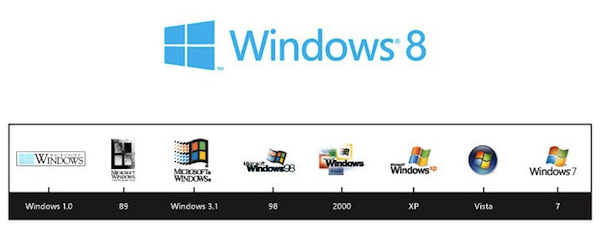
Microsoft is making plenty of big changes with its Windows 8 operating system, and that has now also extended to a new logo. As explained by Microsoft’s Sam Moreau in a post on the official Windows blog, the logo was created with the help of the design agency Pentagram, which posed a simple question when it began on the project: “your name is Windows. Why are you a flag?” That discussion eventually led to the four-paned window you see above, which not only looks more like a window than the previous logos, but clearly echoes the company’s new Metro design language. Microsoft also notes that the logo is “authentically digital,” and says it will welcome you with a slight tilt and change color based on your desktop. You can see a bigger version after the break, and read the full story of its creation (along with a look back at past logos) at the source link below.

Continue reading Microsoft reveals Windows 8’s new logo: ‘It’s a window… not a flag’

Microsoft reveals Windows 8’s new logo: ‘It’s a window… not a flag’ originally appeared on Engadget on Fri, 17 Feb 2012 12:42:00 EDT. Please see our terms for use of feeds.

Permalink | sourceThe Windows Blog | Email this | Comments

See original article:
Microsoft reveals Windows 8’s new logo: ‘It’s a window… not a flag’