View the original here:
R.I.P. Ray Bradbury, Author of Fahrenheit 451 and The Martian Chronicles [Obituary]
AMD shows off LiveBox mini desktop based on one of its Fusion chips (video)

Between the Raspberry Pi and the new Chromebox, we’ve been spending more time than usual lately talking about miniature desktops. Until now, though, AMD hasn’t really entered the discussion; all of the models we’ve tested have featured either an ARM chip or Intel processor. So we were intrigued, then, when we found this mini PC hanging out at the company’s Computex booth. It’s called the LiveBox, and it runs one of AMD’s X86-based Fusion chips. Before we get into specifics, though, have a gander at our hands-on photos and check out that funky design. In addition to being tiny, it has a two-pronged power connector attached, allowing you to plug it directly into an outlet. We’re not sure individual consumers will prefer that cordless design, but we can see it translating well in businesses and schools — precisely the sorts of places where AMD thinks these boxes might find a home.
Again, the LiveBox is based on a Fusion APU (a 1GHz C-60 chip, to be exact), complemented by 1GB of RAM and Radeon HD 6200 graphics. As for storage, the unit on display had a Samsung-made 64GB SSD. Take a tour around the edges and you’ll find two USB 2.0 ports (no USB 3.0), a Gigabit Ethernet jack and an HDMI socket. There’s also a memory card reader, a SIM slot for quad-band 3G (WCDMA) and Bluetooth 4.0, in case you want to pair it with any wireless peripherals. As you can see in the video below, those modest internals are enough to output smooth 1080p video, which means this setup should suffice for basic things like email, web surfing and YouTube. Unfortunately, the machine on display was running Windows 7, not 8, which is a bummer. We also wish we knew more about the target price: AMD won’t say what brand will be selling this, or when it will be available. Until then, it’s tough to say where the LiveBox fits in. But hey, hands-on photos and video can’t hurt, right?
Gallery: AMD LiveBox hands-on


Continue reading AMD shows off LiveBox mini desktop based on one of its Fusion chips (video)
AMD shows off LiveBox mini desktop based on one of its Fusion chips (video) originally appeared on Engadget on Thu, 07 Jun 2012 04:01:00 EDT. Please see our terms for use of feeds.
Permalink | | Email this | Comments
View article:
AMD shows off LiveBox mini desktop based on one of its Fusion chips (video)
Solar Impulse plane lands, completing world’s first intercontinental flight powered by the sun (photos)

Photo: REUTERS/Youssef Boudlal
The Solar Impulse plane project president and pilot Bertrand Piccard lands after a 19-hour flight from Madrid at Rabat’s International airport, June 5, 2012. The plane landed in Morocco on Tuesday, completing the world’s first intercontinental flight powered by the sun to show the potential for pollution-free air travel.
More about the successful completion of the project here.
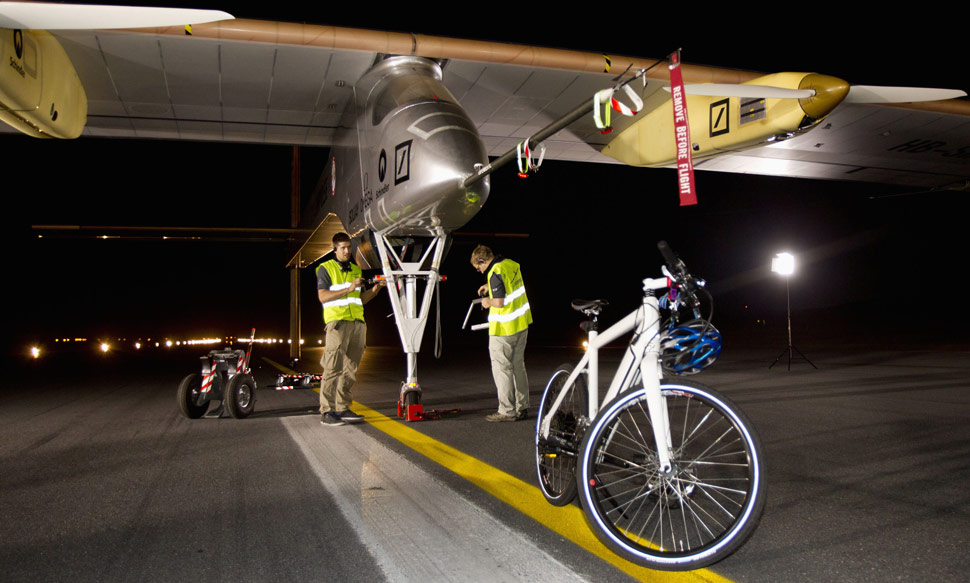
Photo: REUTERS/Youssef Boudlal
Crew members check the Solar Impulse plane after it landed following a 19-hour flight from Madrid at Rabat’s International airport, June 5, 2012.

Photo: REUTERS/Youssef Boudlal
The Solar Impulse plane’s project president and pilot, Bertrand Piccard (L) celebrates with co-founder and CEO Andre Borschberg (R) and Moroccan Agency for Solar Energy (MASEN) CEO Mustapha Bakkoury after the plane landed.
FBI Used FedEx To Sneak Dotcom's Hard Drives Out of NZ
First time accepted submitter bpkiwi writes “FBI agents, working with New Zealand police on the Megaupload case, took a copy of Kim Dotcom’s hard drives and then immediately sneaked out of the police facility and FedEx’ed them back to the USA. Despite the fact that removal of evidence in this manner without official approval (and a chance for the defendant to challenge it) appears to be illegal, the New Zealand government is now left arguing on a technicality — that the law only covers ‘physical’ items.” Things got slightly better for Megaupload users trying to get their files back today. In a court filing the MPAA said users can have their files back as long as access to copyrighted files is blocked. “The MPAA Members are sympathetic to legitimate users who may have relied on Megaupload to store their legitimately acquired or created data, although the Megaupload terms of use clearly disclaimed any guarantee of continued access to uploaded materials,” MPAA lawyers write.


Read more of this story at Slashdot.
Read the original post:
FBI Used FedEx To Sneak Dotcom's Hard Drives Out of NZ
YouTube will live stream HD Olympics coverage to 64 territories in Asia, Africa
 We’ve already heard about broadcast plans for the 2012 London Olympics in the US on NBC and UK from BBC, but what about other areas of the world? YouTube, which is partnering with NBC on streaming in the US, has also struck a deal with the International Olympic Committee to stream 2,200 hours on 10 live high definition feeds to viewers in 64 territories across Asia and sub-Saharan Africa. That only extends to countries where the digital rights haven’t already been snapped up, but it does mean that in many regions people will have access to a level of coverage that has never been available at all before on computers, phones and tablets. The English language commentated feeds will be available daily depending on the competition schedule, plus a 24-hour broadcast of the Olympic News Channel. YouTube has already made a name for itself as a sports broadcaster to worldwide markets with events like Indian Premier League Cricket and now with the Olympics it’s taking another step forward. Check the press release after the break for the full list of countries as well as a video peek behind the scenes of producing such a large event.
Continue reading YouTube will live stream HD Olympics coverage to 64 territories in Asia, Africa
YouTube will live stream HD Olympics coverage to 64 territories in Asia, Africa originally appeared on Engadget on Wed, 06 Jun 2012 19:48:00 EDT. Please see our terms for use of feeds.
Permalink |  YouTube Blog | Email this | Comments
Continue Reading:
YouTube will live stream HD Olympics coverage to 64 territories in Asia, Africa
8 million leaked passwords connected to LinkedIn, dating website (updated)
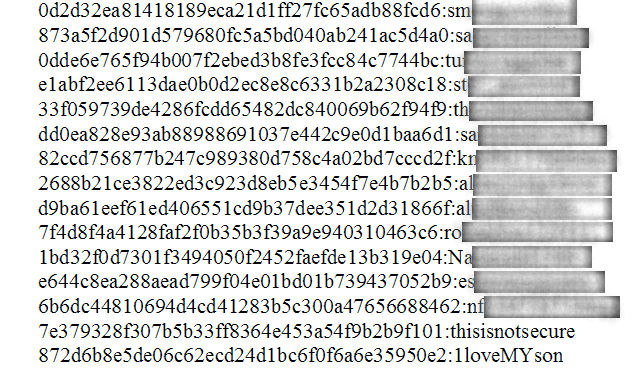
An unknown hacker has posted more than 8 million cryptographic hashes to the Internet that appear to belong to users of LinkedIn and a separate, popular dating website.
The massive dumps over the past three days came in postings to user forums dedicated to password cracking at insidepro.com. The bigger of the two lists contains almost 6.46 million passwords that have been converted into hashes using the SHA-1 cryptographic function. They use no cryptographic “salt,” making the job of cracking them considerably faster. Rick Redman, a security consultant who specializes in password cracking, said the list almost certainly belongs to LinkedIn because he found a password in it that was unique to the professional social networking site. Robert Graham, CEO of Errata Security said much the same thing, as did researchers from Sophos. Several Twitter users reported similar findings.
“My [LinkedIn] password was in it and mine was 20 plus characters and was random,” Redman told Ars. With LinkedIn counting more than 160 million registered users, the list is probably a small subset, most likely because the person who obtained it cracked the weakest ones and posted only those he needed help with.
Read More:
8 million leaked passwords connected to LinkedIn, dating website (updated)
Google Maps, Earth take on full 3D imagery

Google is keeping the string of Maps launches going — it’s just rolling out very, very detailed 3D maps for technology like Google Earth, using a “new process” to get extra depth. In some areas, such as San Francisco, it models every building and delves down into the trees. The new fully textured, fully modeled imagery is coming both to Android and iOS in the “coming weeks,” and Google even made a point of showing the update running on an iPad. Just how deep this rabbit hole goes is an unknown right now, but it certainly ups the ante for Apple’s rumored giant iOS 6 Maps revamp and the 3D mapping it might be using from C3 Technologies.
Update: We just followed up with Peter Birch following the keynote regarding version compatibility for offline and 3D Maps, and were told that Google “has nothing to announce at this time,” but will do so in the coming weeks. We prodded a bit to see if 2.x devices would be in the mix, and all we got was a non-confirming reply about an “assumption” that if Google Maps Navigation is supported, offline and 3D would be as well.
Relive the memories in our liveblog… right here!
Continue reading Google Maps, Earth take on full 3D imagery
Google Maps, Earth take on full 3D imagery originally appeared on Engadget on Wed, 06 Jun 2012 13:20:00 EDT. Please see our terms for use of feeds.
Permalink | Google | Email this | Comments
Continue reading here:
Google Maps, Earth take on full 3D imagery
Google Announces Massively Improved 3D Views For Google Earth, StreetView Backpacks & Offline Maps For Mobile

At a press event in San Francisco this morning, Google announced that it will soon feature far better 3D maps in Google Earth. The company also announced that Google Maps for mobile will soon feature offline caching. This feature will come to Google Maps to Android soon. Google says it wants to bring this feature to all platforms in the long run. Users will be able to download parts of a map to their devices and then use them when they are offline.
The company also announced that its Street View cars have now driven 5 million miles and collected 20 petabytes worth of imagery data. Google also announced that it is bringing Map Maker to South Africa and Egypt today. Google’s engineering director for Street View, Luc Vincent also announced that the company has now managed to put the hardware that Google uses to capture its Street View data into a backpack called the Street View Trekker.
Google’s Peter Birch noted that it’s taken Google a while to go from basic 3D maps to adding buildings to its maps. One issue Google faced by 2008 was that its 3D data was coming from a wide variety of sources. “We knew we wanted to do something better,” said Birch.
To model the world in 3D, the company will now use the 45-degree aerial images it already gathers from planes. Thanks to new imagery rendering techniques and advances in computer vision, Google can now retire its old 3D view in Google Earth and replace it with these new images. The result, which Google demoed today, is nothing short of spectacular. These new features will come to Android and iOS devices. Google expects this new technology will cover “communities of over 300 million people” by the end of the year.
Google doesn’t want to say when these features will become available, making it pretty obvious that today’s announcement is meant to preempt Apple’s rumored announcements next week.
Talking about the history of Street View, Vincent noted that Google’s earliest vans worked (Google didn’t use cars back then) but weren’t very good. The company now uses a fleet of cars and trikes (and even a snowmobile) to collect its street level imagery. Now, however, with the backpack, Google will be able to add data from a far wider range of locations.
Starting the event, Google’s Brian McClendon, a VP of engineering for Google Maps, noted how far we’ve come since the early days of Silicon Graphics machines in the 1990s, which once upon a time allowed its users to see a 3D view of the world for the first time. Not until 2001, when Keyhole launched, met with CNN in 2003 and made it onto the big screen did this kind of technology really become available to the public. Google, of course, bought Keyhole in 2004 (after just 24 hours of deliberation).
At the same time Google bought Keyhole – which then became Google Earth – the company was also working on Google Maps. According to McClendon, Google always had a fetish for comprehensiveness and even though the first versions of Google Maps missed many countries, it quickly added data from as many providers as it could find.
In 2006, after launching Google Earth, the company now had more imagery data and now 75% of the Earth is covered in high resolution by Google Earth. Street View is now available in many countries and on every continent, including Antarctica.
Google, with its Ground Truth program, also started building its own maps over the last few years and now uses street signs from its Street View cars and adds this data to its maps and directions.
As for making sure its data is accurate, McClendon noted that this is often still a hard problem. Even basic plate tectonics can often lead to misalignments between different data sets. Here, too, Google uses its Street View data to extract business data and human operators to ensure its data is correct. The company, of course, also uses its Map Maker program to let users edit maps. South Africa and Egypt. It’s bringing this program to 10 more countries, including New Zealand and Australia in a few weeks.
Google’s engineering manager for Google Maps for Good Rebecca Moore also talked about how Google Maps can be used by non-profits and during humanitarian crises. Google started this program after Hurricane Katrina hit New Orleans. Google, for example, helped a tribe in the Amazon to map its territory to preserve its culture by, for example, putting the location of the tribe’s battles on its maps.
Starting today, the Halo Trust, which is dedicated to eliminating land mines around the world, will also start using Google Maps to show which areas have been cleared of mines and which are still too dangerous.
Preempting Apple
The company’s invitation to the event promised that Google would unveil “the next dimension of Google Maps.” Apple, of course, is widely rumored to be in the process of replacing Google Maps in its iOS mapping apps with its own service. Rumor has it that these new maps from Apple will feature a prominent 3D mode, but for the time being, these are obviously just rumors. The timing of Google’s announcement today, however, was likely not coincidental and the date was probably set to preempt Apple’s announcement next week.
Asked about this during today’s event, McClendon noted that Google is very proud of Google Maps and that it will continue to make it available on as many devices as possible.
Internet killing porn
Louis Theroux, who produced a documentary on the US porn industry 15 years ago, has revisited the industry, and found it in severe decline. The proliferation of free Internet porn and the rise of amateur pornography has combined to take nearly all the money out of the system. He writes about it in The Guardian:
At one of the top LA agencies for performers, LA Direct, the accountant Francine Amidor laments the “devastating” impact of piracy. “There’s less work, and there’s an abundance – because of the economy – of performers. There aren’t enough people shooting to give everybody a day’s work.”I put it to Amidor that she owes it to the young aspirants who still make their way to the LA Direct offices to explain the consequences of their decision. She demurs. “Because then I would talk three quarters of the girls out of the business and then we wouldn’t be in business.”
Fees for scenes, not surprisingly, have taken a hit. “Some girls get $600 [£390] for a scene now,” the retired performer JJ Michaels tells me. “It might be $900-$1,000 for a big-name girl. It used to get up to $3,000.” For guys, rates can be $150 or lower.

View article:
Internet killing porn
World IPv6 Launch Day Underway
A number of readers have written in with stories related to today’s permanent rollout of IPv6 by several major organizations. From the looks of it, for the 1% or so of end users with IPv6 support, everything is going smoothly. For those not so lucky to have IPv6 already, an anonymous reader writes with (mostly) good news: 60% of ISPs intend to enable IPv6 by the end of 2012. For business users, darthcamaro provides some words of caution: “…the Chief Security Officer of VeriSign doesn’t think IPv6 should be turned on by a whole lot of people. The problem is network security devices in many cases don’t scan IPv6. So if you turn IPv6 on, you’re screwed.
‘If you don’t have that visibility into IPv6, you should probably consider explicitly disabling IPv6 on your systems until you can take a very concerted approach to enabling IPv6 in a secure manner,’ McPherson said.”
Read more of this story at Slashdot.
Continue reading here:
World IPv6 Launch Day Underway