Skype calls now equivalent to one-third of global phone traffic

TeleGeography New research (PDF) from TeleGeography, a telecom market analysis firm, shows that worldwide Skype usage is now equivalent to over one-third of all international phone traffic—a record level. The firm’s new data, released Wednesday , shows that “international telephone traffic grew 5 percent in 2012, to 490 billion minutes.” At the same time, “cross-border Skype-to-Skype voice and video traffic grew 44 percent in 2012, to 167 billion minutes. This increase of nearly 51 billion minutes is more than twice that achieved by all international carriers in the world, combined.” While that doesn’t mean that telcos are going to go out of business anytime soon, it does mean that they are certainly continuing to feel the heat. Read 3 remaining paragraphs | Comments

Read the original:
Skype calls now equivalent to one-third of global phone traffic

MediaPortal 2 Alpha 1 – Winter release!

Time for another Alpha release of the next generation in HTPC software:  Med iaPortal 2 ! A lot has been done since the autumn release, so the path to Alpha 2 is nearly gone. Please be aware that this is still an Alpha release , meaning that it isn’t either feature complete nor bug free, and therefor is not meant to be used on a productive system. Make sure that you read the instructions at the end of this news regarding installation, upgrade and extension compatibility. Summary of changes Here is a list of major changes since the autumn release: The internal player handling of MediaPortal 2 got extended to control an unlimited number of players, which allows us nice things like Video Backgrounds Better input handling including support for key shortcuts (see Keyboard shortcuts ) Copy and paste support for Text Controls / Virtual Keyboard Added UPnP compression support, which improves network performance Reworked the Fanart handling both on server (extensible provider structure) and client (faster loading) Multiple monitors are now supported correctly, MP2-Client can also run fullscreen on secondary screen Integrated news plugin, using news ticker in home screen Support for more power options. This will be used later for an advanced shutdown menu (WiP) Support for reading metadata from video MP4-tags Support for picture geo location (lookup country, state, city from GPS coordinates inside EXIF) Several tweaks done to further improve performance And last but not least:    The new skin for MediaPortal 2  –   Titanium!  Additionally there are new plugins available, ready to be used with the current Winter Release: Now it’s possible to use MySQL instead of Microsoft SQLCE, resulting in much better performance and no size limit for database. The required plugin can be downloaded separately from: ( MySQL database plugin ) Online Videos MP2 has been updated for Winter Release ( OnlineVideos MP2 ) ( coming soon : Integrated TVE3.5 test build:  Test builds for Native MP2 TV ) Screenshots To get a first impression of the new Titanium skin take a look at those screenshots:                     Installation Before installing MediaPortal 2, you need to make sure all requirements are installed. Then simply run the .msi installer file. For screenshots refer to our installation wiki .  Upgrade notes If you have an earlier version of MP2 installed, you need to recreate your shares for pictures . Due to the new location lookup feature the database has been extended. Remove your existing share, then add a new one for the same location. Feedback & Support Discuss this release in the official thread MediaPortal 2 Alpha 1 Winter Release! If you are looking for further information please check out MediaPortal 2 wiki first. We are heavily working to improve it. If you don’t find an answer there create a new thread in MediaPortal 2 forums . If you found a bug, please check Mantis & bug report forums first. If it has not been reported already, create a new thread. Download     If you would like to support MediaPortal, we would be happy to receive  a small donation ! The Team wishes you a lot of fun with this new release! .::. Download – MediaPortal 2.0 Alpha 1 Winter Release .::.   :: Post a Comment ::  

See the original article here:
MediaPortal 2 Alpha 1 – Winter release!

Tesla releases logs it says prove NYT reviewer faked review

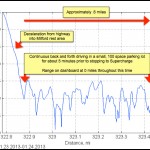
Last week, Tesla’s electric sedan reportedly died during a reviewer’s road trip in cold weather; the firm’s CEO, Elon Musk, said the review was “fake” and promised a data-driven takedown. Today, Musk published the logs and claims they reveal, among other things, that the New York Times’ reviewer drove around in circles in an empty car lot to run down the batteries. “Instead of plugging in the car,” Musk wrote, “He drove in circles for over half a mile in a tiny, 100-space parking lot. When the Model S valiantly refused to die, he eventually plugged it in. On the later legs, it is clear Broder was determined not to be foiled again.”

More:
Tesla releases logs it says prove NYT reviewer faked review

A world of hurt after McAfee mistakenly revokes key for signing Mac apps

Travis Nep Smith A McAfee administrator accidentally revoked the digital key used to certify desktop applications that run on Apple’s OS X platform, creating headaches for customers who want to install or upgrade Mac antivirus products. A certificate revocation list  [CRL] hosted by Apple Worldwide developer servers lists the reason for the cancellation as a “key compromise,” but McAfee officials said they never lost control of the sensitive certificate which is used to prove applications are legitimate releases. The revocation date shows as February 6, meaning that for seven days now, customers have had no means to validate McAfee applications they want to install on Macs. “We were told that as a workaround, we should just allow untrusted certificates until they figure it out,” an IT administrator at a large organization, who asked that he not be identified, told Ars. “They’re telling us to trust untrusted certs, and that definitely puts us at risk.” Read 6 remaining paragraphs | Comments

View the original here:
A world of hurt after McAfee mistakenly revokes key for signing Mac apps

Unscrambling an Android Telephone With FROST

Noryungi writes “Researchers at the University of Erlangen demonstrate how to recover an Android phone confidential content, with the help of a freezer and FROST, a specially-crafted Android ROM. Quite an interesting set of pictures, starting with wrapping your Android phone in a freezer bag.” Read more of this story at Slashdot.

Read More:
Unscrambling an Android Telephone With FROST

How we built a DIY book scanner with speeds of 150 pages per minute

Bookshelves today are simply not as appealing as they used to be, and there’s no shortage of people looking to digitize their own book collections. Fortunately, we now have easy and relatively inexpensive ways to digitize those books. You don’t have to slave away at your copier or scanner, either—we’re talking about building a book scanner of your very own. We’re not talking about the numerous book scanning services that have popped up in the last few years, offering book digitization at the cost of only a few cents per page. Nor are we talking about chopping off the binding of your book and feeding the pages into a copier or scanner, or purchasing a commercial book scanner for upwards of $10,000 (that just isn’t going to happen for most). No, we’re talking toolbelts, paint cans, bike brakes, and digital cameras—doing it yourself. For two law students interested in the legal and policy discussions surrounding copyright and technology, deciding to build a DIY Book Scanner was never just a project to digitize our own textbooks (however practical that might be). Instead, it gave us the opportunity to experience these issues first hand. Plus, we wanted to see what it would take to build one. Read 31 remaining paragraphs | Comments

Read More:
How we built a DIY book scanner with speeds of 150 pages per minute

British Farmers Install Their Own 1Gbps Fiber Network in the Middle of Nowhere

Next time you whinge about your slow-ass internet, spare a thought for a bunch of British farmers who have had to build, test and install their own fiber network this year—from scratch. More »

Read More:
British Farmers Install Their Own 1Gbps Fiber Network in the Middle of Nowhere

Thanks, Adobe. Protection for critical zero-day exploit not on by default

dimland.blogspot.com The recently discovered zero-day attacks targeting critical vulnerabilities in Adobe’s ubiquitous Reader application are able to bypass recently added security defenses unless end users manually make changes to default settings, company officials said. According to an advisory Adobe published Wednesday night , the “protected view” feature prevents the current attacks from working—but only if it’s manually enabled. To turn it on, access Preferences > Security (Enhanced) and then check the “Files from potentially unsafe locations,” or even the “All files” option. Then click OK. There’s also a way for administrators to enable protected view on Windows machines across their organization. The revelation is significant because it means users aren’t protected when using the default version of the widely used document reader. The limitation came to light following the discovery of in-the-wild attacks against current versions of Reader, which are being exploited to surreptitiously install malware on end-user computers. The exploit is also noteworthy because its intricate code base bypasses several additional protections added just four months ago with the goal thwarting malware attacks. Read 6 remaining paragraphs | Comments

Link:
Thanks, Adobe. Protection for critical zero-day exploit not on by default

Britain Could Switch Off Airport Radar and Release 5G Spectrum

judgecorp writes “Britain is considering switching off air traffic control radar systems and using “passive radar” instead. A two year feasibility study will consider using a network of ground stations which monitor broadcast TV signals and measure echoes from aircraft to determine their location and velocity. The system is not a new idea — early radar experiments used BBC shortwave transmitters as a signal source before antenna technology produced a transceiver suitable for radar — but could now be better than conventional radar thanks to new antenna designs and signal processing techniques. It will also save money and energy by eliminating transmitters — and release spectrum for 5G services.” Read more of this story at Slashdot.

View post:
Britain Could Switch Off Airport Radar and Release 5G Spectrum

USC battery wields silicon nanowires to hold triple the energy, charge in 10 minutes

There’s no shortage of attempts to build a better battery , usually with a few caveats. USC may have ticked all the right checkboxes with its latest discovery, however. Its use of porous, flexible silicon nanowires for the anodes in a lithium-ion battery delivers the high capacity, fast recharging and low costs that come with silicon, but without the fragility of earlier attempts relying on simpler silicon plates. In practice, the battery could deliver the best of all worlds. Triple the capacity of today’s batteries? Full recharges in 10 minutes? More than 2,000 charging cycles? Check. It all sounds a bit fantastical, but USC does see real-world use on the horizon. Researchers estimate that there should be products with silicon-equipped lithium-ion packs inside of two to three years, which isn’t long to wait if the invention saves us from constantly hunting for the nearest wall outlet. Filed under: Science Comments Via: Gizmodo Source: USC

Visit site:
USC battery wields silicon nanowires to hold triple the energy, charge in 10 minutes