SSL fix aims to mend huge cracks in ‘Net’s foundation of trust


Open-source software developer Kai Engert has proposed an overhaul to the Internet’s SSL authentication system, aiming to minimize the damage that would result from the compromise of one of the authorities trusted by major browsers.

Under version 2 (PDF) of Engert’s Mutually Endorsing CA Infrastructure proposal, people connecting to Google Mail, Twitter and other sites protected by SSL would draw on one of three randomly selected notaries to verify that the digital credential being presented is valid. By comparing the SSL certificate’s contents to data contained in the voucher returned by the notary, the person’s Web browser or e-mail program could quickly spot credentials that have been forged, even when they’ve been signed using the private key of a legitimate certificate authority. The notaries—or “voucher authorities” as they’re called—would be made up of existing CAs.

Read the rest of this article...

Read the comments on this post

View article:
SSL fix aims to mend huge cracks in ‘Net’s foundation of trust

Light-based ‘Metatronics’ chip melts minds, not copper

Engineers at the University of Pennsylvania have flipped the switch on a new type of computer circuit. Unlike conventional silicon, the new chip uses light — not electricity — to perform its logic. By creating an array of nano-rods, light-flow can be treated like voltage and current. These rods can then be configured to emulate electrical components such as resistors, inductors and capacitors. The benefits of the so-called “metatronic” system would be smaller, faster and more efficient computer chips, which is clearly a welcome prospect. Another curious property the team discovered, is what it calls “stereo-circuitry.” Effectively one set of nano-rods can act as two different circuits, depending on the plane of the field. This means your CPU could become a GPU just by changing the signal. We can’t speak for the light itself, but our minds are certainly bent.

Light-based ‘Metatronics’ chip melts minds, not copper originally appeared on Engadget on Sun, 26 Feb 2012 04:45:00 EDT. Please see our terms for use of feeds.

Permalink ExtremeTech | sourceUniversity of Pennsylvania | Email this | Comments

Continue reading here:
Light-based ‘Metatronics’ chip melts minds, not copper

Google dives deep to bring underwater photos of the Great Barrier Reef this September

Your next trip to the Great Barrier Reef could be from the comfort of your home now that Google’s partnered with Caitlin SeaView Survey, the University of Queensland’s Global Change Institute and the Underwater Earth organization to document this amazing ecosystem. Equipped with a special underwater camera capable of withstanding depths of 328 feet, the survey aims to photograph 50,000 shots in 360-degree panoramic view and incorporate them into Google Earth and Google Maps. Dubbed “Google SeaView,” it seeks to open opportunities for increased conservation as well as a free look for wanna-be world travelers who can’t afford a plane ticket down under. As an added perk, the collected data may also be used to help future ship captains navigate through the treachery of the intricate coral highways. Check past the break for more info on the survey and plenty of footage teeming with aquatic wildlife.

Continue reading Google dives deep to bring underwater photos of the Great Barrier Reef this September

Google dives deep to bring underwater photos of the Great Barrier Reef this September originally appeared on Engadget on Sun, 26 Feb 2012 06:24:00 EDT. Please see our terms for use of feeds.

Permalink DVICE | sourceDigital Trends | Email this | Comments

More:
Google dives deep to bring underwater photos of the Great Barrier Reef this September

Court upholds Fifth Amendment, prevents forced decryption of data

When our forefathers were amending the constitution for the fifth time, they probably didn’t have TrueCrypt-locked hard drives in mind. However, a ruling from the 11th Circuit Appeals Court has upheld the right of an anonymous testifier to not forcibly decrypt their data. The case relates to a Jon Doe giving evidence in exchange for immunity. The protection afforded to them under this case wouldn’t extend to any other incriminating data that might be found, and as such Doe felt this could lead to violation of the fifth amendment. The validity of the prosecution’s demands for the data decryption lies in what they already know, and how they knew it — to prevent acting on hopeful hunches. The prosecutors were unable to demonstrate any knowledge of the data in question, leading the 11th Circuit to deem the request unlawful, adding that the immunity should have extended beyond just the current case. This isn’t the first time we’ve seen this part of the constitution under the digital spotlight, and we’re betting it won’t be the last, either.

Court upholds Fifth Amendment, prevents forced decryption of data originally appeared on Engadget on Sun, 26 Feb 2012 07:45:00 EDT. Please see our terms for use of feeds.

Permalink ExtremeTech | sourceUSA Courts (PDF) | Email this | Comments

Read More:
Court upholds Fifth Amendment, prevents forced decryption of data

After US v. Jones, FBI Turns Off 3,000 GPS Tracking Devices


suraj.sun writes with this excerpt from the Wall Street Journal: “The Supreme Court’s recent ruling overturning the warrantless use of GPS tracking devices has caused a ‘sea change’ inside the U.S. Justice Department, according to FBI General Counsel Andrew Weissmann. Mr. Weissmann, speaking at a University of San Francisco conference called ‘Big Brother in the 21st Century’ on Friday, said that the court ruling prompted the FBI to turn off about 3,000 GPS tracking devices that were in use. These devices were often stuck underneath cars to track the movements of the car owners. In U.S. v. Jones, the Supreme Court ruled that using a device to track a car owner without a search warrant violated the law. After the ruling, the FBI had a problem collecting the devices that it had turned off, Mr. Weissmann said. In some cases, he said, the FBI sought court orders to obtain permission to turn the devices on briefly – only in order to locate and retrieve them.”


Share on Google+

Read more of this story at Slashdot.

Follow this link:
After US v. Jones, FBI Turns Off 3,000 GPS Tracking Devices

Carbon Nanotube Coated Fibers Could One Day Lead To Self-Heating Clothing [Video]

Working with Hokkaido University, Kuraray Living has created a soft washable fabric woven with carbon nanotube coated fibers that produces heat when electricity is applied. So when it’s perfected, your electric blanket could get a lot less bulky. More »


View article:
Carbon Nanotube Coated Fibers Could One Day Lead To Self-Heating Clothing [Video]

New Version of Flashback Trojan Targets Mac Users


wiredmikey writes with this extract from Security Week: “On Friday, researchers from security firm Intego reported that a new variant of Flashback is targeting passwords and as a byproduct of infection, Flashback is crashing several notable applications. Flashback was first discovered by Intego in September of 2011. It targets Java vulnerabilities on OS X, two of them to be exact, in order to infect the system. Should Flashback find that Java is fully updated, it will attempt to social engineer the malware’s installation, by presenting an applet with a self-signed certificate. The certificate claims to be signed by Apple, but is clearly marked as invalid. However, users are known to skip such warnings, thus allowing the malware to be installed. … The newest variant will render programs such as Safari and Skype unstable, causing them to crash. Interestingly enough, normally these are stable programs, so if they start suddenly crashing might be a sign of larger issues.”


Share on Google+

Read more of this story at Slashdot.

More:
New Version of Flashback Trojan Targets Mac Users

Once Shrouded In Secrecy, Jaw-Dropping First Images Of Bertone Nuccio™ Supercar Are Released, Unveiling Set For March In Geneva

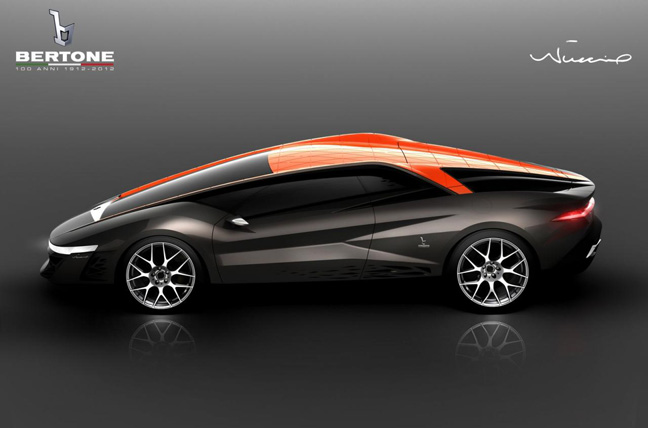
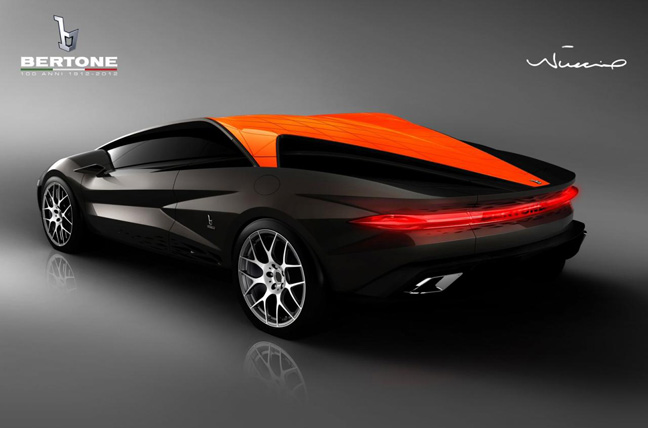
Iconic Italian car manufacturer BERTONE has been teasing the world with slow-released tidbits of information about their upcoming Bertone Nuccio™ concept car design for a little while now, but yesterday the legacy car company finally unveiled the thick shroud of secrecy by revealing the very first images of the supercar design. Named after Nuccio, the son of its founder Giovanni, the car is a love letter of sorts to the man who took over the reigns of the company after World War II. It was Nuccio who separated the company into two branches: Stile Bertone for styling, and Carrozzerio for manufacturing. Officials with BERTONE say the Bertone Nuccio™ is an extreme sportscar, and a significant evolution of the mid-rear engined rear-wheeled drive Berlinetta™ design from the 1970s — with a completely new look. Bertone’s chief design director Michael Robinson is the genius behind its stunning final result, and he will deservedly be front and center when the car itself is unveiled at the Geneva Motor Show next month. Following its Geneva debut, the Bertone Nuccio™ will travel to similar exhibitions around the world including the Beijing Motor Show in April, the Laguna Seca in California in August, and Florence in September. What a beautiful car.

Bertone1 Once Shrouded In Secrecy, Jaw Dropping First Images Of Bertone Nuccio™ Supercar Are Released, Unveiling Set For March In GenevaBertone2 Once Shrouded In Secrecy, Jaw Dropping First Images Of Bertone Nuccio™ Supercar Are Released, Unveiling Set For March In GenevaBertone3 Once Shrouded In Secrecy, Jaw Dropping First Images Of Bertone Nuccio™ Supercar Are Released, Unveiling Set For March In GenevaSource: INAUTONEWS

Read more here:
Once Shrouded In Secrecy, Jaw-Dropping First Images Of Bertone Nuccio™ Supercar Are Released, Unveiling Set For March In Geneva

North Korea's High-Tech Counterfeit $100 Bills


ESRB writes “North Korea is apparently able to produce high-quality counterfeits of U.S. dollars — specifically $100 and $50 bills. It’s suspected that they possess similar printing technologies as the U.S. and buy ink from the same Swedish firm. ‘Since the superdollars were first detected about a decade ago, the regime has been pocketing an estimated $15 to $25 million a year from them. (Other estimates are much higher — up to several hundred million dollars’ worth.)’ The article also advocates a move to all-digital payment/transfers by pointing out both forms are only representations of value and noting it would cripple criminal operations such as drug cartels, human traffickers, and so forth.”


Share on Google+

Read more of this story at Slashdot.

See more here:
North Korea's High-Tech Counterfeit $100 Bills

This Is What the Death of a Star Really Looks Like [Image Cache]

This is the best, the most detailed and clearest image of a dying star yet, according to NASA. Pause for a few seconds, expand the image, and really look at it. Imagine all that unstoppable fire in motion, like a real version of the Death Star explosion, but a gazillion times bigger. More »


Read the article:
This Is What the Death of a Star Really Looks Like [Image Cache]