The Video Game Entertainment Curve

This illustrated chart by H. Caldwell Tanner shows how much time is needed to properly enjoy each genre of video game, from casual games to epic length RPGs, and in my opinion it pretty much sums up what all hardcore gamers know-each genre has a different level of commitment, and appeals to a particular type of gamer.

This chart is a great way for newbie gamers to figure out what kind of games they’re looking for, instead of borrowing your copy of Mass Effect 3 for six months just to discover that they don’t really like RPGs.

Link –via Geeks Are Sexy

Read More:
The Video Game Entertainment Curve

Chrome 17 released, will preload autocompleted URLs as you type


Google has just released Chrome version 17, which brings several minor enhancements to the company’s web browser— including a new web address preloading feature and improved protection against malicious downloads.

The new Chrome introduces a preemptive rendering” feature that will automatically begin loading and rendering a page in the background while the user is typing the address in the omnibox (the combined address and search text entry field in Chrome’s navigation toolbar). The preloading will occur in cases when the top match generated by the omnibox’s autocompletion functionality is a site that the user visits frequently.

When the user hits the enter key and confirms the autocompletion result, the prerendered page will display almost instantly. The feature extends Chrome’s existing predictive page loading functionality to autocompletion results. Unlike Chrome’s instant search capability, however, the autocompletion preloading waits until the user hits the enter key before displaying the rendered page.

Google has also added some new security functionality to Chrome. Every time that the user downloads a file, the browser will compare it against a whiltelist of known-good files and publishers. If the file isn’t in the whitelist, its URL will be transmitted to Google’s servers, which will perform an automatic analysis and attempt to guess if the file is malicious based on various factors like the trustworthiness of its source. If the file is deemed a potential risk, the user will receive a warning.

Google says that data collected by the browser for the malware detection feature is only used to flag malicious files and isn’t used for any other purpose. The company will retain the IP address of the user and other metadata for a period of two weeks, at which point all of the data except the URL of the file will be purged from Google’s databases.

Users who are concerned about the privacy implications of this functionality can prevent the browser from relaying this information to Google by disabling the phishing and malware protection features in the browser’s preferences. You can refer to the official Chromium blog for additional details about the malware detection feature.

Chrome 17 is available through the browser’s automatic updater and can also be downloaded from Google’s website. More information about the new release is available in the official Google Chrome blog

Read the comments on this post

Original post:
Chrome 17 released, will preload autocompleted URLs as you type

Facebook shares climb 10% in private auction to $103B valuation

Facebook’s shares climbed 10 percent from a week ago in a private auction that valued the company at $103.4 billion. SharesPost, which arranges sales of shares in privately held companies, said it completed an auction of 150,000 shares of Class B stock today at a clearing price of $44. That’s up 10 percent from a week ago, where shares cleared at $40 with a $94 billion valuation.

Facebook may raise around $5 billion after filing for an initial public offering last week. While we don’t know what the ultimate market capitalization will be, the fact that the shares cleared at a valuation of more than $100 billion suggests that demand may be strong enough to push the company beyond the previously expected range of $75 to $100 billion.

A $103.4 billion valuation would give Facebook a PE ratio of more than 100 and put it at 27.9 times trailing twelve-month sales. Facebook had a net income of slightly more than $1 billion on revenue of $3.71 billion in 2011.

We based the valuation upon a fully diluted share count of around 2.35 billion, which is what Bloomberg used when it reported a similar auction a week ago that implied a $94 billion valuation.

They based it on 117.1 million of Class A shares, 1.76 billion of Class B shares and 380 million shares subject to restricted stock units that were outstanding at the end of last year. Facebook’s chief executive Mark Zuckerberg also plans to exercise his options and purchase 120 million in Class B shares. There are also 138.5 million shares that are issuable under other options. The share count during the actual initial public offering will likely shift a little from what is projected now.

Read More:
Facebook shares climb 10% in private auction to $103B valuation

Critics slam SSL authority for minting certificate for impersonating sites


Critics are calling for the ouster of Trustwave as a trusted issuer of secure sockets layer certificates after it admitted minting a credential it knew would be used by a customer to impersonate websites it didn’t own.

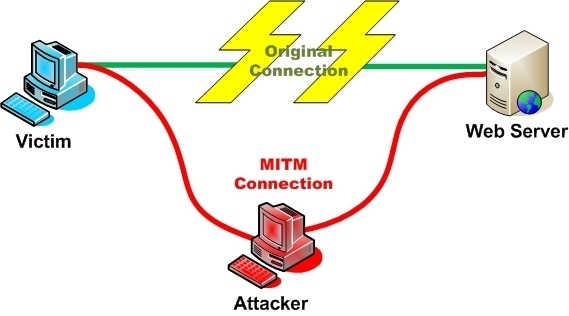
The so-called subordinate root certificate allowed the customer to issue SSL credentials that Internet Explorer and other major browsers would accept as valid for any server on the Internet. The unnamed buyer of this skeleton key used it to perform what amounted to man-in-the-middle attacks that monitored users of its internal network as they accessed SSL-encrypted websites and services. The data-loss-prevention system used a hardware security module to ensure the private key at the heart of the root certificate wasn’t accidentally leaked or retrieved by hackers.

Read the rest of this article...

Read the comments on this post

Visit link:
Critics slam SSL authority for minting certificate for impersonating sites

Two US startups break solar efficiency records, aim to light up your life

Two US startups break solar efficiency records, aim to light up your life

Two US startups are breaking solar efficiency records in their quest to bring clean, cost-effective, eco-friendly energy to a power grid near you. Alta Devices, based in Santa Clara, CA, has achieved a 23.5 percent efficiency rating with its standard solar panel, while Semprius, a Durham, NC company, has achieved a rating of 33.9 percent with its concentrated photovoltaic offering — besting the previous records of 22.9 percent and 33 percent, respectively. Interestingly enough, both outfits chose to utilize a new material to construct their sun-sopping cells: gallium arsenide. The material, while more expensive, is better suited for absorbing the sun’s energy, especially when compared to silicon, the cheaper element typically used. Alta and Semprius are looking to proliferate solar power by further refining the technology, making its price per kilowatt equivalent to that of fossil fuels without the use of government subsides. Here comes the sun…

Two US startups break solar efficiency records, aim to light up your life originally appeared on Engadget on Wed, 08 Feb 2012 14:35:00 EDT. Please see our terms for use of feeds.

Permalink | sourcePhysOrg | Email this | Comments

See the article here:
Two US startups break solar efficiency records, aim to light up your life

Set Gmail as Your Browser’s Default Email Client with a Simple Hack [Gmail]

Sick of mailto: links in your browser opening Outlook or Mail.app whenever you click them? You can tackle this problem with extensions or through other means, but Googler and HTML5 guru Paul Irish offers a simple, no-add-ons-required approach. Here’s how it works: More »


View post:
Set Gmail as Your Browser’s Default Email Client with a Simple Hack [Gmail]

ReactOS 0.3.14 Released With Improved Networking Stack

An anonymous reader wrote in with news of the latest release of ReactOS, a project to create a complete reimplementation of Windows. The highlights of this release are the integration of a new network stack based upon lwIP, the ability to build using Microsoft’s C compiler, and Wifi support. There are a few options for trying it out (emulator image and a livecd amongst others) and source code over at Sourceforge.


Share on Google+

Read more of this story at Slashdot.

View article:
ReactOS 0.3.14 Released With Improved Networking Stack