
When Google introduced the new tabbed interface for Gmail , it also brought along some new ads under the Promotions tab. Read more…
Visit site:
Gmail Has New Ads That Look Like Emails, Here’s How to Turn Them Off
When Google introduced the new tabbed interface for Gmail , it also brought along some new ads under the Promotions tab. Read more…
Visit site:
Gmail Has New Ads That Look Like Emails, Here’s How to Turn Them Off

We’re all pretty aware that we probably shouldn’t be running a million tabs at once just for the sake of our own sanity, but it’s also a wear on your system resources. Wired decided to take a look to see if that also has an effect on your laptop’s battery life. Read more…
 sturgeon writes “Wired Magazine claims today that Google is now 25% of the North American traffic with a mostly unreported (and rapidly expanding), massive deployment of edge caching servers in almost every Internet provider around the world. Whether users are directly using a Google service (i.e. search, YouTube) or the devices are automatically sending data (e.g. Google Analytics, updates), the majority of end devices around the world will now send traffic to Google server during the course of an average day. It looks like Wired based their story on a report from cloud analytics and network management company DeepField.” Read more of this story at Slashdot.
Follow this link:
Google Now Serves 25% of North American Internet Traffic

When the government comes knocking on your door, you kind of have to cooperate with them or face the consequences. That’s the situation Pete Ashdown, CEO of Utah ISP XMission, was faced with in 2010 after receiving a warrant under the Foreign Intelligence Service Act (FISA). The warrant, coming in at just three or four pages, was perfectly clear: install a rack-mount server on your network to track every last bit going in and out from one of your customers, and don’t say anything to anyone about this. Ashdown’s lawyer said the request was indeed legit, and the box stayed there for a little over half a year. So why talk about it now? Because Pete, like the rest of us, wants a bit of transparency , even if there’s a risk the G-Men will come “come back and haunt” him. Comments Source: BuzzFeed
Read More:
Utah ISP breaks silence over government server installed on its network
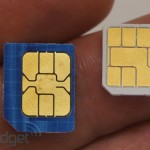
Every phone needs a SIM card, and you’d think such a ubiquitous standard would be immune to any hijack attempts. Evidently not, as Karsten Nohl of Security Research Labs — who found a hole in GSM call encryption several years ago — has uncovered a flaw that allows some SIM cards to be hacked with only a couple of text messages. By cloaking an SMS so it appears to have come from a carrier, Nohl said that in around a quarter of cases, he receives an error message back containing the necessary info to work out the SIM’s digital key. With that knowledge, another text can be sent that opens it up so one can listen in on calls, send messages, make mobile purchases and steal all manner of data. Apparently, this can all be done “in about two minutes, using a simple personal computer, ” but only affects SIMs running the older data encryption standard (DES). Cards with the newer Triple DES aren’t affected; also, the other three quarters of SIMs with DES Nohl probed recognized his initial message as a fraud. There’s no firm figure on how many SIMs are at risk, but Nohl estimates the number at up to 750 million. The GSM Association has been given some details of the exploit, which have been forwarded to carriers and SIM manufacturers that use DES. Nohl plans to spill the beans at the upcoming Black Hat meeting. If you’re listening, fine folks at the NSA , tickets are still available. Filed under: Cellphones , Mobile Comments Source: New York Times
Continue Reading:
Some SIM cards can be hacked ‘in about two minutes’ with a pair of text messages
 Trying a new method of making money off its free e-mail service, the Internet giant has begun putting ads in Gmail’s “promotions” category. [Read more]
Read More:
Google starts placing ads directly in Gmail inboxes

It sometimes feels like there’s a big data breach in the news every week—but some are far worse than others. This data visulization shows the world’s biggest data breaches to date, and how they compare over time. Read more…
Read more here:
The World’s Biggest Data Breaches, Visualized

Rumors that Apple is looking to super-size its upcoming iPhone and iPad lineups are gathering steam, thanks to a recent report from the Wall Street Journal . It cited Apple’s suppliers in Asia, who said that Cupertino is testing a 13-inch iPad design and prototype iPhone screens larger than the current four inches. While Apple wouldn’t comment, of course, that jibes with an earlier Reuters report, which claimed it was considering 4.7- and 5.7-inch iPhone screens. If accurate (and that’s always a big if with such rumors), the report doesn’t necessarily mean that products with larger displays will ever come to market — Apple routinely changes specs and tests components during the development cycle. Still, it would be further evidence that the company’s willing to bend on its one-size-fits-all screen size policy, which is something that the large-handed (or weak-eyed) among us might appreciate. Filed under: Cellphones , Tablets , Apple Comments Source: WSJ
More:
WSJ: Apple testing larger iPhone, iPad screens with suppliers
SmartAboutThings writes “Smartphones are susceptible to malware and carriers have enabled NSA snooping, but the prevailing wisdom has it there’s still one part of your mobile phone that remains safe and un-hackable: your SIM card. Yet after three years of research, German cryptographer Karsten Nohl claims to have finally found encryption and software flaws that could affect millions of SIM cards, and open up another route on mobile phones for surveillance and fraud.” Read more of this story at Slashdot.
More here:
Rooting SIM Cards

Apple Since Thursday, registered Apple developers trying to download OS X 10.9, iOS 7, or any other Apple software from the company’s developer portal have been greeted with a notice that the site was down for “maintenance.” Today, the company issued a brief statement (above) blaming the extended outage on an “intruder, ” and that Apple “[has] not been able to rule out the possibility that some developers’ names, mailing addresses, and/or email addresses may have been accessed.” The notice says that “sensitive” information could not be accessed by the intruder because it was encrypted, and the company told MacWorld that the system in question is not used to store “customer information, ” application code, or data stored by applications. Anecdotal reports (including one from our own Jacqui Cheng ) point to a sudden spike in password reset requests for some Apple IDs, suggesting that email addresses have in fact been accessed and distributed but that passwords were not. In any case, we generally recommend that users change their passwords when any breach (or suspected breach) like this one occurs. “In order to prevent a security threat like this from happening again, we’re completely overhauling our developer systems, updating our server software, and rebuilding our entire database, ” the statement said. Apple has also given week-long extensions to any developers’ whose program subscriptions were scheduled to lapse during the outage, which will keep those developers’ applications from being delisted in Apple’s various App Stores. Read on Ars Technica | Comments
View article:
Apple blames days-long Developer Center outage on “intruder”