Ubuntu 17.10 Artful Aardvark Released

Canonical has made available the download links for Ubuntu 17.10 “Artful Aardvark”. It comes with a range of new features, changes, and improvements including GNOME as the default desktop, Wayland display server by default, Optional X.org server session, Mesa 17.2 or Mesa 17.3, Linux kernel 4.13 or kernel 4.14, new Subiquity server installer, improved hardware support, new Ubuntu Server installer, switch to libinput, an always visible dock using Dash to Dock GNOME Shell extension, and Bluetooth improvements with a new BlueZ among others. Read more of this story at Slashdot.

See more here:
Ubuntu 17.10 Artful Aardvark Released

Samsung To Let Proper Linux Distros Run on Galaxy Smartphones

An anonymous reader shares a report: Samsung has announced it will soon become possible to run actual proper Linux on its Note8, Galaxy S8 and S8+ smartphones — and even Linux desktops. Yeah, yeah, we know Android is built on Linux, but you know what we mean. Samsung said it’s working on an app called “Linux on Galaxy” that will let users “run their preferred Linux distribution on their smartphones utilizing the same Linux kernel that powers the Android OS.” “Whenever they need to use a function that is not available on the smartphone OS, users can simply switch to the app and run any program they need to in a Linux OS environment, ” Samsung says. The app also allows multiple OSes to run on a device. Linux desktops will become available if users plug their phones into the DeX Station, the device that lets a Galaxy 8 run a Samsung-created desktop-like environment when connected to the DeX and an external monitor. Read more of this story at Slashdot.

See the original article here:
Samsung To Let Proper Linux Distros Run on Galaxy Smartphones

New Law Bans California Employers From Asking Applicants Their Prior Salary

An anonymous reader shares a report: California employers can no longer ask job applicants about their prior salary and — if applicants ask — must give them a pay range for the job they are seeking, under a new state law that takes effect Jan. 1. AB168, signed Thursday by Gov. Jerry Brown, applies to all public- and private-sector California employers of any size. The goal is to narrow the gender wage gap. If a woman is paid less than a man doing the same job and a new employer bases her pay on her prior salary, gender discrimination can be perpetuated, the bill’s backers say. Last year, the state passed a weaker law that said prior compensation, by itself, cannot justify any disparity in compensation. The new bill goes further by prohibiting employers, “orally or in writing, personally or through an agent, ” from asking about an applicant’s previous pay. However, if the applicant “voluntarily and without prompting” provides this information, the employer may use it “in determining the salary for that applicant.” Read more of this story at Slashdot.

More:
New Law Bans California Employers From Asking Applicants Their Prior Salary

Adobe’s ‘Cloak’ experiment is a content-aware eraser for video

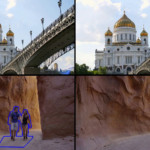
Glamorous show-reels from shows like Game of Thrones get all the fame, but a lot of VFX work is mundane stuff like removing cars , power lines and people from shots. Adobe’s research team is working on making all of that easier for anyone, regardless of budget, thanks to a project called “Cloak.” It’s much the same as ” content-aware fill” for Photoshop, letting you select and then delete unwanted elements, with the software intelligently filling in the background. Cloak does the same thing to moving video, though, which is a significantly bigger challenge. Engadget got an early look at the tech, including a video demonstration and chance to talk with Adobe research engineer Geoffrey Oxholm and Victoria Nece, product manager for video graphics and VFX. At the moment, the technology is in the experimental stages, with no set plans to implement it. However, Adobe likes to give the public ” Sneaks ” at some of its projects as a way to generate interest and market features internally to teams. An example of that would be last year’s slightly alarming “VoCo” tech that lets you Photoshop voiceovers or podcasts. That has yet to make it into a product, but one that did is “Smartpic” which eventually became part of Adobe’s Experience Manager. The “Cloak” tech wouldn’t just benefit Hollywood — it could be useful to every video producer. You could make a freeway look empty by removing all the cars, cut out people to get a pristine nature shot, or delete, say, your drunk uncle from a wedding shot. Another fun example: When I worked as a compositer in another life , I had to replace the potato salad in a shot with macaroni, which was a highly tedious process. Object removal will also be indispensable for VR, AR, and other types of new video tech. “With 360 degree video, the removal of objects, the crew and the camera rig becomes virtually mandatory, ” Nece told Engadget. Content-aware fill on photos is no easy task in the first place, because the computer has to figure out what was behind the deleted object based on the pixels around it. Video increases the degree of difficulty, because you have to track any moving objects you want to erase. On top of that, the fill has to look the same from frame to frame or it will be a glitchy mess. “It’s a fascinating problem, ” Oxholm said. “Everything is moving, so even if you nail one frame, you have to be consistent.” Luckily, video does have one advantage over photos. “The saving grace is that we can see behind the thing we want to remove, ” says Oxholm. “If you’ve got a microphone to remove, you can see behind the microphone.” In other words, if you’re doing shot of a church with a pole in the way, there’s a good chance you have a different angle with a clean view of the church. With 360 degree video, the removal of objects, the crew and the camera rig becomes virtually mandatory. Another thing making content-aware fill for video much more feasible now is the fact that motion-tracking technology has become so good. “We can do really dense tracking, using parts of the scene as they become visible, ” said Oxholm. “That gives you something you can use to fill in.” The results so far, as shown in the video above, are quite promising. The system was able to erase cars from a freeway interchange, did a decent job of deleting a pole in front of a cathedral and even erased a hiking couple from a cave scene. The shots were done automatically in “one quick process, ” Oxholm said, after a mask was first drawn around the object to be removed — much as you do with Photoshop. It’s not totally perfect, however. Shadow traces are visible on the cave floor, and the cathedral is blurred in spots where the pole used to be. Even at this early stage, though, the tool could do much of the grunt-work, making it easier for a human user to do the final touch-ups. I’d love to see Adobe release it in preview as soon as possible, even if it’s not perfect, as it looks like it could be a major time saver — I sure could’ve used it for that macaroni.

Excerpt from:
Adobe’s ‘Cloak’ experiment is a content-aware eraser for video

Alphabet invests $1 billion in Lyft

Last month, we reported on rumors that Alphabet, Google’s parent company, was considering investing in Lyft. Now, Lyft has announced that CapitalG, which is Alphabet’s growth investment fund, is leading a $1 billion financing round in the car-sharing company. This brings Lyft’s total valuation to $11 billion. Alphabet’s interest in Lyft isn’t that surprising, if you think about it. It’s already clear that Alphabet is interested in self-driving cars, as the company owns Waymo. And back in May, Waymo and Lyft announced the two companies would work togethe r on self-driving cars. Following that, Lyft announced it would develop its own autonomous driving technology , stating that it was “core” to its business. Alphabet’s interest makes sense if we stop thinking about Lyft as a ride sharing service and more of a self-driving car company. As Uber has been plagued by woe after woe of its own making, Lyft has been quietly rising as an increasingly used alternative. This round of funding may help put the company on equal footing as Uber’s rival, rather than constantly being thought of as a second-place finisher. Source: Lyft

View article:
Alphabet invests $1 billion in Lyft

Holy Cow: Dubai Police Have a Freaking Hoverbike

Remember how Dubai’s police department uses a fleet of supercars as their cruisers? Now the flashy force has added another head-turning vehicle: A Scorpion 3 hoverbike built by Russian company Hoversurf . According to Autoblog , …The police force aims to deploy its latest toy as a first-responder vehicle in hard-to-reach places, such as the middle of a traffic jam. Conveyed to a staging point, the Scorpion’s 660-pound cargo capacity could carry an officer to a choke-point scene with aid before a Mercedes G-wagen or Bugatti Veyron could get through. The hoverbike also does standard drone duty with a range of up to six kilometers. I’d love to see these here in New York City. Alas, this is the NYPD’s latest vehicle.

View article:
Holy Cow: Dubai Police Have a Freaking Hoverbike

The U.S. vs. Japan Giant Robot Duel Finally Happened, and These Guys Aren’t Messing Around

We’ve been waiting for this international giant robot fight since 2015 , and this month it finally happened. To refresh your memory, American robotics firm MegaBots challenged Japan’s Suidobashi Heavy Industries to a mecha-vs.-mecha fight, the challenge was accepted, and trash-talking ensued. To be honest, I was a little worried that this duel was going to suck. I figured there’s no way these guys would actually deploy giant chainsaw swords and fire projectiles that could do any kind of actual damage, and I also thought that a concern for safety would limit the fighting tactics they’d use. I was wrong. These guys aren’t messing around. And during the two duels, the fear of the pilots inside the cockpits is palpable. I don’t want to spoil anything, and I’ve cut the video into the two duels. Here’s the first, which is practically over before it begins: Here’s the second, which is filled with some surprises and OH SHIT moments: I eagerly await the rematch!

Continue Reading:
The U.S. vs. Japan Giant Robot Duel Finally Happened, and These Guys Aren’t Messing Around

Air Force General: “We’d be dumb not to” fly on SpaceX’s reusable rockets

Enlarge / SpaceX launches the Air Force’s X-38B space plane in September, 2017. (credit: SpaceX) The increasingly warm relationship between the US Air Force and the rocket company SpaceX appears to be approaching full-on bromance levels. The latest words of lavish praise for SpaceX have come from Gen. John W. Raymond, commander of Air Force Space Command, which oversees launch operations for the US military and national security sectors. In an interview with Bloomberg, Raymond said the potential savings from reusable rockets like the Falcon 9 booster now being flown and reflown by SpaceX are irresistible. “The market’s going to go that way. We’d be dumb not to,” he said. “What we have to do is make sure we do it smartly.” It would be “absolutely foolish” to not begin using them, Raymond said. Before the military can fly its satellites and other payloads on a previously flown booster, the US military has to certify that SpaceX’s “flight proven” boosters are reliable enough. That process already appears to be underway. “I don’t know how far down the road we’ve gotten, but I am completely committed to launching on a reused rocket, a previously flown rocket, and making sure that we have the processes in place to be able to make sure that we can do that safely,” Raymond told Bloomberg. Read 3 remaining paragraphs | Comments

Read more here:
Air Force General: “We’d be dumb not to” fly on SpaceX’s reusable rockets

Researchers craft an LED just two atoms thick

Enlarge / Hexagonal boron nitride, one of the materials used here. (credit: Wikimedia Commons ) Modern computers are, in many ways, limited by their energy consumption and cooling requirements. Some of that comes from the process of performing calculations. But often, the majority of energy use comes from simply getting data to the point where calculations are ready to be performed. Memory, storage, data transfer systems, and more all create power draws that, collectively, typically end up using more power than the processor itself. Light-based communications offers the possibility of dropping power consumption while boosting the speed of connections. In most cases, designs have focused on situations where a single external laser supplies the light, which is divided and sent to the parts of the system that need it. But a new paper in Nature Nanotechnology suggests an alternate possibility: individual light sources on the chip itself. To demonstrate this possibility, the team put together an LED just two atoms thick  and integrated it with a silicon chip. Better still, the same material can act as a photodetector, providing a way of building all the needed hardware using a single process. Atomic The work relied on two different atomically thin materials. These materials consist of a planar sheet of atoms chemically linked to each other. While their study was pioneered using graphene, a sheet of carbon atoms, they developed a variety of other materials with similar structures. The materials being used here are molybdenum ditelluride (MoTe 2 ), a semiconductor, and hexagonal boron nitride. Read 7 remaining paragraphs | Comments

More:
Researchers craft an LED just two atoms thick

In 3-1 vote, LA Police Commission approves drones for LAPD

Enlarge (credit: Peter Linehan / Flickr ) The Los Angeles Police Department, one of the nation’s largest municipal police forces, approved a one-year pilot program for drones—making it the largest city in the nation to undertake such an evaluation. According to the Los Angeles Times , the LA Police Commission approved a set of policies that limits “their use to a handful of tactical situations, searches or natural disasters.” Each drone flight must also be signed off by a “high-ranking office on a case-by-case basis.” The drones are also not to be weaponized. The decision, which was announced Tuesday, was made despite vociferous protest. Already the Los Angeles Sheriff’s Department uses drones, as do other agencies in California , including the Ventura County Sheriff’s Department and the Alameda County Sheriff’s Organization. Read 3 remaining paragraphs | Comments

Read the original post:
In 3-1 vote, LA Police Commission approves drones for LAPD