Blue LEDs given Nobel Prize in physics

Nobel Prize Committee Each year, roughly a quarter of the electricity we generate goes to lighting. For decades, that lighting came in the form of an incandescent light bulb, which produced 16 lumens for every Watt it was fed. Fluorescent bulbs are roughly five times as efficient, but recent LEDs do nearly 19 times better than incandescents, producing 300 lumens for each Watt. The first LEDs date back to 1907, but it’s only recently that their incredible efficiency has been brought to bear on the lighting market. One of the key holdups was our inability to generate a broad spectrum of colors. Specifically, we couldn’t make white light because we lacked the ability to produce blue LEDs. Now, the Nobel Prize in Physics is being given to three materials scientists who overcame this roadblock. The people receiving the honor are Isamu Akasaki and Hiroshi Amano, both faculty at Nagoya University in Japan, and Shuji Nakamura, now of UC Santa Barbara, who did much of his key work while at Nichia Chemicals, a small company in Japan. Read 8 remaining paragraphs | Comments

Read More:
Blue LEDs given Nobel Prize in physics

FBI director says Chinese hackers are like a “drunk burglar”

Ivan David Gomez Arce James Comey, the Federal Bureau of Investigation director, says Chinese hackers are daily targeting US companies’ intellectual property. “I liken them a bit to a drunk burglar. They’re kickin’ in the front door, knocking over the vase, while they’re walking out with your television set,” Comey said Sunday on CBS’ 60 Minutes . “They’re just prolific. Their strategy seems to be: `We’ll just be everywhere all the time. And there’s no way they can stop us.”‘ 60 Minutes Comey’s remarks on the news magazine comes two weeks after a Senate Armed Services Committee report concluded that China’s military broke into Pentagon contractors’ computer networks at least 50 times—hacks that threaten ” to erode US military technical superiority .” Read 6 remaining paragraphs | Comments

Follow this link:
FBI director says Chinese hackers are like a “drunk burglar”

References to iOS 8.1, 8.2, and 8.3 showing up in site analytics

iOS 8 development continues apace. Andrew Cunningham iOS 8 has been in the hands of the public  for about a week and a half , and the OS has already received a pair of minor updates.  One fixed a handful of small issues in the initial release;  another fixed the major bugs introduced in the first update. But we’re already seeing evidence that Apple is working on some larger updates to the operating system, namely versions 8.1, 8.2, and 8.3. 9to5Mac first pointed out evidence of these new iOS versions this morning, found in its own analytics and data from some of its sources. So we quickly looked into our traffic data for September for similar data. We found requests listing iOS 8.1, 8.2, and 8.3 coming from Apple IP addresses—several thousand from 8.1 and just a few hundred from 8.2 and 8.3, which makes sense given that 8.1 is probably being worked on more aggressively at this point. The news here is not that Apple is continuing to develop new versions of iOS but that releasing an iOS 8.2 or 8.3 update would be a break from recent tradition. The last iOS version to progress beyond x.1 was iOS 4, which came during a much busier period for Apple in general and iOS specifically. Version 4.1 fixed many of the glaring bugs in version 4.0 and helped boost speed on the iPhone 3G, version 4.2 unified the iPhone and iPad versions of the OS and ushered in the first non-AT&T iPhones, and version 4.3 was introduced alongside the iPad 2. To some degree, software version numbers are arbitrary, but releasing three “major” updates for iOS 8 could indicate that iOS 8’s lifecycle will be similarly busy. Read 1 remaining paragraphs | Comments

Read More:
References to iOS 8.1, 8.2, and 8.3 showing up in site analytics

Comcast seeks to fix awful customer service, admits “it may take a few years”

Comcast executive Charlie Herrin is aiming to improve Comcast’s legendarily poor customer service. Comcast After months of getting bashed for treating customers poorly, Comcast today said it’s going to make improving customer service its “number one priority.” But the company admitted that “it may take a few years before we can honestly say that a great customer experience is something we’re known for.” Neil Smit, CEO of Comcast’s cable division,  wrote today  that Comcast’s customer service hasn’t kept up with Comcast’s focus on “product innovation,” technology, and content. “But this is only one half of the customer experience equation. The other half is operational excellence in how we deliver service,” he wrote. “The way we interact with our customers—on the phone, online, in their homes—is as important to our success as the technology we provide. Put simply, customer service should be our best product.” A longtime Comcast executive is being called upon to fulfill that goal. Smit announced the promotion of 15-year Comcast veteran Charlie Herrin to a new role as senior VP of customer experience. Herrin previously was senior VP of product development and led design of X1, Comcast’s new TV user interface. Read 5 remaining paragraphs | Comments

Read this article:
Comcast seeks to fix awful customer service, admits “it may take a few years”

Apple releases iOS 8.0.1 with HealthKit, keyboard, iPhone 6 fixes

iOS 8.0.1 fixes a handful of bugs with the new update. Andrew Cunningham Apple has just released iOS 8.0.1, the first update to the new operating system that reached the public last week . The update is available through iTunes or as an over-the-air update for any device that runs iOS 8—the iPhone 4S or newer, iPad 2 or newer, and the fifth-generation iPod Touch. Though it comes just a week after iOS 8’s release, the 8.0.1 update fixes a wide-ranging list of problems. Apple has fixed the bug that was keeping HealthKit-compatible apps from working, and it corrected a problem where third-party keyboards could be toggled off after entering a passcode. The company also addressed photo library access for third-party apps, “unexpected cellular data usage when receiving SMS/MMS messages,” the Ask To Buy feature of Family Sharing, something keeping ringtones from being restored from iCloud backups, and “a bug that prevented uploading photos and videos from Safari.” Those updates are available for all devices, but the new iPhone 6 and 6 Plus get one specific fix that is meant to make the Reachability feature more consistent. Read 1 remaining paragraphs | Comments

See the original article here:
Apple releases iOS 8.0.1 with HealthKit, keyboard, iPhone 6 fixes

Texas man must pay $40.4M for running Bitcoin-based scam, court rules

A federal judge in Texas has convicted a local man of conducting a massive Bitcoin-based Ponzi scheme, and ordered him to pay $40.4 million. The court found on Friday that Tendon Shavers had created a virtual bitcoin-based hedge fund that many suspected of being a scam—and it turned out they were right. The Bitcoin Savings and Trust (BTCST) shut down in August 2012, and by June 2013 the Securities and Exchange Commission (SEC) filed charges against its founder . In a statement at the time, the SEC said Shavers “raised at least 700,000 Bitcoin in BTCST investments, which amounted to more than $4.5 million based on the average price of Bitcoin in 2011 and 2012 when the investments were offered and sold.” Judge Amos Mazzant wrote: Read 2 remaining paragraphs | Comments

See more here:
Texas man must pay $40.4M for running Bitcoin-based scam, court rules

Apple releases OS X 10.9.5 with fixes, new code signing requirements [updated]

Yesterday evening Apple released OS X 10.9.5 to the general public, the fifth major update for OS X Mavericks. As usual, the update comes with a handful of fixes for user-facing features as well as a small pile of security updates . Many of these security patches are also available for OS X 10.7.5 and 10.8.5 in separate updates. Like OS X 10.9.4 , the update focuses on smaller problems that affect a subset of Macs. The new features include Safari 7.0.6, improved “reliability for VPN connections that use USB smart cards for authentication,” and better reliability for connecting to file servers that use the SMB protocol. For businesses using OS X, the update fixes a problem that could keep system admins from “performing some administrative tasks successfully” on larger groups of Macs, and it also speeds up authentication “when roaming on 802.1x networks which use EAP-TLS.” Among the security updates are fixes for Bluetooth, CoreGraphics generally and the Intel graphics driver specifically, and OS X’s version of OpenSSL among many others. The latter problems were fixed by updating from OpenSSL version 0.9.8y to 0.9.8za. Read 6 remaining paragraphs | Comments

See original article:
Apple releases OS X 10.9.5 with fixes, new code signing requirements [updated]

Artificial sweeteners may leave their users glucose intolerant

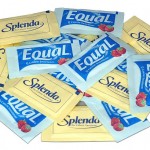
Flickr user Bukowsky18 People who are watching their weight will often opt for a diet soda, reasoning that the fewer calories, the better. But the availability of drinks and foods made with artificial sweeteners like saccharin, sucralose, and aspartame hasn’t seemed to help much with our booming obesity levels. Now, some researchers might have identified a reason for this: the sweeteners leave their users with elevated blood glucose levels. But they don’t seem to act directly on human metabolism. Instead, the effects come through alterations in the bacterial populations that live inside us. The paper that describes this work, which was performed by a large collaboration of researchers from Israel, is being released by Nature today. The researchers note that epidemiological studies about the effects of artificial sweeteners have produced mixed results; some show a benefit, while others indicate that they’re associated with weight gain and diabetes risk. Given that human populations haven’t given us a clear answer, the researchers turned to mice, where they could do a carefully controlled study. They started taking a group of genetically matched mice and spiking their drinking water with either sucrose or a commercial prep of an artificial sweetener (either saccharin, sucralose, or aspartame). After five weeks, they checked the blood glucose levels of these animals. Eleven weeks later, the groups that were given the artificial sweeteners all had elevated blood glucose levels compared to those that received sucrose. This is typically a sign of metabolic problems, most often caused by insulin losing its effectiveness. It can be a precursor to type 2 diabetes. Read 10 remaining paragraphs | Comments

Read More:
Artificial sweeteners may leave their users glucose intolerant

Why T-Mobile needs Wi-Fi calling: its network can’t match AT&T and Verizon

T-Mobile’s “data strong network.” T-Mobile T-Mobile US’ latest “Un-carrier” move is just about the most amazing thing ever, CEO John Legere said last week. “This is like adding millions of towers to our network in a single day,” Legere boasted in a press release . “The difference between us and the traditional carriers is that they’ll do everything they can to make more money off you. We’ll do everything we can to solve your problems.” The innovation is actually something that T-Mobile has had since 2007: Wi-Fi calling. It makes sense for T-Mobile to promote Wi-Fi calling now, given that Apple is adding the capability to iPhones in iOS 8. The initiative has some nice benefits for customers—T-Mobile offered to upgrade all customers to phones that can make Wi-Fi calls and is giving out a free “Personal CellSpot,” a Wi-Fi router that prioritizes voice calls. Read 22 remaining paragraphs | Comments

Read this article:
Why T-Mobile needs Wi-Fi calling: its network can’t match AT&T and Verizon

Watch out, California’s self-driving car permits take effect today

Audi On Tuesday, permits for self-driving cars issued by the California Department of Motor Vehicles (DMV) took effect for the first time. Applications for the permits began in May 2014. Only the Volkswagen Group (which includes Volkswagen and Audi cars among others), Mercedes Benz, and Google have been issued permits for their 29 total vehicles. Overall, that represents a miniscule fraction of all 32 million registered cars in the Golden State. Bernard Soriano, a DMV spokesman, told Ars that Tuesday also marked the first time those numbers had been disclosed outside of the agency. “There are a handful of different companies that are completing their application,” he added, noting that the DMV expected to issue more permits soon. “They’re all large automakers.” Read 6 remaining paragraphs | Comments

Continue reading here:
Watch out, California’s self-driving car permits take effect today