Latest tech support scam stokes concerns Dell customer data was breached

Enlarge (credit: Jjpwiki ) Tech-support scams, in which fraudsters pose as computer technicians who charge hefty fees to fix non-existent malware infections, have been a nuisance for years . A relatively new one targeting Dell computer owners is notable because the criminals behind it use private customer details to trick their marks into thinking the calls come from authorized Dell personnel. “What made the calls interesting was that they had all the information about my computer; model number, serial number, and notably the last item I had called Dell technical support about (my optical drive),” Ars reader Joseph B. wrote in an e-mail. “That they knew about my optical drive call from several months prior made me think there was some sort of information breach versus just my computer being compromised.” He isn’t the only Dell customer reporting such an experience. A blog post published Tuesday reported scammers knew of every problem the author had ever called Dell about. None of those problems were ever discussed in public forums, leading the author to share the suspicion that proprietary Dell data had somehow been breached. Read 7 remaining paragraphs | Comments

Read more here:
Latest tech support scam stokes concerns Dell customer data was breached

T-Mobile added another 8.3 million customers in 2015

T-Mobile USA added 8.3 million customers last year, including 2.1 million in the fourth quarter, solidifying its position as the country’s number three wireless carrier ahead of Sprint and behind Verizon Wireless and AT&T. T-Mobile had 63.3 million customers as of December 31, 2015, up from 55 million customers at the end of 2014, the company announced today  in a preliminary earnings report. In total, T-Mobile now has 29.4 million postpaid phone customers, 2.3 million postpaid mobile broadband customers, 17.6 million prepaid customers, and 14 million wholesale customers. This was the second consecutive year that T-Mobile boosted its customer total by more than 8 million. (credit: T-Mobile) T-Mobile has also improved its churn rate—the percentage of subscribers who discontinued service—meaning that fewer customers are leaving for other carriers. Read 2 remaining paragraphs | Comments

More:
T-Mobile added another 8.3 million customers in 2015

General Motors pledges $500 million to Lyft for driverless taxi research

On Monday, General Motors and ride-sharing company Lyft announced a new partnership to develop a network of driverless taxis. GM has invested $500 million in Lyft  as part of a $1 billion funding round. The partnership includes a seat for GM on Lyft’s board of directors. Neither Lyft nor GM mentioned how soon they expect to realize their driverless taxi dream. In a press release , GM said it would work with Lyft to “leverage GM’s deep knowledge of autonomous technology.” Lyft  promised “to build a network of on demand autonomous vehicles that will make getting around more affordable, accessible and enjoyable.” GM’s labs have been testing the waters with autonomous concept cars , even hinting in October that the company’s strategy in 2016 would be “aggressive” and would include a fleet of self driving Chevrolet Volts . Lyft declined to comment publicly on how a fleet of driverless taxis would impact current Lyft drivers. Read 1 remaining paragraphs | Comments

Original post:
General Motors pledges $500 million to Lyft for driverless taxi research

First known hacker-caused power outage signals troubling escalation

(credit: Krzysztof Lasoń ) Highly destructive malware that infected at least three regional power authorities in Ukraine led to a power failure that left hundreds of thousands of homes without electricity last week, researchers said. The outage left about half of the homes in the Ivano-Frankivsk region of Ukraine without electricity, Ukrainian news service TSN reported in an article posted a day after the December 23 failure . The report went on to say that the outage was the result of malware that disconnected electrical substations. On Monday, researchers from security firm iSIGHT Partners said they had obtained samples of the malicious code that infected at least three regional operators. They said the malware led to “destructive events” that in turn caused the blackout. If confirmed it would be the first known instance of someone using malware to generate a power outage. “It’s a milestone because we’ve definitely seen targeted destructive events against energy before—oil firms, for instance—but never the event which causes the blackout,” John Hultquist, head of iSIGHT’s cyber espionage intelligence practice, told Ars. “It’s the major scenario we’ve all been concerned about for so long.” Read 7 remaining paragraphs | Comments

See the original post:
First known hacker-caused power outage signals troubling escalation

Files on nearly 200 floppy disks belonging to Star Trek creator recovered

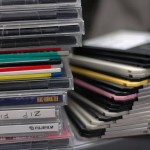
(credit: churl ) According to a press release from DriveSavers data recovery, information on nearly 200 floppy disks that belonged to Star Trek creator Gene Roddenberry has been recovered. The information on the disks belongs to Roddenberry’s estate and has not been disclosed to the general public. DriveSavers notes, however, that Roddenberry used the disks to store his work and “to capture story ideas, write scripts and [take] notes.” VentureBeat reports that the disks, containing 160KB of data each, were likely used and written in the ’80s. The circumstances of the information recovery are particularly interesting, however. Several years after the death of Roddenberry, his estate found the 5.25-inch floppy disks. Although the Star Trek creator originally typed his scripts on typewriters, he later moved his writing to two custom-built computers with custom-made operating systems before purchasing more mainstream computers in advance of his death in 1991. Read 2 remaining paragraphs | Comments

Excerpt from:
Files on nearly 200 floppy disks belonging to Star Trek creator recovered

CBS, Paramount sue crowdfunded Star Trek filmmakers for copyright infringement

Prelude to Axanar (Official). On Tuesday, lawyers representing CBS and Paramount Studios sued Axanar Productions, a company formed by a group of fans attempting to make professional-quality Star Trek fan-fiction movies, for copyright infringement. “The Axanar Works are intended to be professional quality productions that, by Defendants’ own admission, unabashedly take Paramount’s and CBS’s intellectual property and aim to ‘look and feel like a true Star Trek movie,’” the complaint reads  (PDF). Axanar Productions released a short 20-minute film called  Prelude to Axanar  in 2014, in which retired Starfleet leaders talk about their experiences in the Four Years War, a war between the Federation and the Klingons that occurred in the Star Trek universe before The Original Series began. The feature-length Axanar is scheduled to premier in 2016 and follows the story of Captain Kirk’s hero, Garth of Izar . Both productions were funded on Kickstarter and Indiegogo, raising more than $1.1 million  from fans. Read 12 remaining paragraphs | Comments

Read More:
CBS, Paramount sue crowdfunded Star Trek filmmakers for copyright infringement

Beating graphene to push supercapacitors closer to batteries

(credit: Oak Ridge National Lab ) Most people think of batteries when they consider energy storage, but capacitors are an alternative in some use cases. Capacitors are used in almost all electronic devices, often to supply temporary power when batteries are being changed to prevent loss of information. In addition to everyday devices, they are also used in more obscure technologies, including certain types of weapons. Understanding the supercapacitor Unlike batteries, capacitors use static electricity to store energy. In their simplest form, they contain two conducting metallic plates with an insulating material (dielectric) placed in between. A typical capacitor charges instantly but usually cannot hold a great deal of charge. Supercapacitors can at least partly overcome this shortcoming. They differ from the typical capacitor in that their “plates” provide significantly larger surface area and are much closer together. The surface area is increased by coating the metal plates with a porous substance. Instead of having a dielectric material between them, the plates of a supercapacitor are soaked in an electrolyte and separated by an extremely thin insulator. Read 11 remaining paragraphs | Comments

Excerpt from:
Beating graphene to push supercapacitors closer to batteries

TSA may soon stop accepting drivers’ licenses from nine states

TSA screening passengers in Fort Lauderdale, Florida. (credit: danfinkelstein ) The citizens of several US states may soon find that they can’t use their drivers’ licenses to get into federal facilities or even board planes. Enforcement of a 2005 federal law that sets identification standards, known as “Real ID,” has been long-delayed. But now Department of Homeland Security officials say enforcement is imminent. The “Real ID” law requires states to implement certain security features before they issue IDs and verify the legal residency of anyone to whom they issue an ID card. The statute is in part a response to the suggestion of the 9/11 Commission, which noted that four of the 19 hijackers used state-issued ID cards  to board planes. Real ID also requires states to share their databases of driver information with other states. The information-sharing provisions are a big reason why some privacy groups   opposed the law , saying it would effectively be the equivalent of a national identification card. Read 10 remaining paragraphs | Comments

More here:
TSA may soon stop accepting drivers’ licenses from nine states

Self-driving Ford Fusions are coming to California next year

Apart from the sensor bar on the roof, this Ford Fusion Hybrid looks just like a normal car. (credit: Jonathan Gitlin) Even more robots are coming to California’s roads next year. Yesterday, Ford announced that it will start testing its autonomous Fusion sedans in the state now that it is officially enrolled in the California Autonomous Vehicle Testing Program . The company opened a new R&D center in Palo Alto at the beginning of the year, which among other projects has been working on virtual simulations of autonomous driving as well as sensor fusion to improve the way its cars perceive the world around them. Ford is the 11th group to obtain a California driving license for its autonomous cars, joining other OEMs (BMW, Mercedes-Benz, Honda, Nissan, Tesla, and Volkswagen Group), tier one suppliers (Bosch and Delphi ), and tech companies (Cruise Automation and Google). A condition of the self-driving car regulations requires companies to provide California’s DMV with a report any time one of their cars is involved in a collision. Since the rules went into effect in September 2014, there have been a total of 10 incidents . The first, in October 2014, involved one of Delphi’s test vehicles, although it was being driven by a human at the time. The nine other incidents all involve Google’s cars, seven of which were being driven autonomously. Read 1 remaining paragraphs | Comments

Read the original:
Self-driving Ford Fusions are coming to California next year

Hackers actively exploit critical vulnerability in sites running Joomla

Enlarge / An payload that’s been modified so it can’t be misused. Malicious hackers are using it to perform an object injection attack that leads to a full remote command execution. (credit: Sucuri ) Attackers are actively exploiting a critical remote command-execution vulnerability that has plagued the Joomla content management system for almost eight years, security researchers said. A patch for the vulnerability, which affects versions 1.5 through 3.4.5, was released Monday morning . It was too late: the bug was already being exploited in the wild, researchers from security firm Sucuri warned in a blog post . The attacks started on Saturday from a handful of IP addresses and by Sunday included hundreds of exploit attempts to sites monitored by Sucuri. “Today (Dec 14th), the wave of attacks is even bigger, with basically every site and honeypot we have being attacked,” the blog post reported. “That means that probably every other Joomla site out there is being targeted as well.” Read 2 remaining paragraphs | Comments

See the article here:
Hackers actively exploit critical vulnerability in sites running Joomla