Microsoft: Software update unlocks more GPU bandwidth on Xbox One

The system update does not turn the system white… only the employee models do that. The June system update rolling out to Xbox One system worldwide this week includes surface-level features like external hard drive support, as we mentioned this morning . But Microsoft says the new firmware will also help developers extract more power from the system’s Graphical Processing Unit (GPU), even though the base hardware in the system is obviously staying the same. Microsoft didn’t trumpet this news in a press release or blog post, but threw it out there in a tweet from Microsoft’s new executive in charge of Xbox, Phil Spencer: “June #XboxOne software dev kit gives devs access to more GPU bandwidth. More performance, new tools and flexibility to make games better.” As far back as last October, Microsoft was publicly acknowledging how Kinect and system processing took “a conservative 10 percent time-sliced reservation… for the GPGPU processing for Kinect and for the rendering of concurrent system content such as snap mode.” Back then, the company promised it would be opening up that slice of processing time to game developers in the future in a way that didn’t impact the system’s background performance. That appears to be what has come to pass with the system’s latest software update. Read 6 remaining paragraphs | Comments

Taken from:
Microsoft: Software update unlocks more GPU bandwidth on Xbox One
Meet “Cupid,” the Heartbleed attack that spawns “evil” Wi-Fi networks

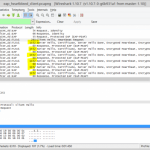
A packet capture showing Cupid attacking a wireless network. SysValue It just got easier to exploit the catastrophic Heartbleed vulnerability against wireless networks and the devices that connect to them thanks to the release last week of open source code that streamlines the process of plucking passwords, e-mail addresses, and other sensitive information from vulnerable routers and connected clients. Dubbed Cupid, the code comes in the form of two software extensions. The first gives wireless networks the ability to deploy “evil networks” that surreptitiously send malicious packets to connected devices. Client devices relying on vulnerable versions of the OpenSSL cryptography library can then be forced to transmit contents stored in memory. The second extension runs on client devices. When connecting to certain types of wireless networks popular in corporations and other large organizations, the devices send attack packets that similarly pilfer data from vulnerable routers. The release of Cupid comes eight weeks after the disclosure of Heartbleed , one of the most serious vulnerabilities to ever hit the Internet. The flaw, which existed for more than two years in OpenSSL, resides in “heartbeat” functions designed to keep a transport layer security (TLS) connection alive over an extended period of time. Read 5 remaining paragraphs | Comments

See more here:
Meet “Cupid,” the Heartbleed attack that spawns “evil” Wi-Fi networks

Payback time: First patent troll ordered to pay “extraordinary case” fees

FindTheBest CEO Kevin O’Connor and Director of Operations Danny Seigle. FindTheBest When Santa Barbara startup FindTheBest (FTB) was sued by a patent troll called Lumen View last year, it vowed to fight back rather than pay up the $50,000 licensing fee Lumen was asking for. Company CEO Kevin O’Connor made it personal, pledging $1 million of his own money to fight the legal battle. Once FindTheBest pursued the case, the company  dismantled the troll in short order. In November, the judge invalidated Lumen’s patent, finding it was nothing more than a description of computer-oriented “matchmaking.” At that point, FindTheBest had spent about $200,000 on its legal fight—not to mention the productivity lost in hundreds of work hours spent by top executives on the lawsuit, and three all-company meetings. Read 10 remaining paragraphs | Comments

Read more here:
Payback time: First patent troll ordered to pay “extraordinary case” fees

Photonic crystals used to make optical RAM

This photonic lattice created at Sandia National Laboratories acts like a crystal in guiding light because of its tiny, regularly placed silicon “logs.” Japanese researchers have shown how to use photonic crystals like this as optical RAM. Sandia National Labs Most high-speed networking is done using optical fibers. The hardware on each end of these fibers has to convert the optical signals to electronic ones in order to figure out a packet’s destination and will often return it to optical form before sending it on toward its destination. Researchers at the Japanese telecom NTT find all that converting a bit wasteful and are working on ways to avoid it. They’ve recently published a paper that includes a description of a working 115-bit optical Random Access Memory device, made of a carefully structured series of photonic crystals, each of which can store light of a different wavelength. Photonic crystals are made of layered semiconductors, with the precise structure (the thickness and spacing of the layers) determining how they interact with light—it’s possible to make photonic crystals that selectively block or transmit a narrow frequency range. Read 8 remaining paragraphs | Comments

Read more here:
Photonic crystals used to make optical RAM

Wireless broadband can reach the moon, and maybe Mars

Prescott Pym Aside from air, water and fresh vegetables, what would need to survive on the moon? One thing that would likely of feature high on the list is a decent, reliable wireless internet. And thanks to a group of researches from MIT and Nasa this kind of connectivity could be within the realms of possibility. Between them, the two organizations have demonstrated for the first time that data communication technology is capable of providing those in space with the same kind of connectivity we enjoy on Earth, and can even facilitate large data transfers and high-definition video streaming. To do this it uses four separate telescopes based at a ground terminal in New Mexico to send the uplink signal to the moon. A laser transmitter that can send information as coded pulses of invisible infrared light feeds into each of the telescopes, which results in 40 watts of transmitter power. Read 7 remaining paragraphs | Comments

More:
Wireless broadband can reach the moon, and maybe Mars

Apple will fix iMessage bug that makes it harder to leave the service

Andrew Cunningham iPhone users (and ex-iPhone users) attempting to sign out of Apple’s iMessage service recently began running into a nasty bug. Signing out of iMessage means that iPhones trying to text your number should seamlessly switch back to using SMS. However, this hasn’t been happening lately—instead, these iMessages continue to be sent as iMessages. They never actually make it to their destination, and neither the sender nor the receiver is given any indication that the message has failed. Apple acknowledged the bug in a statement to Re/code this morning , noting that it has “recently fixed a server-side iMessage bug which was causing an issue for some users,” and that an additional software update was being planned to fix more problems. Signing out of the iMessage service has always been more difficult than enabling it, and I say that as someone who recently disabled iMessage to make jumping between iOS, Android, Windows Phone, and other mobile operating systems easier. In my case, iMessages sent to my newly disconnected number would simply fail to send, and the problem only worked itself out after I changed my Apple ID password (thereby signing all of my devices out of the service), disassociating my phone number from my Apple ID, and then calling Apple support about the problem. This new bug sounds worse, since message senders don’t even know that the texts aren’t arriving at their destination. Read 1 remaining paragraphs | Comments

More:
Apple will fix iMessage bug that makes it harder to leave the service

Sailor convicted of hacking websites from aboard aircraft carrier

The USS Harry S. Truman apparently had adequate Internet bandwidth for a sailor to hack websites in his spare time. US Navy A 27-year old now-former sailor pleaded guilty in a federal court in Tulsa, Oklahoma on May 20 to charges of conspiracy after leading a band of hackers in the US and Canada from onboard an aircraft carrier . Nicholas Paul Knight, who was the system administrator for the USS Harry S. Truman’s nuclear reactors department, was caught trying to hack into a Navy database while at sea. Knight and a co-defendant—Daniel Kreuger of Salem, Illinois—were part of “Team Digi7al,” a collective of hackers who attacked at least 24 websites in 2012 in search of personal identifying information. Knight himself hacked the Navy’s Smart Web Move website , a system for sailors to manage household moves during transfers between stations; that hack included about 220,000 service members’ Social Security numbers, dates of birth, addresses, and other personal data. Other sites attacked by the group included ones operated by the Department of Homeland Security, the Library of Congress, Stanford University, Los Alamos National Laboratory, the Toronto Police Service, and the University of Nebraska-Lincoln. Read 2 remaining paragraphs | Comments

Original post:
Sailor convicted of hacking websites from aboard aircraft carrier

California approves test of self-driving cars on public roads

Terrence Lui On Tuesday, the California Department of Motor Vehicles (DMV)  officially approved rules to allow the testing of autonomous vehicles on public roads. The rules will take effect September 16, 2014. The move has been a long time coming , with the DMV promising back in December 2013 that it would post regulations for public use of self-driving cars  and then holding a public hearing in January to address concerns about them. These new rules will set a statewide standard for all manufacturers. (Although Google has been running pilot programs in Mountain View and elsewhere, it’s not the only company pursuing an automated vehicle—Nvidia told Ars last week that Audi has plans to incorporate a “cruise control for stop-and-go traffic” feature in one of its cars come 2015.) Bryant Walker Smith, a fellow at the Center for Automotive Research at Stanford (CARS), told Ars that the new rules could change how manufacturers proceed with their testing. “The DMV has a really, really difficult task, and I was impressed with the thoughtfulness of their approach,” he said. “I would say that anyone who is reading these documents will have to read very closely.” Read 6 remaining paragraphs | Comments

More here:
California approves test of self-driving cars on public roads

Missing features we’d like to see in the next version of OS X

It’s only been about seven months since Apple  released OS X 10.9,  the latest and greatest version of its Mac operating system. But the yearly upgrade cycle means that unless something unexpected happens, Apple will tell us about OS X 10.10 at the traditional keynote next month on the first morning of its Worldwide Developers Conference (WWDC). The operating system is over 13 years old and it’s come a long way since those first versions , but it’s still not perfect. What areas do we think Apple should focus on in 10.10? Think of the SSDs Isn’t it time our modern hard drives got a modern filesystem? The latest Macs may have solid state drives that can read and write over 700 megabytes per second over a direct PCI Express connection, but all that data is still organized by a file system from the previous millennium: HFS+. There’s something to be said for using stable, battle-hardened code for the file system, which is probably the most critical part of the operating system. Unfortunately, Apple’s current HFS+ implementation isn’t as stable as it should be, much to the chagrin of Ars’ OS X reviewer extraordinaire John Siracusa. With the introduction of a logical volume manager—Core Storage—it looks like Apple has found a way to innovate in the area of storage without having to replace HFS+. One of the big missing features in HFS+ is snapshots . Time Machine, for example, works per-file. Changing a few bytes in the middle of a large file means that the entire file is copied during the next backup. With snapshots, that’s not necessary: multiple snapshots share the unmodified disk blocks. As such, snapshots could be implemented in Core Storage rather than in the file system. This would allow Time Machine backups to be much faster and more efficient. Read 18 remaining paragraphs | Comments

Continued here:
Missing features we’d like to see in the next version of OS X

Wi-Fi networks are wasting a gigabit—but multi-user beamforming will save the day

Aurich Lawson Wi-Fi equipment based on the new 802.11ac standard—often called Gigabit Wi-Fi —has been on the market for nearly two years. These products offer greater bandwidth and other improvements over gear based on the older 802.11n specification, but they don’t implement one of the most impressive features of 11ac. It was simply too complicated to deploy all the upgrades at once, hardware makers say. As a result, 11ac networks actually waste a lot of capacity when serving devices like smartphones and tablets. This shortcoming should be fixed over the next year with new networking equipment and upgrades to end-user devices. Once everything is in place, Wi-Fi networks will be better able to serve lots of devices at once, particularly the mobile devices that every single person in the US seemingly has in his or her hands every minute of the day.The soon-to-be-deployed technology is called MU-MIMO (multi-user, multiple-input and multiple-output), which is like a wireless “switch” that sends different data to different receivers at the same time. It’s powered by multi-user beamforming, an improvement over the single-user beamforming found in first-generation 11ac products. MU-MIMO will let wireless access points send data streams of up to 433Mbps to at least three users simultaneously, for a total of 1.3Gbps or more. First-generation 11ac equipment without MU-MIMO could send those streams of data simultaneously, but only to one device—and only if that device was capable of receiving multiple streams. Many computers could handle the influx of data, but smartphones and tablets generally couldn’t. That meant they could only receive one stream (occasionally two) because of power limitations. Read 37 remaining paragraphs | Comments

Continued here:
Wi-Fi networks are wasting a gigabit—but multi-user beamforming will save the day