Chicago issued $2.4 million in bogus traffic tickets from speed cameras

The Chicago Tribune reported Wednesday as part of an exhaustive investigation that as many as 110,000 “questionable” speeding tickets totalling $2.4 million have been issued in the past two years in Chicago as part of a speed-camera program designed to keep kids safe near parks and schools. …City Hall has systematically ticketed drivers near schools without the legally required evidence of a schoolchild in sight. A Tribune random-sample analysis puts the number of those questionable tickets at about 110,000. And while it was pitched by the mayor as a way to protect youngsters walking near parks and schools, the most prolific cameras in the 2-year-old “Children’s Safety Zone” initiative can be found along major roadways, where crash data show child pedestrians are least likely to be struck by speeders. The lengthy  report is worth a read. Among other things, the report found that Mayor Rahm Emanuel’s speed camera program issued 22,000 tickets for speeding near parks and another 11,000 tickets near parks that were closed for the night. What’s more, another 28,000 citations “were issued at cameras plagued by problems with warning signs that did not meet the minimum legal requirements.” And at least 62,000 tickets were given during the summer “when school activity is so limited that drivers are left to guess whether school is in session or not.” Read 2 remaining paragraphs | Comments

Read the original:
Chicago issued $2.4 million in bogus traffic tickets from speed cameras

Visual Studio now supports debugging Linux apps; Code editor now open source

The Visual Studio Code editor, now open source, editing TypeScript on OS X. (credit: Microsoft) NEW YORK—Developers can now debug apps running on Linux servers or IoT devices from the comfort of Visual Studio. Microsoft today released a preview of a Visual Studio extension that adds remote debugging using GDB of Linux software. This was one of many announcements made at Microsoft’s Connect developer event today as the company aims to give its developer platform the broadest reach it’s ever had, able to handle Android, iOS, and Linux development, alongside the more expected Azure, Office, and Windows. Visual Studio 2015 already made big strides in this direction, and Microsoft is pushing ahead to try to make Visual Studio the best development environment around. The free and cross-platform Chromium-based code editor Visual Studio Code is being open sourced today. A new build has also been published, adding an extension mechanism to the editor. There are already some 60 extensions available, including new language support (such as Go language), richer debugging, code linters, and more. Read 10 remaining paragraphs | Comments

Link:
Visual Studio now supports debugging Linux apps; Code editor now open source

Single course of antibiotics can mess up the gut microbiome for a year

(credit: Global Panorama/Flickr ) In a battle against an infection, antibiotics can bring victory over enemy germs. Yet that war-winning aid can come with significant collateral damage; microbial allies and innocents are killed off, too. Such casualties may be unavoidable in some cases, but a lot of people take antibiotics when they’re not necessary or appropriate. And the toll of antibiotics on a healthy microbiome can, in some places, be serious, a new study suggests. In two randomized, placebo-controlled trials of healthy people, a single course of oral antibiotics altered the composition and diversity of the gut microbiome for months, and in some cases up to a year. Such shifts could clear the way for pathogens, including the deadly Clostridium difficile . Those community changes can also alter microbiome activities, including interacting with the immune system and helping with digestion. Overall, the data, published Tuesday in the journal mBio , suggests that antibiotics may have more side effects than previously thought—at least in the gut. In the mouth, on the other hand, researchers found that microbial communities fared much better, rebounding in weeks after antibiotic treatments. The finding raises the question of why the oral microbiome is less disturbed by drugs. It could simply be because of the way that antibiotics, taken orally, circulate through the body. Or, it could imply that oral microbiomes are innately more resilient, a quality that would be useful to replicate in microbial communities all over the body. Read 6 remaining paragraphs | Comments

Read the original post:
Single course of antibiotics can mess up the gut microbiome for a year

Chrome to end support for Windows XP, Vista, and OS X 10.8 on April 2016

If you’re on an older operating system, your Chrome could stop getting updates in just a few months. Google’s official Chrome Blog announced it will be ending support for Windows XP, Windows Vista, and Mac OS X 10.6, 10.7, and 10.8 in April 2016. Browsers on those operating systems will continue to work, but they will stop getting updates from Google. For Windows XP, this is yet another stay of execution from Google, mirroring Microsoft’s continually extended support for the OS that just won’t die. Chrome support for XP was originally stated to end along with Microsoft’s in April 2014. Google then extended that to ” at least April 2015 ,” then all of 2015 , and now it’s going to hang around for the next five months. On the Mac side of things, Apple usually supports its three newest operating systems. So official support for 10.8 ended when 10.11 El Capitan was released, and 10.6 and 10.7 have long been put to rest by Apple. Read 2 remaining paragraphs | Comments

See the original article here:
Chrome to end support for Windows XP, Vista, and OS X 10.8 on April 2016

$635 poop pills cure deadly gastrointestinal infection

(credit: Ana C./ Flickr ) The country’s first stool bank , OpenBiome, is now selling capsules of fecal matter to treat life-threatening Clostridium difficile , or C. diff, infections. The $635 pill-based therapy, a type of fecal transplant, is highly effective against the difficult-to-treat gastrointestinal infection, according to results of a pilot study. A single dose, which includes a whopping 30 pills, cured 70 percent of patients. A second dose bumped the success rate up to 94 percent. The treatment, currently being sold only to doctors, may offer an easier alternative to other effective fecal transplant routes, namely  colonoscopies, nasal tubes, and enemas . Scientists have known for years that fecal transplants in general are highly effective against C. diff infections, which can be extremely difficult to cure. The infection can cause severe, recurring diarrhea. It can be resistant to antibiotic treatments, and sometimes it turns deadly. In the US, C. diff causes more than 450,000 infections a year, leading to about 15,000 deaths . Read 3 remaining paragraphs | Comments

More:
$635 poop pills cure deadly gastrointestinal infection

AT&T expands gigabit fiber to 23 cities starting at $70 (or $110)

AT&T’s updated GigaPower coverage map. (credit: AT&T ) AT&T yesterday announced expansions of its gigabit fiber Internet service into parts of 23 cities and towns. The new markets are mostly in the suburbs of big cities where AT&T already offered its fastest broadband. For example, AT&T previously brought its “U-verse with GigaPower” service to Atlanta, Chicago, Houston, Miami, Nashville, and Orlando. The expansion this week brings the service into a bunch of cities and towns within the larger metro areas. Pricing for the Internet-only 1Gbps package is either $70 a month or $110 a month, depending on where you live. As we’ve reported previously, AT&T tends to match Google Fiber’s $70 pricing , but not in areas where Google isn’t offering service. Besides that, AT&T’s lowest price in each city requires customers to opt into “Internet Preferences ,” which gives the company permission to examine each customer’s Web traffic in order to serve personalized ads. Read 4 remaining paragraphs | Comments

Continue reading here:
AT&T expands gigabit fiber to 23 cities starting at $70 (or $110)

vBulletin password hack fuels fears of serious Internet-wide 0-day attacks

Enlarge (credit: Coldzer0) Developers of the vBulletin software package for website forums released a security patch Monday night, just hours after reports surfaced that a hack on the developers’ site leaked password data and other sensitive information belonging to almost 480,000 subscribers. vBulletin officials have put in place a mandatory password reset for all users after discovering it was subjected to a hack attack. They went on to warn that the attacker “may have accessed customer IDs and encrypted passwords on our system.” A separate post on the vBulletin site makes reference to a security patch for versions 5.1.4 through 5.1.9 of the vBulletin Connect software package. Noticeably missing from either link is an explicit warning that there is a critical vulnerability in vBulletin that has already been actively exploited and puts thousands of sites at risk until they install the patch. Ars asked vBulletin officials to clarify the reports and to confirm or disconfirm the speculation they have generated, but so far the request has gone unanswered. This post contains inferences and information from alternative sources that has yet to be explicitly confirmed. Read 4 remaining paragraphs | Comments

Read more here:
vBulletin password hack fuels fears of serious Internet-wide 0-day attacks

OEMs to stop selling PCs with Windows 7 by October 31, 2016

In February last year , Microsoft said that it would give a one year warning of when systems with Windows 7 preinstalled would no longer be available from OEMs. That time has finally come to pass. As spotted by Ed Bott , there’s now a date after which Windows 7 OEM preinstalls will no longer be available: October 31, 2016. That same date will also apply to Windows 8.1. Windows 8 preinstalls will end a few months earlier than that, June 30, 2016. This means that after October 31 next year, the only version of Windows that will be available on a new system from a PC builder will be Windows 10. Right now, OEMs can still offer Windows 7 Professional (though not any of the other versions), Windows 8, Windows 8.1, and Windows 10. Windows 7 will remain supported until January 10, 2020. It left mainstream support earlier this year, so it’s no longer eligible to receive non-security fixes or extra features but still has many years of security updates. Read 2 remaining paragraphs | Comments

View the original here:
OEMs to stop selling PCs with Windows 7 by October 31, 2016

Report: iPad Pro, Smart Keyboard, and Apple Pencil go on sale November 11

Enlarge / The iPad Pro and its Smart Keyboard. (credit: Andrew Cunningham) According to a report by the usually reliable 9to5Mac, Apple’s new iPad Pro is slated to go on sale on Wednesday, November 11. The tablet (as well as its Smart Keyboard and Apple Pencil accessories) will supposedly be available both on Apple’s online store and in retail stores, so this appears to be the actual launch day and not just a pre-order date. The new iPad looks a lot like an iPad Air 2, but it has a larger 12.9-inch 2732×2048 screen, a new Apple A9X SoC, and 4GB of RAM . Between the better specs, the larger screen, and the accessories, Apple obviously intends the iPad Pro to be a more Mac-like iPad, in much the same way that the Retina MacBook is a more iPad-ish Mac. The iPad Pro starts at $799 for a 32GB Wi-Fi version, or you can pay $949 for a 128GB Wi-Fi version. Adding LTE to the 128GB version raises the cost to $1,079. The Smart Keyboard is an additional $169, and the Apple Pencil is $99. Read 1 remaining paragraphs | Comments

Read More:
Report: iPad Pro, Smart Keyboard, and Apple Pencil go on sale November 11

Low-cost IMSI catcher for 4G/LTE networks tracks phone’s precise locations

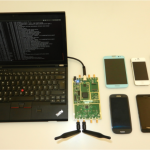
Enlarge (credit: Shaik, et al. ) Researchers have devised a low-cost way to discover the precise location of smartphones using the latest LTE standard for mobile networks , a feat that shatters widely held perceptions that it’s immune to the types of attacks that targeted earlier specifications. The attacks target the LTE specification , which is expected to have a user base of about 1.37 billion people by the end of the year. They require about $1,400 worth of hardware that run freely available open-source software. The equipment can cause all LTE-compliant phones to leak their location to within a 32- to 64-foot (about 10 to 20 meter) radius and in some cases their GPS coordinates, although such attacks may be detected by savvy phone users. A separate method that’s almost impossible to detect teases out locations to within an area of roughly one square mile in an urban setting. The researchers have devised a separate class of attacks that causes phones to lose connections to LTE networks, a scenario that could be exploited to silently downgrade devices to the less secure 2G and 3G mobile specifications. The 2G, or GSM, protocol has long been known to be susceptible to man-in-the-middle attacks using a form of fake base station known as an IMSI catcher  (like the Stingray). 2G networks are also vulnerable to attacks that reveal a phone’s location within about 0.6 square mile . 3G phones suffer from a similar tracking flaw . The new attacks, described in a research paper published Monday, are believed to be the first to target LTE networks, which have been widely viewed as more secure than their predecessors. Read 12 remaining paragraphs | Comments

See original article:
Low-cost IMSI catcher for 4G/LTE networks tracks phone’s precise locations