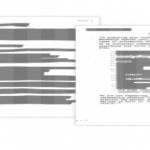
The National Security Letter spy tool has been uncloaked, and it’s bad

It took 11 years to finally unveil what the FBI demands in a National Security Letter. How it evolved over the years is shown above. (credit: ACLU ) The National Security Letter (NSL) is a potent surveillance tool that allows the government to acquire a wide swath of private information—all without a warrant. Federal investigators issue tens of thousands of them each year to banks, ISPs, car dealers, insurance companies, doctors, and you name it. The letters don’t need a judge’s signature and come with a gag to the recipient, forbidding the disclosure of the NSL to the public or the target. Nicholas Merrill (credit: Wikipedia ) For the first time, as part of a First Amendment lawsuit, a federal judge ordered the release of what the FBI was seeking from a small ISP as part of an NSL. Among other things, the FBI was demanding a target’s complete Web browsing history, IP addresses of everyone a person has corresponded with, and records of all online purchases, according to a court document unveiled Monday. All that’s required is an agent’s signature denoting that the information is relevant to an investigation. “The FBI has interpreted its NSL authority to encompass the websites we read, the Web searches we conduct, the people we contact, and the places we go. This kind of data reveals the most intimate details of our lives, including our political activities, religious affiliations, private relationships, and even our private thoughts and beliefs,” said Nicholas Merrill, who was president of Calyx Internet Access in New York when he received the NSL targeting one of his customers in 2004. Read 6 remaining paragraphs | Comments

Continued here:
The National Security Letter spy tool has been uncloaked, and it’s bad

Managing a 100-percent renewable grid, without batteries

(credit: US DOE ) Stanford researcher Mark Jacobson likes to take current thinking about renewable energy and supersize it. Rather than aiming for 50 percent renewables, like California is , he has analyzed what it would take for each of the 50 states to go fully renewable . It would apparently involve so many offshore wind turbines that hurricanes headed toward the States would be suppressed. Now, he and a few collaborators are back with a more detailed look at how to manage the grid stability issues that come with large amounts of intermittent generators, like photovoltaic panes and wind turbines. Normally, issues of intermittency are expected to be handled by fossil fuel power and batteries. But the new analysis suggests we don’t need any of that—and we don’t need biofuels or nuclear, either. Instead, it suggests we could manage a 100-percent renewable grid through a combination of hydrogen production and heat storage. None of this is entirely new. People have been talking about generating hydrogen from renewable energy for years—with a fuel cell, it can be used to power cars or generate electricity as needed. And the paper cites an existing community that’s already using solar energy to generate heat that’s stored under ground. But, as with Jacobson’s past analyses, they are taken to new scales here. Read 11 remaining paragraphs | Comments

More:
Managing a 100-percent renewable grid, without batteries

Android adware can install itself even when users explicitly reject it

(credit: Lookout) Two weeks ago, Ars reported on newly discovered Android adware that is virtually impossible to uninstall . Now, researchers have uncovered malicious apps that can get installed even when a user has expressly tapped a button rejecting the app. The hijacking happens after a user has installed a trojanized app that masquerades as an official app available in Google Play and then is made available in third-party markets. During the installation, apps from an adware family known as Shedun try to trick people into granting the app control over the Android Accessibility Service , which is designed to provide vision-impaired users alternative ways to interact with their mobile devices. Ironically enough, Shedun apps try to gain such control by displaying dialogs such as this one, which promises to help weed out intrusive advertisements. From that point on, the app has the ability to display popup ads that install highly intrusive adware. Even in cases where a user rejects the invitation to install the adware or takes no action at all, the Shedun-spawned app uses its control over the accessibility service to install the adware anyway. Read 4 remaining paragraphs | Comments

View original post here:
Android adware can install itself even when users explicitly reject it

Chicago issued $2.4 million in bogus traffic tickets from speed cameras

The Chicago Tribune reported Wednesday as part of an exhaustive investigation that as many as 110,000 “questionable” speeding tickets totalling $2.4 million have been issued in the past two years in Chicago as part of a speed-camera program designed to keep kids safe near parks and schools. …City Hall has systematically ticketed drivers near schools without the legally required evidence of a schoolchild in sight. A Tribune random-sample analysis puts the number of those questionable tickets at about 110,000. And while it was pitched by the mayor as a way to protect youngsters walking near parks and schools, the most prolific cameras in the 2-year-old “Children’s Safety Zone” initiative can be found along major roadways, where crash data show child pedestrians are least likely to be struck by speeders. The lengthy  report is worth a read. Among other things, the report found that Mayor Rahm Emanuel’s speed camera program issued 22,000 tickets for speeding near parks and another 11,000 tickets near parks that were closed for the night. What’s more, another 28,000 citations “were issued at cameras plagued by problems with warning signs that did not meet the minimum legal requirements.” And at least 62,000 tickets were given during the summer “when school activity is so limited that drivers are left to guess whether school is in session or not.” Read 2 remaining paragraphs | Comments

Read the original:
Chicago issued $2.4 million in bogus traffic tickets from speed cameras

Visual Studio now supports debugging Linux apps; Code editor now open source

The Visual Studio Code editor, now open source, editing TypeScript on OS X. (credit: Microsoft) NEW YORK—Developers can now debug apps running on Linux servers or IoT devices from the comfort of Visual Studio. Microsoft today released a preview of a Visual Studio extension that adds remote debugging using GDB of Linux software. This was one of many announcements made at Microsoft’s Connect developer event today as the company aims to give its developer platform the broadest reach it’s ever had, able to handle Android, iOS, and Linux development, alongside the more expected Azure, Office, and Windows. Visual Studio 2015 already made big strides in this direction, and Microsoft is pushing ahead to try to make Visual Studio the best development environment around. The free and cross-platform Chromium-based code editor Visual Studio Code is being open sourced today. A new build has also been published, adding an extension mechanism to the editor. There are already some 60 extensions available, including new language support (such as Go language), richer debugging, code linters, and more. Read 10 remaining paragraphs | Comments

Link:
Visual Studio now supports debugging Linux apps; Code editor now open source

Feds bugged steps of Silicon Valley courthouse

(credit: James Vaughan ) Defense attorneys have asked a federal judge to throw out more than 200 hours of conversations FBI agents recorded using hidden microphones planted on the steps of a California county courthouse. The lawyers are representing defendants accused of engaging in an illicit real estate bid-rigging and fraud conspiracy. The steps to the San Mateo County courthouse are frequently the scene of public auctions for foreclosed homes. Federal prosecutors have admitted that on at least 31 occasions in 2009 and 2010, FBI agents used concealed microphones to record auction participants as they spoke, often in hushed voices with partners, attorneys, and others. Because the federal agents didn’t obtain a court order, the defense attorneys argue the bugging violated Constitutional protections against unreasonable searches and seizures. In a court brief filed Friday in the case, attorneys wrote: Read 4 remaining paragraphs | Comments

Read More:
Feds bugged steps of Silicon Valley courthouse

$635 poop pills cure deadly gastrointestinal infection

(credit: Ana C./ Flickr ) The country’s first stool bank , OpenBiome, is now selling capsules of fecal matter to treat life-threatening Clostridium difficile , or C. diff, infections. The $635 pill-based therapy, a type of fecal transplant, is highly effective against the difficult-to-treat gastrointestinal infection, according to results of a pilot study. A single dose, which includes a whopping 30 pills, cured 70 percent of patients. A second dose bumped the success rate up to 94 percent. The treatment, currently being sold only to doctors, may offer an easier alternative to other effective fecal transplant routes, namely  colonoscopies, nasal tubes, and enemas . Scientists have known for years that fecal transplants in general are highly effective against C. diff infections, which can be extremely difficult to cure. The infection can cause severe, recurring diarrhea. It can be resistant to antibiotic treatments, and sometimes it turns deadly. In the US, C. diff causes more than 450,000 infections a year, leading to about 15,000 deaths . Read 3 remaining paragraphs | Comments

More:
$635 poop pills cure deadly gastrointestinal infection

Microsoft considers blocking SHA-1 certificates after cost of collisions slashed

Microsoft may phase out support for TLS certificates that use the SHA-1 hashing algorithm as early as June 2016 . The decision comes in the wake of recent calculations that suggest generating collisions is quicker and cheaper than previously anticipated. SHA-1 is a hash algorithm, used to derive a 128-bit value from an arbitrary input. Its intent is for collisions—different inputs that hash to the same 128-bit value—to be hard to generate. As compute power has steadily grown over the years, it becomes quicker and cheaper to generate collisions. It was previously projected by Bruce Schneier , based on the observed growth of compute power, that creating SHA-1 collisions would be within reach of criminals by 2018 at a cost of about $173,000. On this basis, Microsoft intended to cease supporting the use of new SSL/TLS certificates using SHA-1 on January 1, 2016 and all SHA-1 SSL/TLS certificates on January 1, 2017. The new cost and performance estimates, however, suggest that the cost is both drastically lower—$75,000 to $120,000—and that the compute resources are immediately available through cloud services such as Amazon EC2. This has given browser vendors little option but to reconsider the previous 2017 timetable for retiring support of SHA-1. Read 2 remaining paragraphs | Comments

Visit link:
Microsoft considers blocking SHA-1 certificates after cost of collisions slashed

First-of-its-kind gene-edited cells treat baby’s leukemia

(credit: Sharon Lees/Great Ormond Street Hospital ) With genetic tweaks and snips, researchers created cancer-busting immune cells that, so far, seem to have wiped out a life-threatening form of leukemia in a one-year-old girl. The new cells are one-size-fits-all, beating out earlier cell-based cancer therapies that required custom engineering of each patient’s own immune cells. If proven effective in more trials, the new, generic cells could offer an easy, off-the-shelf treatment for life-threatening forms of leukemia. “It is something we’ve been waiting for,”  said Stephan Grupp, a professor of pediatrics at the University of Pennsylvania, who was not involved with the research. Previous methods requiring engineering cells, specifically T cells, from every single patient could be slow, costly, and impossible in some patients with low T cell counts. “The innovation here is gene-editing T cells so that one person’s T cells could be given to another even if they are not a donor match,” he said in a statement. Read 5 remaining paragraphs | Comments

Continued here:
First-of-its-kind gene-edited cells treat baby’s leukemia

Changing the Earth’s climate by covering the deserts with solar panels

Solar panels in Chile’s Atacama desert. (credit: OPIC.gov ) Currently, the Earth’s inhabitants are consuming about 17.5TeraWatts of power each year. It’s estimated that an aggressive rollout of solar panels could generate at least 400TW, and possibly much, much more. But that would involve paving over a lot of the Earth’s surface with solar panels, in many cases covering relatively reflective sand with dark black hardware. Could this have its own effects on the climate? The answer turns out to be remarkably complex. That’s in part because the panels don’t simply absorb the energy of the light—a fraction of it gets converted to electricity and shipped elsewhere. A team of US and Chinese scientists decided to account for all of this and found out that massive solar installations would cause changes in the climate, but the changes would be minor compared to what we’d see from continued greenhouse gas emissions. The authors created a number of scenarios to tease out the influence of the panels, and they used climate models to examine the changes they drove. The first method involved covering most of the Earth’s deserts and urban areas with solar panels (this would, of course, lead to a ridiculous overproduction of electricity). In a second, the power harvested by these panels was then sent to urban areas and dissipated as heat. Finally, for a somewhat more realistic view, they simply covered most of the deserts of Egypt with panels. Read 5 remaining paragraphs | Comments

Read the original post:
Changing the Earth’s climate by covering the deserts with solar panels