Bringing Windows 8-style multitasking to iPads isn’t as simple as it seems

“I just need to write about this Murloc rush deck. For work.” Aurich Lawson Apple is planning to add a split-screen multitasking mode to its iPads in iOS 8, according to “sources with knowledge of the enhancement in development” speaking to 9to5Mac . The feature will supposedly allow two applications to run side-by-side while the tablet is in landscape mode, not unlike the similar Snap feature in Windows 8.1 or the multi-window mode supported on many of Samsung’s phones and tablets . iPad applications have always used the tablet’s entire screen, which keeps things simple but can feel restrictive for heavy multitaskers. Though 9to5Mac’s sources have been accurate in the past, as with all rumors, this report should be taken with a continuous stream of salt until you actually see Apple get up on stage and announce it. If it’s true, this new display mode implies big changes to the way that iPad apps are designed and the way that they interact with each other, and we wanted to take a look at the hurdles in iOS and the iPad hardware that would have to be dealt with to make this feature a reality. We’ll also be making some informed guesses about how Apple might jump over them. Resolution independence Read 17 remaining paragraphs | Comments

See more here:
Bringing Windows 8-style multitasking to iPads isn’t as simple as it seems

Encrypted or not, Skype communications prove “vital” to NSA surveillance

Last year, Ars documented how Skype encryption posed little challenge to Microsoft abuse filters that scanned instant messages for potentially abusive Web links. Within hours of newly created, never-before-visited URLs being transmitted over the service, the scanners were able to pluck them out of a cryptographically protected stream and test if they were malicious. Now comes word that the National Security Agency is also able to work around Skype crypto—so much so that analysts have deemed the Microsoft-owned service “vital” to a key surveillance regimen known as PRISM . “PRISM has a new collection capability: Skype stored communications,” a previously confidential NSA memo from 2013 declared. “Skype stored communications will contain unique data which is not collected via normal real-time surveillance collection.” The data includes buddy lists, credit card information, call records, user account data, and “other material” that is of value to the NSA’s special source operations. The memo, which was leaked by former NSA contractor Edward Snowden and released Tuesday by Glenn Greenwald to coincide with the publication of his book No Place to Hide , said the FBI’s Electronic Communications Surveillance Unit had approved “over 30 selectors to be sent to Skype for collection.” Read 2 remaining paragraphs | Comments

View post:
Encrypted or not, Skype communications prove “vital” to NSA surveillance

Teen arrested for 30 “swatting” attacks against schools, security reporter

Police in the Canadian city of Ottawa said they arrested a 16-year-old male charged with carrying out so-called “swatting” attacks that targeted 30 North American targets. One of the targets included KrebsOnSecurity reporter Brian Krebs , who was previously on the receiving end of a vicious swatting attack that resulted in a team of police pointing guns at him as he opened the front door of his Virginia home. Krebs said the recent attacks were preceded by taunts from someone controlling the Twitter handle @ProbablyOnion . The last tweet made from that account, made on Thursday, stated: “Still awaiting for the horsies to bash down my door.” The individual didn’t have long to wait. That same day, the 16-year-old was arrested, according to press releases here and here issued by the Ottawa Police Service and the FBI, respectively. Swatting refers to the act of knowingly giving authorities false information about bomb threats, the taking of hostages, or similar threats in progress with the goal of tricking heavily armed police to raid the location of an innocent person or group. According to authorities, the unnamed 16-year-old allegedly carried out swatting attacks on 30 targets, including schools in North America that responded with lockdowns or evacuations. The minor was charged with 60 criminal offenses, including public mischief, mischief to property, uttering death threats, and conveying false info with intent to alarm. Read 1 remaining paragraphs | Comments

Continued here:
Teen arrested for 30 “swatting” attacks against schools, security reporter

Epic announces crowdsourced dev model for next Unreal Tournament

It’s been a long six-and-a-half years since we’ve gotten a new Unreal Tournament game (not counting expansion packs), but today marks the beginning of the end for that wait. Epic announced  that work on a new game, simply titled Unreal Tournament , begins today for PC, Mac, and Linux, and the process will heavily involve participation from the modding and player community from the get go. While a “small team of UT veterans” at Epic will be spearheading the development of the game, everything from design decisions to art direction will primarily “happen in the open, as a collaboration between Epic, UT fans, and [Unreal Engine 4] developers,” Epic says. The developers are inviting everyone from regular players to experienced modders from sites like Polycount to sign up at the Unreal Engine forums and use an official wiki to take direct part in driving the game’s direction. Already, mere minutes after the announcement, those forums are filled with players discussing everything from series maps and weapons they’d like to see return to things like VR headset compatibility. Epic says it will be “many months” until the game is in any sort of playable state, but when it is playable it “will be free. Not free to play, just free.” Source code will be made available directly from GitHub as it is updated, and modders will even be able to fork their own builds if they want to take the project in a new direction. Read 2 remaining paragraphs | Comments

Follow this link:
Epic announces crowdsourced dev model for next Unreal Tournament

New guidelines outline what iPhone data Apple can give to police

If you store your stuff on iCloud, Apple can provide most of that information to law enforcement if it’s requested. Andrew Cunningham We’ve known (or suspected) for some time that Apple can provide data from iOS devices to US law enforcement, whether that data is stored on Apple’s iCloud servers or on a password protected phone or tablet . In an effort to be more transparent about this process, Apple yesterday posted an extensive document describing what data the company can provide to law enforcement and the processes for requesting that data. The document outlines two basic types of data: information stored on Apple’s servers and information stored locally on iOS devices. Information on Apple’s servers includes both data associated with your Apple ID—your basic contact information, customer service records, your transaction history both in Apple’s retail stores and in the online iTunes and App Stores, and iTunes gift card information—and data associated with your iCloud account. All account data stored on Apple’s servers is obtainable “with a subpoena or greater legal process.” The short version is that essentially anything you’ve backed up to or stored on iCloud is available for Apple to fork over to law enforcement, including connection logs and IP addresses you’ve used. Apple has access to 60 days of iCloud mail logs that “include records of incoming and outgoing communications such as time, date, sender e-mail addresses, and recipient e-mail addresses”; any e-mail messages that the user has not deleted; and any other information that can be backed up to iCloud. As of this writing, this list includes contacts, calendars, browser bookmarks, Photo Stream photos, anything that uses the “documents and data” feature (which can include not just word processors but also photo and video apps, games, and data from other applications), and full device backups. Subscriber information requires a “subpoena or greater legal process,” e-mail logs require a court order or search warrant, and e-mail or other iCloud content requires a search warrant. Any iCloud information that the user deletes cannot be accessed. Read 5 remaining paragraphs | Comments

See more here:
New guidelines outline what iPhone data Apple can give to police

Intel and Google boast 11-hour battery life with upcoming Chromebooks

Intel Intel Intel likes Chrome OS. Need proof? The company is apparently the number-two contributor to the operating system’s code after Google itself. Intel and Google also co-hosted a small event in San Francisco today, intended to highlight Intel’s commitment to Chrome OS and the number of PC OEMs that are shipping Intel-equipped Chromebooks. Many of Intel and Google’s announcements were about products we already knew about: there’s a multi-colored HP Chromebox coming in June for an as-yet-undisclosed price, and LG’s Chromebase all-in-one will be here later this month for $349. Both Acer and Dell are also tweaking their existing 11-inch Chromebooks, providing a faster Core i3 CPU option to complement the lower-end Celeron offerings. The Acer version will cost $349 when it launches later in the summer, while the Dell model will ship later in the year. Intel and Google started by telling us more about Chrome devices we’ve already met. Intel The truly new Chromebooks announced at the presentation used Intel’s Bay Trail platform rather than the more common Haswell chips. These gadgets share a number of characteristics: like the ARM Chromebooks we’ve seen so far, they’re fanless. Intel says they’ll run for “up to” 11 hours, compared to around 10 hours for Haswell designs, and they’ll include Intel’s 802.11ac Wi-Fi adapters instead of the single- and dual-band 802.11n adapters most current Chromebooks use. Bay Trail Chromebooks are going to give up a significant amount of CPU and GPU performance compared to even the slowest Haswell chips, but the other benefits may outweigh that hit. Bay Trail comes to Chromebooks. Intel Asus, Acer, Toshiba, and Lenovo will be the first PC OEMs to ship Bay Trail-based Chromebooks, not counting a basic education-focused reference design that Intel showed off during the presentation. Asus is offering both 11-inch (C200) and 13-inch (C300) Bay Trail Chromebooks with dual-core Bay Trail Celeron chips (the N2830 , to be exact), 2GB of RAM, 16GB of solid-state storage, 1366×768 displays, and 802.11ac. The 11-inch model weighs 2.5 pounds, while the 13-inch model is 3.1 pounds, and the lineup will reportedly start at $250 . The Toshiba and Acer models weren’t shown, and we don’t yet know anything about specific specifications, pricing, or availability for either of them. Lenovo’s Chromebooks are a little more intriguing . The company is offering two models, the N20 and the N20p. Both use 11.6-inch 1366×768 displays, quad-core Bay Trail Celeron chips, 2GB or 4GB of RAM, 16GB of solid-state storage, and about eight hours of battery life. The difference between the two is that the N20p integrates a Yoga-like flexible hinge and a touchscreen that can be flipped backward (though it won’t sit flush against the bottom of the laptop like the regular Yogas will). The standard N20 will start at $279 when it’s available in July, and the N20p will start at $329 in August. The event also played up Chrome OS’ momentum in the marketplace, though no one who spoke used specific sales numbers. They chose instead to focus on other metrics—that seven of the top 20 best-selling laptops on Amazon are Chromebooks, that the Asus Chromebox  has been the best-selling desktop on Amazon since it was introduced, and that Amazon customer reviews on these devices are generally favorable. Eight major PC OEMs are now selling Chrome OS devices, and they’re available in 20 countries (with nine more countries to follow). Chromebooks were initially available from just two PC OEMs, but six more have since joined them. Intel The Q&A session with representatives from Acer, Lenovo, Dell, and Google yielded few substantive answers to the most interesting questions. Can we expect a Chrome OS tablet, as has occasionally been rumored ? Are any of the OEMs planning to build a machine more like the Chromebook Pixel and less like a netbook? What about Chromebooks with larger screens since most of the current crop includes 11.6-inch panels? The reps would only give some version of “we’re always evaluating new form factors” before moving on. Even if the computers highlighted and announced today aren’t mind-blowing individually, the breadth and variety of the Chrome OS ecosystem as a whole has become quite impressive in the last two years. There’s still a conspicuous gap between the Acer C720 and HP Chromebook 11 at the bottom of the laptop pile and the Chromebook Pixel at the top of it, but as of this summer Chrome OS will come in pretty much any form factor you could want. In 2011 all we had were a couple of lackluster netbooks that retailed for $499 . Now you can even grab touch-enabled laptops, mini desktops, and all-in-ones for well below that price. All we need to do is wait another couple of years to see whether this is the birth of a vibrant new post-PC ecosystem or a netbook-style gold rush. Read on Ars Technica | Comments

Read this article:
Intel and Google boast 11-hour battery life with upcoming Chromebooks

ARM: The $20 smartphone will be possible “in the next few months”

Basic smartphones are cheap—and getting cheaper. ARM Smartphone prices have been creeping ever downward in the last few years, and ARM is betting that they’re going to go even lower. AnandTech is reporting from ARM’s Tech Day today , and one of the company’s slides predicts that the cost of a phone with a single-core Cortex A5 chip in it will go as low as $20 within the next few months. Of course, these ultra-low-cost phones won’t be devices tech enthusiasts lust after. ARM notes that even a $25 phone like the Firefox handsets announced at Mobile World Congress  have to cut down on RAM and other specs to hit that price point, and it’s unlikely that something with such low specs could run something like Android satisfactorily. More expensive phones like the $179 Moto G will still be necessary if you want that full smartphone experience on a budget. Still, for those ever-important emerging markets where the smartphone has yet to take off, any OEM that can provide a decent experience for this price is going to fill an important niche. In other news from ARM’s Tech Day, ARM shared some new performance estimates for its upcoming 64-bit Cortex A53 and A57 architectures. The company predicts that chips based on these architectures will be about 1.5 times as fast as the Cortex A7 and A15 architectures they replace when the SoCs are all built on the same 28nm manufacturing process. When moved to a newer 20nm or 16nm manufacturing process, though, the A57 in particular will supposedly be nearly twice as fast as the older A15. Read 1 remaining paragraphs | Comments

View article:
ARM: The $20 smartphone will be possible “in the next few months”

Infecting DVRs with Bitcoin-mining malware even easier than you suspected

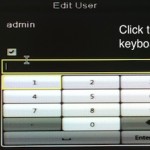
The dialog that appears when users want to manually change the default password on their EPCOM Hikvision S04 DVR. Sans Institute It took just one day for a low-end, Internet-connected digital video recorder to become infected with malware that surreptitiously mined Bitcoins on behalf of the quick-moving attackers. The feat, documented in a blog post published Monday by researchers at the security-training outfit Sans Institute, was all the more impressive because the DVR contained no interface for downloading software from the Internet. The lack of a Wget , ftp, or kermit application posed little challenge for the attackers. To work around the limitation, the miscreants used a series of Unix commands that effectively uploaded and executed a Wget package and then used it to retrieve the Bitcoin miner from an Internet-connected server. Monday’s observations from Sans CTO Johannes Ullrich are part of an ongoing series showing the increasing vulnerability of Internet-connected appliances to malware attacks. In this case, he bought an EPCOM Hikvision S04 DVR off eBay, put it into what he believes was its factory new condition, and connected it to a laboratory “honeypot” where it was susceptible to online attackers. In the first day, it was probed by 13 different IP addresses, six of which were able to log into it using the default username and password combination of “root” and “12345.” Read 4 remaining paragraphs | Comments

View article:
Infecting DVRs with Bitcoin-mining malware even easier than you suspected

Fitbit designer calls Project Ara the “IKEA chair” of smartphones

Magnets, how do they work? Google’s eventual, modular Project Ara smartphone will answer that question and more once its first “millions of units” ship in 2015’s first half. Project Ara To some extent, Gadi Amit, the tech-design guru who owns New Deal Design and helms the team behind devices like Fitbit, is letting go. His latest project forced him to. It’s called Project Ara , a smartphone concept that began as a Motorola product before Google bought the company. Project Ara strays from Amit’s string of simple, elegant, self-contained products. This phone is not like a fitness band or a more efficient camera; it doesn’t solve a single, immediate goal and then step out of the way. Rather, Project Ara demands experimentation and customization, forcing everyone outside of the Project Ara team to become the phone’s designers. In Amit’s eyes, especially in the modern phone era, that has become the point. The mission, even. Read 11 remaining paragraphs | Comments

Taken from:
Fitbit designer calls Project Ara the “IKEA chair” of smartphones

High School senior charged with hacking report-card system

A high school senior in Miami has been arrested on charges claiming he illegally accessed his school’s online report card system and changed grades for him and at least four other students, according to a published report. Jose Bautista, 18, appeared in court Friday, according to WFOR . He reportedly faces charges of intellectual property offense, modifying programs, and an offense against computer users. The student allegedly approached fellow students and asked if they wanted him to change their grades. The principal of Dr. Michael M. Krop Senior High School, the school Bautista attended, said the student gave a written confession detailing the hacking. Bautista’s bond was set at $20,000. He is under house arrest with a GPS monitor. It’s unclear if he will be allowed to graduate or if the other students involved will face any punishment. Read on Ars Technica | Comments

Read this article:
High School senior charged with hacking report-card system