Soylent gets a $1.5 million infusion of venture capital

EVERYBODY SOYLENT. Lee Hutchinson TechCrunch is reporting that Rob Rhinehart’s Soylent, the nutritionally complete meal replacement shake/drink mix, has just closed out a $1.5 million seed funding round from a wide mix of investors led by Andreessen Horowitz and Lerer Ventures. This is on top of the $1.5 million in pre-orders the company already amassed as part of its crazy-successful crowdfunding run earlier this year. The project has been a poster child for crowdfunding success—in fact, the sheer volume of orders has caused its own set of delays in scaling Soylent from a hand-mixed product for a few dozen testers to a mass-produced meal replacement for hundreds of thousands of customers. Rhinehart and company have discussed the ongoing growing pains on the official Soylent blog . The round of funding should give the Soylent crew some breathing room. TechCrunch reports that the company has finalized the 1.0 formulation of the product and will be moving some amount of manufacturing in-house. The company is also moving offices from San Francisco to Los Angeles, and Soylent will bring in a “culinary director” to help evolve the product’s flavor and (currently extremely chalky) mouthfeel. Read 2 remaining paragraphs | Comments        

Visit link:
Soylent gets a $1.5 million infusion of venture capital

Obama administration launches “tech surge” to improve Healthcare.gov

The Department of Health and Human Services announced on October 20 that the agency has launched a “tech surge” to make improvements to the troubled Affordable Care Act (ACA) health insurance exchange website , HealthCare.gov. The move comes as President Barack Obama reportedly prepares to speak about the site’s issues at an event today highlighting the ACA, frequently referred to as “Obamacare.” Secretary of Health and Human Services Kathleen Sebelius had previously blamed most of the problems experienced by citizens visiting the site on unexpected demand. But as problems have continued, the White House has grown increasingly frustrated with the site’s performance. An administration official told the Washington Post that the president and others in the administration “find [the problems with HealthCare.gov] unacceptable.” While HealthCare.gov is being operated almost entirely by a team of contractors, HHS is now stepping in to take an active role in resolving the site’s problems. In a blog post , an unidentified agency spokesperson wrote “Our team is bringing in some of the best and brightest from both inside and outside government to scrub in with the team and help improve HealthCare.gov.” Read 2 remaining paragraphs | Comments        

Original post:
Obama administration launches “tech surge” to improve Healthcare.gov

New York City is getting wireless EV chargers disguised as manholes

Hevo Power Imagine an electric Pepsi delivery truck in Manhattan. It makes dozens of stops at the same locations, day in and day out. Now what if at each stop—or every other stop—it could wirelessly top up its battery pack as the driver drops off another case of sugar water. That’s what Hevo Power is aiming to do with a new wireless charging system that blends into its surroundings by aping a manhole. “I was walking down the street, pondering how wireless charging could be deployed,” Hevo’s CEO and founder Jeremy McCool told WIRED. “I was standing at 116th and Broadway, and I was looking down and saw a manhole cover and thought, that’s the ticket. There are no cords, no hazards. Everything can be underneath the manhole cover.” The result is a new system of wireless charging stations that Hevo plans to deploy in New York’s Washington Square Park in early 2014, beginning with two Smart ForTwo electric vehicles operated by NYU. Read 8 remaining paragraphs | Comments        

Read More:
New York City is getting wireless EV chargers disguised as manholes

Intel’s next-generation Broadwell CPUs delayed due to yield problems

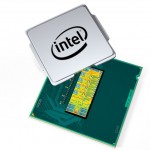
Intel’s next-generation CPUs will arrive slightly later than expected. Intel During the company’s third quarter earnings call yesterday, CEO Brian Krzanich announced that production of Intel’s next-generation Broadwell CPUs would be delayed slightly due to manufacturing issues. CNET reports that a “defect density issue” in the new 14nm manufacturing process was causing lower-than-expected yields, and that Intel’s first round of fixes didn’t improve the yields by the expected amount. Krzanich expressed “confidence” that the issue had been fixed and that it was just a “small blip in the schedule,” and that the CPUs would begin mass production in the first quarter of 2014 rather than the fourth quarter of 2013 as expected. Broadwell’s successor, codenamed Skylake and due in 2015, will apparently not be affected by the delay. Broadwell is a “tick” on Intel’s CPU roadmap, a refined version of the current Haswell architecture built on a new manufacturing process. Intel typically doesn’t introduce a new architecture and a new manufacturing process simultaneously to reduce the likelihood and severity of manufacturing issues like these. Even with the delay, Intel will still be producing 14nm chips while most of its chipmaking competitors (including TSMC and Samsung) are rolling out their 20nm processes. Intel hasn’t gone into much detail on what Broadwell will bring to the table, but smart money says that it will further reduce power usage over Haswell while also increasing CPU and integrated GPU performance incrementally. The company announced at its Intel Developer Forum this year that it was seeing a ” 30 percent power improvement ” over Haswell in early production samples, a number which may stand to improve as the process matures and yields get better. Read 1 remaining paragraphs | Comments        

More:
Intel’s next-generation Broadwell CPUs delayed due to yield problems

New effort to fully audit TrueCrypt raises over $16,000 in a few short weeks

For nearly a decade now, TrueCrypt has been one of the trusty tools in a security-minded user’s toolkit. There’s just one problem, though. No one knows who created the software, and worse still, no one has ever conducted a full security audit on it—until now. Since last month, a handful of cryptographers have newly discussed problems and alternatives to the popular application, which lead on Monday to a public call to perform a full security audit on TrueCrypt. As of Tuesday afternoon, that fundraiser reached over $16,000, making a proper check more likely. Much of those funds came from a single $10,000 donation from an Atlanta-based security firm. “We’re now in a place where we have nearly—but not quite enough—to get a serious audit done,” wrote Matthew Green , a  well-known cryptography professor at Johns Hopkins University, on Twitter. Read 3 remaining paragraphs | Comments        

See original article:
New effort to fully audit TrueCrypt raises over $16,000 in a few short weeks

US indicts suspected Anonymous members for leading 2010 “Operation Payback”

Back in 2010, “Operation Payback” involved a series of distributed denial of service (DDoS) attacks against anti-piracy websites as a way to protest what some members of Anonymous viewed as an overly greedy intellectual property industry. The attack was later revived in early 2011. On Thursday, 13 men were indicted (PDF) in federal court in Virginia on one count of Conspiracy to Intentionally Cause Damage to a Protected Computer. They are accused of using the well-known Low-Orbit Ion Cannon application to conduct DDoS attacks on the Recording Industry Association of America, the Motion Picture Association of America, the United States Copyright Office of the Library of Congress, Visa, MasterCard, and Bank of America. According to the indictment, the victims suffered “significant damage, ” noting specifically that MasterCard suffered at least $5, 000 in losses during a one-year period. (For the record, MasterCard profited $415 million in 2010.) Read 8 remaining paragraphs | Comments        

View post:
US indicts suspected Anonymous members for leading 2010 “Operation Payback”

Ubuntu’s controversial Mir window system won’t ship with 13.10 desktop

Ubuntu 13.04. Ubuntu 13.10 (“Saucy Salamander”) is scheduled for a final release on Oct. 17, but the OS won’t include what was perhaps the biggest and most controversial change planned for the desktop environment. Canonical announced in March that it would replace the X window system with Mir, a new display server that will eventually work across phones, tablets, and desktops. It has proven controversial, with Intel rejecting Ubuntu patches because Canonical’s development of Mir meant it stopped supporting Wayland as a replacement for X. Mir will ship by default on Ubuntu Touch for phones (but not tablets) this month, allowing a crucial part of Ubuntu’s mobile plans to go forward. However, it won’t be the default system on the desktop, because XMir—an X11 compatibility layer for Mir—isn’t yet able to properly support multi-monitor setups. This is a step back from Canonical’s original plan to “Deliver Mir + XMir + Unity 7 on the [13.10] desktop for those cards that supported it, and fall back to X for those that don’t.” Read 5 remaining paragraphs | Comments        

Link:
Ubuntu’s controversial Mir window system won’t ship with 13.10 desktop

Microsoft: “System processing” takes up 10 percent of Xbox One GPU time

Wired The Xbox One’s ability to run up to four apps in the background (or on the side via Snap mode) during gameplay and to switch from a game to those apps almost instantaneously obviously comes at some cost to the system’s maximum theoretical gaming performance. Now, thanks to an interview with Xbox technical fellow Andrew Goossen over at Digital Foundry we have some idea of the scale of that performance cost. “Xbox One has a conservative 10 percent time-sliced reservation on the GPU for system processing, ” Goossen told the site. “This is used both for the GPGPU processing for Kinect and for the rendering of concurrent system content such as snap mode.” It’s important to note that additional processing time for the next-generation Kinect sensor is included in that 10 percent number. Still, setting aside nearly a tenth of the GPU’s processing time to support background execution of non-gaming apps is a bit surprising. Read 5 remaining paragraphs | Comments        

Link:
Microsoft: “System processing” takes up 10 percent of Xbox One GPU time

How the FBI found Miss Teen USA’s webcam spy

RATer’s moniker was “cutefuzzypuppy.” Aurich Lawson / Thinkstock The sextortionist who snapped nude pictures of Miss Teen USA Cassidy Wolf through her laptop’s webcam has been found and arrested, the FBI revealed yesterday. 19-year old Jared James Abrahams, a California computer science student who went by the online handle “cutefuzzypuppy, ” had as many as 150 “slave” computers under his control during the height of his webcam spying in 2012. Watching all of those webcams to see when a young woman changes her clothes takes a serious time commitment, and Abrahams made one; he “was always at his computer, ” according the FBI complaint against him. Abrahams yesterday turned himself in after the complaint was unsealed, and a federal judge released him on a $50, 000 bond. Anatomy of a RATer How did Abrahams get his start learning the intricacies of remote administration tools (RATs), the malware used to spy on his victims? Not surprisingly, he was a regular user of hackforums.net, which features a large RAT forum that I profiled earlier this year . As cutefuzzypuppy, Abrahams asked for plenty of help distributing software like DarkComet to victims, since he “suck[ed] at social engineering” and needed to find better ways to spread his spyware. Read 14 remaining paragraphs | Comments        

Read more here:
How the FBI found Miss Teen USA’s webcam spy

2013 iMac teardowns reveal SSD slots, soldered-in CPU in the 21.5” model

All iMacs now leave you an empty PCIe SSD slot to use if you don’t go in for the Fusion Drive or SSD upgrade, but it’s still hard to get at. iFixit Just one day after Apple quietly refreshed its iMac lineup with Intel’s new Haswell processors, the teardown artists at iFixit have pulled both the 21.5-inch and 27-inch models apart to see what makes them tick. One of our chief complaints about last year’s 21.5-inch iMac was how difficult it was to upgrade, and that remains true of this year’s model. You can still access the computer’s two RAM slots if you’re brave enough to attempt the teardown process (which includes tearing apart and replacing some foam padding), and Apple has included an empty PCIe slot on the base model where last year’s model only had an empty spot on the system board. However, the low-end iMac’s use of Intel’s Iris Pro 5200 integrated GPUs means that it uses one of Intel’s R-series CPUs, and those CPUs only come in a soldered-on ball-grid array (BGA) package. The 27-inch model proves a bit easier to upgrade: it still has four user-accessible RAM slots, still leaves people who opt out of the Fusion Drive or SSD upgrades an empty PCIe slot to use, and still uses a socketed Intel CPU for those of you who want to take the trouble to upgrade that component yourselves after the fact. Both the 21.5-inch and 27-inch iMacs were also confirmed to be using triple-antenna (3×3:3) 802.11ac configurations, meaning the iMacs will be capable of the standard’s maximum theoretical transfer speed of 1.3Gbps where the 2013 MacBook Airs used a two-antenna setup capable of 867Mbps speeds. Read 1 remaining paragraphs | Comments        

Continue Reading:
2013 iMac teardowns reveal SSD slots, soldered-in CPU in the 21.5” model