Watching two waves of hot lava in the Solar System’s largest volcano

Enlarge / Loki Patera, in the lower-center, has a central island that divides two waves of molten material. (credit: NASA/JPL/USGS ) Volcanic activity appears to be a common feature in our Solar System; we have evidence of it on three planets and two moons and hints of it elsewhere. But that doesn’t mean all volcanic activity is the same. Venus’ activity is driven by a simple version of plate tectonics. On the Moon, massive lava flows were released by large impacts, and Mars just seems to have vented heat left over from its formation. There are also hints of cryovolcanoes, which belch up ice rather than lava, on some of the bodies of the outer Solar System. But when it comes to sheer volume of activity, all of this takes a back seat to Jupiter’s moon Io. Io is partially molten due to gravitational stress from its proximity to three large moons and a massive planet. The results are active volcanoes and vast pools of molten material on the Moon’s surface. And we just got a good look inside the biggest of them. Slicing up Loki Loki Patera is the most powerful active volcano in the Solar System. It’s an enormous crater with a central island; around that island is a sea of hot material that covers more than 20,000 square kilometers. By all appearances, that hot material isn’t stable, since the entire surface seems to be reworked every few years, temporarily replaced by new hot material. Read 10 remaining paragraphs | Comments

Visit link:
Watching two waves of hot lava in the Solar System’s largest volcano

Today’s Massive Ransomware Attack Was Mostly Preventable—Here’s How To Avoid It

Ransomware may be mostly thought of as a (sometimes costly) nuisance, but when it hinders the ability of doctors and nurses to help people with an emergency medical problems, that qualifies as armed robbery. Read more…

See the original article here:
Today’s Massive Ransomware Attack Was Mostly Preventable—Here’s How To Avoid It

Biggest Global Cyber Attack Ever? 10 WannaCry Ransomware Facts

A global cybersecurity attack involving WannaCry ransomware crippled Microsoft Windows computers across the globe today. Here are 10 facts to know. The post Biggest Global Cyber Attack Ever? 10 WannaCry Ransomware Facts appeared first on ChannelE2E .

Read this article:
Biggest Global Cyber Attack Ever? 10 WannaCry Ransomware Facts

WCry is so mean Microsoft issues patch for 3 unsupported Windows versions

Enlarge (credit: Health Service Journal) A day after a ransomware worm infected 75,000 machines in 100 countries, Microsoft is taking the highly unusual step of issuing patches that immunize Windows XP, 8, and Server 2003, operating systems the company stopped supporting as many as three years ago. The company also rolled out a signature that allows its Windows Defender antivirus engine to provide “defese-in-depth” protection. The moves came after attackers on Friday used a recently leaked attack tool developed by the National Security Agency to virally spread ransomware known as WCry . Within hours, computer systems around the world were crippled, prompting hospitals to turn away patients and telecoms, banks and companies such as FedEx to turn off computers for the weekend. The chaos surprised many security watchers because Microsoft issued an update in March that patched the underlying vulnerability in Windows 7 and most other supported versions of Windows. (Windows 10 was never vulnerable.) Friday’s events made it clear that enough unpatched systems exist to cause significant outbreaks that could happen again in the coming days or months. In a blog post published late Friday night , Microsoft officials wrote: Read 9 remaining paragraphs | Comments

More here:
WCry is so mean Microsoft issues patch for 3 unsupported Windows versions

Google Found Over 1,000 Bugs In 47 Open Source Projects

Orome1 writes: In the last five months, Google’s OSS-Fuzz program has unearthed over 1, 000 bugs in 47 open source software projects… So far, OSS-Fuzz has found a total of 264 potential security vulnerabilities: 7 in Wireshark, 33 in LibreOffice, 8 in SQLite 3, 17 in FFmpeg — and the list goes on… Google launched the program in December and wants more open source projects to participate, so they’re offering cash rewards for including “fuzz” targets for testing in their software. “Eligible projects will receive $1, 000 for initial integration, and up to $20, 000 for ideal integration” — or twice that amount, if the proceeds are donated to a charity. Read more of this story at Slashdot.
View article:
Google Found Over 1,000 Bugs In 47 Open Source Projects

Microsoft Finally Bans SHA-1 Certificates In Its Browsers

An anonymous reader quotes ZDNet: With this week’s monthly Patch Tuesday, Microsoft has also rolled out a new policy for Edge and Internet Explorer that prevents sites that use a SHA-1-signed HTTPS certificate from loading. The move brings Microsoft’s browsers in line with Chrome, which dropped support for the SHA-1 cryptographic hash function in January’s stable release of Chrome 56, and Firefox’s February cut-off… Apple dropped support for SHA-1 in March with macOS Sierra 10.12.4 and iOS 10.3… Once Tuesday’s updates are installed, Microsoft’s browsers will no longer load sites with SHA-1 signed certificates and will display an error warning highlighting a security problem with the site’s certificate. Read more of this story at Slashdot.

View original post here:
Microsoft Finally Bans SHA-1 Certificates In Its Browsers

50 floating screens will clean the Pacific garbage patch next year

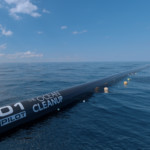
The Ocean Cleanup , a Dutch foundation that aims to deal with plastics polluting our seas, says it’s finally ready to put its technology to work. In a statement released today, the organization has revealed that it plans to start cleaning up the Great Pacific Garbage Patch in early 2018 using its newly redesigned cleaning system. That garbage patch is the biggest collection of debris in the ocean, a massive soup of visible and microscopic plastic particles poisoning marine life. The ship captain who discovered it in 2003 said he “never found a clear spot” in the week it took to cross the region. While Boyan Slat (the organization’s founder) originally envisioned trapping plastic trash with one large screen tethered to the ocean floor, the new design is smaller, sturdier and can save the group a ton of money. Instead of deploying a 60-mile stationary screen, they plan on releasing 50 smaller ones that measure 0.6 miles in length. They’ll weigh the floating screens down with anchor, so they can move with the currents like plastics do, albeit a bit slower in order to trap debris. Slat told FastCompany that he expected the original design to clean up half of the massive garbage patch in 10 years for $320 million. Now, he expects the new design to cut that timespan in half and to cost the group significantly less than that amount. Since he and his team still need to fund the project, though, they plan to use the plastic they collect to make items they can sell, such as sunglasses, chairs and car bumpers. Source: The Ocean Cleanup

Link:
50 floating screens will clean the Pacific garbage patch next year

Scientists Finally Know What Makes These Weird Glass Droplets So Incredibly Strong

Something unusual happens when a drop of molten glass falls into water. As it cools, it creates a crystal clear tadpole-like droplet that’s bulletproof on one end, but impossibly fragile on the other. We’ve known about these droplets for 400 years, but scientists have only recently figured out what makes them almost… Read more…

Excerpt from:
Scientists Finally Know What Makes These Weird Glass Droplets So Incredibly Strong

Massive ransomware attack hits UK hospitals, Spanish banks

Enlarge (credit: Health Service Journal) A large number of hospitals, GPs, and walk-in clinics across England have been locked down by a ransomware attack, reports suggest. There are also some reports of a ransomware attack hitting institutions in Portugal and Spain, though it isn’t known if the incidents are connected. NHS England says it is aware of the issue, but hasn’t yet issued an official statement. At this point it isn’t clear whether a central NHS network has been knocked offline by the ransomware, or whether individual computers connected to the network are being locked out. In any case, some hospitals and clinics are reporting that their computer systems are inaccessible and some telephone services are down too. Read 7 remaining paragraphs | Comments

See more here:
Massive ransomware attack hits UK hospitals, Spanish banks