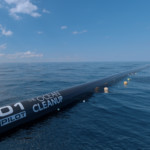
The Ocean Cleanup , a Dutch foundation that aims to deal with plastics polluting our seas, says it’s finally ready to put its technology to work. In a statement released today, the organization has revealed that it plans to start cleaning up the Great Pacific Garbage Patch in early 2018 using its newly redesigned cleaning system. That garbage patch is the biggest collection of debris in the ocean, a massive soup of visible and microscopic plastic particles poisoning marine life. The ship captain who discovered it in 2003 said he “never found a clear spot” in the week it took to cross the region. While Boyan Slat (the organization’s founder) originally envisioned trapping plastic trash with one large screen tethered to the ocean floor, the new design is smaller, sturdier and can save the group a ton of money. Instead of deploying a 60-mile stationary screen, they plan on releasing 50 smaller ones that measure 0.6 miles in length. They’ll weigh the floating screens down with anchor, so they can move with the currents like plastics do, albeit a bit slower in order to trap debris. Slat told FastCompany that he expected the original design to clean up half of the massive garbage patch in 10 years for $320 million. Now, he expects the new design to cut that timespan in half and to cost the group significantly less than that amount. Since he and his team still need to fund the project, though, they plan to use the plastic they collect to make items they can sell, such as sunglasses, chairs and car bumpers. Source: The Ocean Cleanup
Visit link:
50 floating screens will clean the Pacific garbage patch next year

 President Trump on Thursday signed a long-delayed executive order on cybersecurity that “makes clear that agency heads will be held accountable for protecting their networks, and calls on government and industry to reduce the threat from automated attacks on the internet, ” reports The Washington Post. From the report: Picking up on themes advanced by the Obama administration, Trump’s order also requires agency heads to use Commerce Department guidelines to manage risk to their systems. It commissions reports to assess the country’s ability to withstand an attack on the electric grid and to spell out the strategic options for deterring adversaries in cyberspace. [Thomas Bossert, Trump’s homeland security adviser] said the order was not, however, prompted by Russia’s targeting of electoral systems last year. In fact, the order is silent on addressing the security of electoral systems or cyber-enabled operations to influence elections, which became a significant area of concern during last year’s presidential campaign. The Department of Homeland Security in January declared election systems “critical infrastructure.” The executive order also does not address offensive cyber operations, which are generally classified. This is an area in which the Trump administration is expected to be more forward-leaning than its predecessor. Nor does it spell out what type of cyberattack would constitute an “act of war” or what response the attack would invite. “We’re not going to draw a red line, ” Bossert said, adding that the White House does not “want to telegraph our punches.” The order places the defense secretary and the head of the intelligence community in charge of protecting “national security” systems that operate classified and military networks. But the secretary of homeland security will continue to be at the center of the national plan for protecting critical infrastructure, such as the electric grid and financial sector. Read more of this story at Slashdot.