Amazon and Microsoft, beware—VMware cloud is more ambitious than we thought

vCloud Hybrid Service integrates with on-premises VMware deployments. VMware VMware today announced that vCloud Hybrid Service , its first public infrastructure-as-a-service (IaaS) cloud, will become generally available in September. That’s no surprise, as we already knew it was slated to go live this quarter. What is surprising is just how extensive the cloud will be. When first announced, vCloud Hybrid Service was described as infrastructure-as-a-service that integrates directly with VMware environments. Customers running lots of applications in-house on VMware infrastructure can use the cloud to expand their capacity without buying new hardware and manage both their on-premises and off-premises deployments as one. That’s still the core of vCloud Hybrid Service—but in addition to the more traditional infrastructure-as-a-service, VMware will also have a desktops-as-a-service offering, letting businesses deploy virtual desktops to employees without needing any new hardware in their own data centers. There will also be disaster recovery-as-a-service, letting customers automatically replicate applications and data to vCloud Hybrid Service instead of their own data centers. Finally, support for the open source distribution of Cloud Foundry and Pivotal’s deployment of Cloud Foundry  will let customers run a platform-as-a-service (PaaS) in vCloud Hybrid Service. Unlike IaaS, PaaS tends to be optimized for building and hosting applications without having to manage operating systems and virtual computing infrastructure. Read 8 remaining paragraphs | Comments        

Original post:
Amazon and Microsoft, beware—VMware cloud is more ambitious than we thought

Sources Say Amazon Testing Its Own Wireless Networking Service

Google has captured lots of attention with its municipal fiber efforts in Kansas City and Austin; Amazon, say some anonymous sources, is experimenting with a networking project of its own (distinct from its Whispernet 3G content delivery service) to connect users’ devices to the internet. Rather than fiber, though, Amazon’s tests involve spectrum controlled by satellite communications company Globalstar Inc., according to sources “who asked not to be identified because the test was private. … Amazon continually tries various technologies, and it’s unclear if the wireless network testing is still taking place, said the people. The trial was in the vicinity of Amazon’s Lab126 research facilities in Cupertino, the people said. Lab126 designs and engineers Kindle devices.” Read more of this story at Slashdot.

Visit link:
Sources Say Amazon Testing Its Own Wireless Networking Service

In surveillance era, clever trick enhances secrecy of iPhone text messages

Creative Heroes A security researcher has developed a technique that could significantly improve the secrecy of text messages sent in near real time on iPhones. The technique, which will debut in September in an iOS app called TextSecure, will also be folded into a currently available Android app by the same name. The cryptographic property known as perfect forward secrecy has always been considered important by privacy advocates, but it has taken on new urgency following the recent revelations of widespread surveillance of Americans by the National Security Agency. Rather than use the same key to encrypt multiple messages—the way, say PGP- and S/MIME-protected e-mail programs do—applications that offer perfect forward secrecy generate ephemeral keys on the fly . In the case of some apps, including the OTR protocol for encrypting instant messages , each individual message within a session is encrypted with a different key. The use of multiple keys makes eavesdropping much harder. Even if the snoop manages to collect years worth of someone’s encrypted messages, he would have to crack hundreds or possibly hundreds of thousands of keys to transform the data into the “plaintext” that a human could make sense of. What’s more, even if the attacker obtains or otherwise compromises the computer that his target used to send the encrypted messages, it won’t be of much help if the target has deleted the messages. Since the keys used in perfect forward secrecy are ephemeral, they aren’t stored on the device. Read 7 remaining paragraphs | Comments        

See more here:
In surveillance era, clever trick enhances secrecy of iPhone text messages

Microsoft CEO Steve Ballmer to retire within 12 months

Substantial news out of Redmond this morning: Microsoft CEO Steve Ballmer is retiring within the next 12 months. Ballmer has been a prominent fixture at Microsoft since joining the company in 1980. Prior to becoming the CEO, Ballmer was active in a number of Microsoft divisions, with a particular focus on the sales side of the house. He took over chief executive duties when Bill Gates stepped down in January 2000. Though much pilloried in the tech press for Microsoft’s more recent missteps, including Windows RT and, most famously, Windows Vista, Ballmer’s tenure as CEO has been a positive one for Microsoft—at least from a revenue perspective. Under his leadership, Microsoft’s net income has increased to $23 billion, with annual revenue climbing from $25 billion to $70 billion, with an average annual profit growth of over 16 percent. Read 3 remaining paragraphs | Comments        

Read More:
Microsoft CEO Steve Ballmer to retire within 12 months

After “technical glitch” halts Nasdaq for hours, trading finally resumes

Trading was halted on the Nasdaq stock market for a few hours on Thursday after what was described as a “technical glitch.” No other detailed technical information has been released other than that the snafu involved a problem with the “quote dissemination system” and a “data feed issue.” The exchange , on which many major tech stocks are traded, re-opened  later in the afternoon. As the modern stock market operates almost entirely by computer and happens with crazy-fast speed, this problem is troubling, particularly when there have been a few major technological problems in recent years. Read 4 remaining paragraphs | Comments        

Visit link:
After “technical glitch” halts Nasdaq for hours, trading finally resumes

Scientists Just Figured Out How to Make Lightning-Fast Graphene CPUs

Graphene has the power to change computing forever by making the fastest transistors ever. In theory. We just haven’t figured out how yet. Sound familiar ? Fortunately, scientists have just taken a big step closer to making graphene transistors work for real . Read more…        

Read this article:
Scientists Just Figured Out How to Make Lightning-Fast Graphene CPUs

Get 4K video from your phone’s USB port with the new MHL 3.0 spec

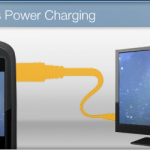
Simultaneous charging is one of MHL’s advantages over Slimport and Miracast. MHL Consortium The Mobile High-Definition Link (MHL) standard already lets you connect certain phones, tablets, and other devices to your TV using adapters that connect to the devices’ micro-USB ports. But the consortium has just announced that an upgrade is coming: the new MHL 3.0 standard adds support for 4K displays. This will allow mobile devices that support the standard to output 3840×2160 (also known as 2160p) video at up to 30 frames per second, an upgrade from MHL 2.0’s 1080p. The updated standard can transmit data and video simultaneously, and a device connected via MHL can draw up to 10 watts of power to charge your device. Backward compatibility with MHL versions 1.x and 2.x, HDCP 2.2 DRM support, and 7.1 channel surround sound support are also part of the standard. The MHL standard competes with a few standards (as well as Apple’s proprietary AirPlay), all of which are designed to put your phone or tablet’s display up on your TV. There’s SlimPort (used most prominently in Google’s Nexus 4 and 2013 Nexus 7), a DisplayPort-compatible spec which like MHL uses the micro USB port to connect over HDMI. There’s also Miracast, an Airplay-like standard that uses a Wi-Fi-equipped receiver to beam video to your TV without the use of cables (Miracast support was baked into Android beginning in version 4.2 , but it’s also included in a smattering of other devices). Neither standard supports 4K video at this point, making MHL 3.0 slightly more appealing for those on the bleeding edge of TV technology. Read 1 remaining paragraphs | Comments        

Taken from:
Get 4K video from your phone’s USB port with the new MHL 3.0 spec

Hyperloop—a theoretical, 760 mph transit system made of sun, air, and magnets

Concept sketches of the Hyperloop passenger capsules; note the air intake noses. Tesla Motors The proposed design for the “Hyperloop, ” an ultra-fast transit system that would run between San Francisco and Los Angeles, was revealed today on Elon Musk’s Tesla Motors website. Musk, the founder of SpaceX and Tesla Motors, describes a system that moves pods under low pressure through a tube between the two cities following the I-5 freeway, all within a 56-page PDF document . The Hyperloop would consist of aluminum pods inside a set of two steel tubes, one for each direction of travel. These are connected at each terminus. The tubes would be positioned on top of pylons spaced 100 feet apart holding the tube 20 feet in the air, and the tube would be covered by solar arrays to generate its own power. Inside the tubes, the pods would carry people up to 760 miles per hour. The pods would each carry 28 passengers, departing every two minutes from either location (or every 30 seconds at peak times). So each pod would have about 23 miles between each other while traversing the tube. The transport capacity would therefore be about 840 passengers per hour. Read 15 remaining paragraphs | Comments        

View post:
Hyperloop—a theoretical, 760 mph transit system made of sun, air, and magnets

FBI director calls on private sector to man up, help with cyber threat

Robert Mueller, FBI Director, says Keith and John are his BFFs. FBI FBI Director Robert S. Mueller, CIA Director John Brennan, and National Security Agency (NSA) Director Gen. Keith Alexander shared the stage on August 8 at the International Conference on Cyber Security  (ICCS), an event cohosted by the FBI and Fordham University in New York. The three spoke on a panel about the future of cybersecurity. Mueller spoke about the Lulzec case and how the FBI caught Hector “Sabu” Monsegur , along with how it will deal with increasingly sophisticated hackers and cybercriminals. Key to the bureau’s success, he said, was “focusing on the individuals behind the keyboards”—with the help of the NSA, CIA, and private industry. “I do believe that in the future, the cyber threat will equal or even eclipse the terrorist threat, ” Mueller said in his opening remarks. “And just as partnerships have enabled us to address the terrorist threat, partnerships will enable us to address the cyber threat. But the array of partners critical to defeating the cyber threat is different. In this case, the private sector is the essential partner.” Getting into hackers’ heads “In the years to come, we will encounter new intrusion methods, hacking techniques, and other unpleasant surprises, ” Mueller said in his prepared remarks for the panel. “And in response, our nation will continue to develop—as we must—the technical skills and tools to prevent these intrusions and limit their damage.” Read 8 remaining paragraphs | Comments        

Read this article:
FBI director calls on private sector to man up, help with cyber threat

“Hand of Thief” banking trojan doesn’t do Windows—but it does Linux

The administration panel for Hand of Thief. RSA Signaling criminals’ growing interest in attacking non-Windows computers, researchers have discovered banking fraud malware that targets people using the open-source Linux operating system. Hand of Thief, as researchers from security firm RSA have dubbed it , sells for about $2, 000 in underground Internet forums and boasts its own support and sales agents. Its functionality—consisting of form grabbers and backdoor capabilities—is rudimentary compared to Windows banking trojans spawned from the Citadel or Blackhole exploit kits, but that’s likely to change. RSA researcher Limor Kessem said she expects Hand of Thief to become a full-blown banking trojan that includes more advanced features such as the ability to inject attacker-controlled content into trusted bank webpages. “Although Hand of Thief comes to the underground at a time when commercial trojans are high in demand, writing malware for the Linux OS is uncommon, and for good reason, ” Kessem wrote. “In comparison to Windows, Linux’s user base is smaller, considerably reducing the number of potential victims and thereby the potential fraud gains.” Read 5 remaining paragraphs | Comments        

Read More:
“Hand of Thief” banking trojan doesn’t do Windows—but it does Linux