Verizon: Network sabotage during strike disrupted thousands of customers

Poorly maintained equipment, as shown in a union complaint about Verizon maintenance. (credit: Communications Workers of America ) Verizon says its network has suffered 57 incidents of vandalism in seven states in the two weeks since 36,000 workers went on strike . The “incidents of sabotage,” mostly involving the severing of fiber optic cables or damage to terminal boxes, “have cut off thousands of Verizon customers from critical wireline services,” the company said Wednesday . Under normal conditions, there are only about a half-dozen incidents of sabotage over the course of a year, a Verizon spokesperson told Ars today. Verizon says it is still investigating the incidents and hasn’t pinned the blame on anyone specific. But the company’s announcement pointed out that “these malicious actions take place as Verizon is experiencing a strike.” Verizon reported similar incidents of vandalism during another  strike in 2011 . Read 10 remaining paragraphs | Comments

Read the original:
Verizon: Network sabotage during strike disrupted thousands of customers

‘A Beautiful Planet’ offers a bold new look at Earth in IMAX 3D

IMAX films shot in space aren’t anything new, but with A Beautiful Planet , longtime IMAX director Toni Myers still manages to show us entirely new perspectives of Earth. Shot on the International Space Station by several crews (including internet sensation Scott Kelly) and narrated by Jennifer Lawrence, it’s a groundbreaking film in many respects: It’s the first IMAX space feature to use digital cameras as well as off-the shelf shooters (the Canon EOS C500 and 1D-C). And it’s also the first film from IMAX to use SpaceX’s Dragon spacecraft to ship equipment to the ISS. While A Beautiful Planet uses converted 3D footage (it wasn’t shot with actual 3D cameras), there’s still an immense sense of depth to the imagery. The film also evokes the Spaceship Earth concept, which centers on the idea that we’re all traveling together on an organic craft with limited resources. It’s hard not to be taken aback when you see how dry the Colorado River Basin appears from space, which has led to droughts in California and surrounding states, or when you see how much of Brazil’s rainforests have been destroyed. In many ways, the film is a call to arms for the next generation of would-be environmentalists. Back when the NASA’s space shuttle was running, IMAX was able to get its large 2D and 3D cameras sent up fairly easily. But these days it’s more difficult to get material into orbit, because there’s no space shuttle for sending up large cargo. Luckily, modern digital filmmaking equipment is also far less cumbersome to deal with than it was during the days of the shuttle program. Not only are the cameras significantly smaller, but there’s no need to handle large reels of IMAX film, which weighed around 10 pounds and could record only three minutes at a time. IMAX says the data packs used today are around the size of an iPhone and can record 30 minutes of 4K video. Astronauts were trained to use the cameras by cinematographer James Neihouse, and they were tasked with getting footage from more than 100 targets (though they were also told to “shoot what they saw”). Though much more convenient, there was a bit of a tradeoff with the new hardware. IMAX’s older film cameras delivered stunning footage with a resolution comparable to 12K. But while the digital cameras might not pack in the same level of quality, their footage still looked astounding when projected in 3D on a full-size IMAX screen at Manhattan’s AMC Loews Lincoln Square theater. And despite the lower resolution, the digital cameras still managed to outdo their predecessors with their ability to handle low-light shots. “We would not have the nighttime scenes without the digital dynamic range, ” Myers said in a statement. “What the digital capture did was totally open up that night world to us, with stars, cities at night, lightning and other phenomena that you see at night, like aurora.” Those night scenes are indeed stunning. Viewing Earth in daylight conveys the immensity of the natural world, but at night you also see the impact of human civilization in cities ablaze with electricity. It’s also a reminder of how different even neighboring societies can be: South Korea is one of the brightest spots on Earth at night, but it’s almost complete darkness over the border in North Korea. On the natural side of things, the brief glimpses we get of aurora dancing across Earth’s atmosphere look more like computer-generated effects than something organic. Another first for the film: It took advantage of the International Space Station’s “Cupola, ” a dome-like arrangement of seven large windows, giving astronauts an incredibly wide view outside the craft. That was helpful for their own work taking care of the ISS, but it also allowed for a wide variety of angles for recording footage of Earth. IMAX also developed a special shield that protected the windows when they weren’t being used, which the astronauts were able to control. A Beautiful Planet gives us a clear sense of what it’s like to be on the ISS working alongside some of Earth’s most talented astronauts. We see them exercise, shower and try to maintain a sense of normalcy in a zero-gravity environment. Sure, they’re in space, but their jobs aren’t exactly glamorous. Much of their time is spent running and maintaining experiments. The astronauts also didn’t get any time off to shoot the film — they worked with what little personal time they had. At only 45 minutes, the film is more of a showcase for its incredible footage instead of a deep think piece. (At times it feels like it was written mainly for children.) Still, it makes a big impact: You’ll see things you’ve never seen before, and it gives you a broader sense of our impact on the environment. I’m sure we’ll get an even more immersive space experience with 360-degree video or virtual reality eventually ( Adr1ft comes close ), but at this point, it’s the closest thing to being in orbit.

More here:
‘A Beautiful Planet’ offers a bold new look at Earth in IMAX 3D

Microsoft experiments with DNA storage: 1,000,000,000 TB in a gram

Microsoft is buying ten million strands of DNA from biology startup Twist Bioscience to investigate the use of genetic material to store data. The data density of DNA is orders of magnitude higher than conventional storage systems, with 1 gram of DNA able to represent close to 1 billion terabytes (1 zettabyte) of data. DNA is also remarkably robust; DNA fragments thousands of years old have been successfully sequenced. These properties make it an intriguing option for long-term data archival. Binary data has already been successfully stored as DNA base pairs , with estimates in 2013 suggesting that it would be economically viable for storage of 500 years or more. Read 3 remaining paragraphs | Comments

See the original article here:
Microsoft experiments with DNA storage: 1,000,000,000 TB in a gram

A Comcastic miracle: Data caps will go from 300GB to a terabyte

Comcast today announced  that it will boost its data cap from 300GB per month to 1TB beginning June 1, but will also charge more to customers who want unlimited data. Comcast has been trialling different caps in various cities in preparation for a potential nationwide rollout. Typically, customers would get 300GB per month and have to pay another $10 for each additional 50GB when they go over. Comcast also allowed customers to pay an extra $30 to $35 a month for unlimited data, depending on the city. After the June 1 change, fewer customers will need to buy unlimited data—but it will cost them $50 a month to do so instead of $30 or $35. Overage fees will stay the same, $10 for each additional 50GB. Thus far, Comcast has allowed customers to exceed the cap in three “courtesy months” before charging them overage fees. Read 7 remaining paragraphs | Comments

Read more here:
A Comcastic miracle: Data caps will go from 300GB to a terabyte

7 million unsalted MD5 passwords leaked by Minecraft community Lifeboat

(credit: Lifeboat ) As security breaches go, they don’t get more vexing than this: 7 million compromised accounts that protected passwords using woefully weak unsalted MD5 hashes, and the outfit responsible, still hadn’t disclosed the hack three months after it came to light. And as if that wasn’t enough, the service recommended the use of short passwords. That’s what Motherboard reported Tuesday about Lifeboat , a service that provides custom, multiplayer environments to gamers who use the Minecraft mobile app. The data circulating online included the e-mail addresses and hashed passwords for 7 million Lifeboat accounts. The mass compromise was discovered by Troy Hunt, the security researcher behind the Have I been pwned? breach notification site. Hunt said he had acquired the data from someone actively involved in trading hacked login credentials who has provided similar data in the past. Hunt reported that some of the plaintext passwords users had chosen were so weak that he was able to discover them simply by posting the corresponding MD5 hash into Google. As if many users’ approach to passwords were lackadaisical itself, Lifeboat’s own Getting started guide recommended “short, but difficult to guess passwords” because “This is not online banking.” Read 3 remaining paragraphs | Comments

More:
7 million unsalted MD5 passwords leaked by Minecraft community Lifeboat

4U Storage Pods offer 240TB of storage for 3.6¢/GB

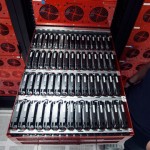
That’s a lot of hard disks. (credit: Backblaze) For the last few years, we’ve looked at the hard disk reliability numbers from cloud backup and storage company Backblaze, but we’ve not looked at the systems it builds to hold its tens of thousands of hard disks. In common with some other cloud companies, Backblaze publishes the specs and designs of its Storage Pods, 4U systems packed with hard disks, and today it announced its sixth generation design , which bumps up the number of disks (from 45 to 60) while driving costs down even further. The first design, in 2009, packed 45 1.5TB disks into a 4U rackable box for a cost of about 12¢ per gigabyte. In the different iterations that have followed, Backblaze has used a number of different internal designs—sometimes using port multipliers to get all the SATA ports necessary, other times using PCIe cards packed with SATA controllers—but it has stuck with the same 45 disk-per-box formula. The new system marks the first break from that setup. It uses the same Ivy Bridge Xeon processor and 32GB RAM of the version 5, adding extra controllers and port multipliers to handle another 15 disks for 60 in total. The result is a little long—it overhangs the back of the rack by about four inches—but it’s packed full of storage. Read 2 remaining paragraphs | Comments

See the original article here:
4U Storage Pods offer 240TB of storage for 3.6¢/GB

Solar Impulse 2 completes its flight across the Pacific

After months of delays and days of flying , Solar Impulse 2 has finished crossing the Pacific . The sunlight-powered aircraft arrived in San Francisco Bay on the night of April 23rd, with an expected touchdown at Moffett Field (as of this writing) around 3AM Eastern on the 24th. This isn’t the toughest stint to date (that honor goes to the 5, 061-mile trip from Japan to Hawaii), but it was no mean feat. Pilot Bertrand Piccard had to travel 2, 717 miles between Hawaii and San Francisco, with only short naps allowed during the 3-day expedition. As daunting as this and the eight previous legs of the trip have been, the tough part isn’t over yet. While flying over the US will be a relative cakewalk (Solar Impulse 2 should reach New York by early June), the aircraft will then have to travel 3, 566 miles to Europe. That’s a straight 5 days in the air, folks. After that, the plane will complete its around-the-world mission by heading to Abu Dhabi. This hasn’t been the quickest adventure given that the aircraft took off back in March 2015. However, speed isn’t really the point. Solar Impulse 2 and its namesake technology are meant to show that green energy can accomplish as spectacular a feat as flying across the planet. If the flight encourages anyone to embrace clean power, it accomplishes its goal. Source: Solar Impulse , YouTube

See more here:
Solar Impulse 2 completes its flight across the Pacific

Volkswagen makes it official—it’s buying back 500,000 2.0L diesels

(credit: Spanish Coches ) In San Francisco this morning, US District Judge Charles Breyer said Volkswagen Group would buy back nearly 500,000 2.0L diesel vehicles which were discovered in September to have software that illegally disabled the emissions control system during normal driving conditions. VW Group is facing some 600 lawsuits that Judge Breyer is overseeing collectively, and the German automaker was compelled by court order to present a plan for fixing the faulty vehicles by today. Specifics of the plan will be hammered out in the coming months. Volkswagen will also set up a fund for people who bought certain diesel Jettas, Golfs, Passats, Beetles, and Audi A3s after 2009. Breyer said this would offer customers “substantial compensation,” on top of the car buyback . Read 7 remaining paragraphs | Comments

Taken from:
Volkswagen makes it official—it’s buying back 500,000 2.0L diesels

Acer unveils a liquid-cooled laptop, simplified UI tablet for “super-seniors”

(credit: Valentina Palladino) NEW YORK—Acer has been busy, and the company showed off some of its latest work at an event in New York City today. Acer announced a slew of new laptops and PCs, many of which build upon some of its other recently released products. The Switch Alpha 12 laptop is the juiced-up version of its Aspire Switch 12 S that was announced back at CES. Instead of the Switch 12 S’s Core M processor, the Alpha 12 supports sixth-generation Core i3U, i5, and i7 processors. But Acer is pushing this device as an efficient and cool laptop above anything else. Engineers built the Switch Alpha 12 with a liquid cooling system and a fanless design. The heat created from the device powers the cooling system, keeping temperatures down. And since it lacks a fan all together, operating sounds are kept quiet. Read 6 remaining paragraphs | Comments

Read More:
Acer unveils a liquid-cooled laptop, simplified UI tablet for “super-seniors”

New Nanowire Batteries Can Be Charged More Than 100,000 Times

Li-on batteries gradually deteriorate as they’re repeatedly drained and recharged. But now researchers from University of California, Irvine have developed a new nano-wire battery that can survive hundreds of thousands of charging cycles. Read more…

More:
New Nanowire Batteries Can Be Charged More Than 100,000 Times