California poised to implement first electronic license plates

Advocates say that electronic license plates can be used to display messages, like EXPIRED. Compliance Innovations This week, the California State Senate approved a bill that would create the nation’s first electronic license plate. Having already passed the state’s assembly, the bill now goes to Gov. Jerry Brown (D) for his signature. The idea is that rather than have a static piece of printed metal adorned with stickers to display proper registration, the plate would be a screen that could wirelessly (likely over a mobile data network) receive updates from a central server to display that same information. In an example shown by a South Carolina vendor, messages such as “STOLEN, ” “EXPIRED, ” or something similar could also be displayed on a license plate. The bill’s language says that for now, the program would be limited to a “pilot program” set to be completed no later than January 1, 2017. Read 17 remaining paragraphs | Comments        

Read More:
California poised to implement first electronic license plates

Lenovo’s new Yoga 2 Pro has the same flexible hinge, 3200×1800 display

The new Yoga 2 Pro is a high-res follow-up to one of the better convertible laptop designs on the market. Lenovo The original IdeaPad Yoga  was one of our favorite early convertible laptops, not least because the “convertible” part didn’t ruin the “laptop” part. Its many contortions were also genuinely useful, even if the weight and exposed keyboard made it a bit too awkward to use as a dedicated tablet. We got a belated 11-inch version of the original Yoga a bit earlier this year, but today at IFA, Lenovo has formally announced a pair of true sequels that look to improve the design without radically altering its formula. From the folding hinge to the bright “clementine orange” color, the Yoga 2 Pro is very much a successor to the first Yoga. It loses some weight and some thickness, dropping to 0.61 inches thick and 3.06 pounds from the 0.68 inches and 3.4 pounds of the original. It also includes Intel’s new Haswell processors (and its new integrated GPUs—there’s no dedicated graphics option available), but the biggest upgrade is the 13.3-inch 3200×1800 touchscreen. At 276 PPI, this is a substantial upgrade over the 1600×900 display of the original, though the (included) Windows 8.1 Pro can have some issues with high-PPI displays . Like the older Yoga, the new one is indistinguishable from a regular laptop most of the time. Lenovo The other specs are a mixed bag—you’ve got 8GB of DDR3L, standard 128, 256, and 512GB SSDs, a backlit keyboard, and Bluetooth 4.0 (all good), but there’s only one USB 3.0 port (the other is USB 2.0) and a frustratingly low-end 2.4GHz-only 802.11n Wi-Fi adapter. We understand laptops that don’t ship with 802.11ac yet, since that’s still a new standard and many people won’t have upgraded to a compatible router just yet. But to ship a high-end laptop without dual-band 802.11n seems like a seriously missed opportunity. The laptop also promises around six hours of battery life, which would have been on the low end of average for an Ivy Bridge Ultrabook but is a bit disappointing for a Haswell model. Read 3 remaining paragraphs | Comments        

Read the original:
Lenovo’s new Yoga 2 Pro has the same flexible hinge, 3200×1800 display

Meet the new hotness: All-in-one 3D printers and scanners

Meet Radiant Fabrication’s Lionhead Bunny. Radiant Fabrication We’ve told you about inexpensive 3D printers. We’ve reported on the first two 3D scanners. And recently, Ars editor Lee Hutchinson took two 3D printers for a spin to reveal what he called a “ maddening journey into another dimension .” But get ready to set aside those old-timey devices—enter the  all-in-one 3D printers and scanners . This week, two companies have each announced their own all-in-one 3D printer and scanner. On Tuesday, Radiant Fabrication trumpeted the Lionhead Bunny, a $1, 649 device that the company will make available starting next month (though it appears to be dependent on the success of its forthcoming Kickstarter campaign). In a  statement  released with its announcement, Radiant Fabrication wrote: Read 2 remaining paragraphs | Comments        

See original article:
Meet the new hotness: All-in-one 3D printers and scanners

How “cell tower dumps” caught the High Country Bandits—and why it matters

Surveillance footage of one of the robbers. On February 18, 2010, the FBI field office in Denver issued a “wanted” notice for two men known as “the High Country Bandits”—a rather grandiose name for a pair of middle-aged white men who had been knocking down rural banks in the northern Arizona and Colorado, grabbing a few thousand dollars from a teller’s cash drawer, and sometimes escaping on a stolen all terrain vehicle (ATV). In each of their 16 robberies, the bandits had a method: “The unknown male identified as suspect number one often enters the banks in rural locations near closing time and brandishes a black semi-automatic handgun. Suspect number one then demands all the money from the teller drawers. He obtains an undisclosed amount of money, puts it in a bag, orders everyone on the ground, then exits the banks with a second suspect. They have been seen leaving the banks on a green or maroon four-wheel ATV with suspect number two driving.” Investigators had bank surveillance footage of the robberies, but the bandits wore jackets, ski masks, and gloves and proved hard to track down. It wasn’t for a lack of witnesses or police effort, either. At one 2009 robbery in Pinetop, Arizona, for instance, the bandits got away with $3, 827. Witnesses saw a man run from the bank and into a residential area, “looking around as if he were lost.” Witnesses later saw the man tear out of the area on an ATV driven by another man. Police followed their escape route and found the spot where the ATV left the road through a freshly-cut barbed wire fence. The cops followed the tracks 17 miles northwest of town before losing the trail completely. Read 21 remaining paragraphs | Comments        

View article:
How “cell tower dumps” caught the High Country Bandits—and why it matters

In historic vote, New Zealand bans software patents

A major new patent bill, passed in a 117-4 vote by New Zealand’s Parliament after five years of debate, has banned software patents. The relevant clause of the patent  bill actually states that a computer program is “not an invention.” Some have suggested that was a way to get around the wording of the TRIPS intellectual property treaty which requires patents to be “available for any inventions, whether products or processes, in all fields of technology.” Processes will still be patentable if the computer program is merely a way of implementing a patentable process. But patent claims that cover computer programs “as such” will not be allowed. Read 5 remaining paragraphs | Comments        

See the original post:
In historic vote, New Zealand bans software patents

Amazon and Microsoft, beware—VMware cloud is more ambitious than we thought

vCloud Hybrid Service integrates with on-premises VMware deployments. VMware VMware today announced that vCloud Hybrid Service , its first public infrastructure-as-a-service (IaaS) cloud, will become generally available in September. That’s no surprise, as we already knew it was slated to go live this quarter. What is surprising is just how extensive the cloud will be. When first announced, vCloud Hybrid Service was described as infrastructure-as-a-service that integrates directly with VMware environments. Customers running lots of applications in-house on VMware infrastructure can use the cloud to expand their capacity without buying new hardware and manage both their on-premises and off-premises deployments as one. That’s still the core of vCloud Hybrid Service—but in addition to the more traditional infrastructure-as-a-service, VMware will also have a desktops-as-a-service offering, letting businesses deploy virtual desktops to employees without needing any new hardware in their own data centers. There will also be disaster recovery-as-a-service, letting customers automatically replicate applications and data to vCloud Hybrid Service instead of their own data centers. Finally, support for the open source distribution of Cloud Foundry and Pivotal’s deployment of Cloud Foundry  will let customers run a platform-as-a-service (PaaS) in vCloud Hybrid Service. Unlike IaaS, PaaS tends to be optimized for building and hosting applications without having to manage operating systems and virtual computing infrastructure. Read 8 remaining paragraphs | Comments        

Original post:
Amazon and Microsoft, beware—VMware cloud is more ambitious than we thought

In surveillance era, clever trick enhances secrecy of iPhone text messages

Creative Heroes A security researcher has developed a technique that could significantly improve the secrecy of text messages sent in near real time on iPhones. The technique, which will debut in September in an iOS app called TextSecure, will also be folded into a currently available Android app by the same name. The cryptographic property known as perfect forward secrecy has always been considered important by privacy advocates, but it has taken on new urgency following the recent revelations of widespread surveillance of Americans by the National Security Agency. Rather than use the same key to encrypt multiple messages—the way, say PGP- and S/MIME-protected e-mail programs do—applications that offer perfect forward secrecy generate ephemeral keys on the fly . In the case of some apps, including the OTR protocol for encrypting instant messages , each individual message within a session is encrypted with a different key. The use of multiple keys makes eavesdropping much harder. Even if the snoop manages to collect years worth of someone’s encrypted messages, he would have to crack hundreds or possibly hundreds of thousands of keys to transform the data into the “plaintext” that a human could make sense of. What’s more, even if the attacker obtains or otherwise compromises the computer that his target used to send the encrypted messages, it won’t be of much help if the target has deleted the messages. Since the keys used in perfect forward secrecy are ephemeral, they aren’t stored on the device. Read 7 remaining paragraphs | Comments        

See more here:
In surveillance era, clever trick enhances secrecy of iPhone text messages

Microsoft CEO Steve Ballmer to retire within 12 months

Substantial news out of Redmond this morning: Microsoft CEO Steve Ballmer is retiring within the next 12 months. Ballmer has been a prominent fixture at Microsoft since joining the company in 1980. Prior to becoming the CEO, Ballmer was active in a number of Microsoft divisions, with a particular focus on the sales side of the house. He took over chief executive duties when Bill Gates stepped down in January 2000. Though much pilloried in the tech press for Microsoft’s more recent missteps, including Windows RT and, most famously, Windows Vista, Ballmer’s tenure as CEO has been a positive one for Microsoft—at least from a revenue perspective. Under his leadership, Microsoft’s net income has increased to $23 billion, with annual revenue climbing from $25 billion to $70 billion, with an average annual profit growth of over 16 percent. Read 3 remaining paragraphs | Comments        

Read More:
Microsoft CEO Steve Ballmer to retire within 12 months

Get 4K video from your phone’s USB port with the new MHL 3.0 spec

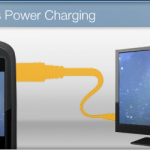
Simultaneous charging is one of MHL’s advantages over Slimport and Miracast. MHL Consortium The Mobile High-Definition Link (MHL) standard already lets you connect certain phones, tablets, and other devices to your TV using adapters that connect to the devices’ micro-USB ports. But the consortium has just announced that an upgrade is coming: the new MHL 3.0 standard adds support for 4K displays. This will allow mobile devices that support the standard to output 3840×2160 (also known as 2160p) video at up to 30 frames per second, an upgrade from MHL 2.0’s 1080p. The updated standard can transmit data and video simultaneously, and a device connected via MHL can draw up to 10 watts of power to charge your device. Backward compatibility with MHL versions 1.x and 2.x, HDCP 2.2 DRM support, and 7.1 channel surround sound support are also part of the standard. The MHL standard competes with a few standards (as well as Apple’s proprietary AirPlay), all of which are designed to put your phone or tablet’s display up on your TV. There’s SlimPort (used most prominently in Google’s Nexus 4 and 2013 Nexus 7), a DisplayPort-compatible spec which like MHL uses the micro USB port to connect over HDMI. There’s also Miracast, an Airplay-like standard that uses a Wi-Fi-equipped receiver to beam video to your TV without the use of cables (Miracast support was baked into Android beginning in version 4.2 , but it’s also included in a smattering of other devices). Neither standard supports 4K video at this point, making MHL 3.0 slightly more appealing for those on the bleeding edge of TV technology. Read 1 remaining paragraphs | Comments        

Taken from:
Get 4K video from your phone’s USB port with the new MHL 3.0 spec

Google confirms critical Android crypto flaw used in $5,700 Bitcoin heist

William Ward Google developers have confirmed a cryptographic vulnerability in the Android operating system that researchers say could generate serious security glitches on hundreds of thousands of end user apps, many of them used to make Bitcoin transactions. This weakness in Android’s Java Cryptography Architecture is the root cause of a Bitcoin transaction that reportedly was exploited to pilfer about $5, 720 worth of bitcoins out of a digital wallet  last week. The disclosure, included in a blog post published Wednesday by Google security engineer Alex Klyubin, was the first official confirmation of the Android vulnerability since Ars and others  reported the incident  last weekend. Klyubin warned that other apps might also be compromised unless developers change the way they access so-called PRNGs, short for pseudo random number generators. “We have now determined that applications which use the Java Cryptography Architecture (JCA) for key generation, signing, or random number generation may not receive cryptographically strong values on Android devices due to improper initialization of the underlying PRNG, ” he wrote. “Applications that directly invoke the system-provided OpenSSL PRNG without explicit initialization on Android are also affected.” Apps that establish encrypted connections using the HttpClient and java.net classes aren’t vulnerable. Read 5 remaining paragraphs | Comments        

Read this article:
Google confirms critical Android crypto flaw used in $5,700 Bitcoin heist