Judge blocks California’s new ban on anonymity for sex offenders

ax2groin On Tuesday, voters in California overwhelmingly approved Proposition 35, which ratcheted up penalties for those convicted of sex crimes, including human trafficking. The proposition included a provision requiring registered sex offenders to disclose to law enforcement all of their Internet connections and online identities. On Wednesday, two of the 73,900 registered sex offenders in the state who would be affected by the law filed a lawsuit challenging the constitutionality of these provisions. The two plaintiffs argued that forcing them to expose their online identities would violate their First Amendment right to speak anonymously. Their appeal is supported by the American Civil Liberties Union of Northern California and the Electronic Frontier Foundation. Late on Wednesday, Judge Thelton Henderson granted a temporary restraining order barring the law from going into effect until he had time to consider the plaintiffs’ constitutional arguments. Read 6 remaining paragraphs | Comments

More here:
Judge blocks California’s new ban on anonymity for sex offenders

Researcher advises against use of Sophos antivirus on critical systems

Antivirus provider Sophos has fixed a variety of dangerous defects in its products that were discovered by a security researcher who is recommending many customers reconsider their decision to rely on the company. “Sophos claim that their products are deployed throughout healthcare, government, finance, and even the military,” Tavis Ormandy wrote in an e-mail posted to a public security forum . “The chaos a motivated attacker could cause to these systems is a realistic global threat. For this reason, Sophos products should only ever be considered for low-value non-critical systems and never deployed on networks or environments where a complete compromise by adversaries would be inconvenient.” A more detailed report that accompanied Ormandy’s e-mail outlined a series of vulnerabilities that attackers can exploit remotely to gain complete control over computers running unpatched versions of the Sophos software. At least one of them requires no interaction on the part of a victim, opening the possibility of self-replicating attacks, as compromised machines in turn exploit other machines, he said. The researcher provided what he said was a working exploit against Sophos version 8.0.6 running Apple’s OS X. Attackers could “easily” rewrite the code to work against unpatched Sophos products that run on the Windows or Linux operating systems, he said. Read 7 remaining paragraphs | Comments

Original post:
Researcher advises against use of Sophos antivirus on critical systems

Google infringes old Lycos patents, must pay $30 million

Vringo is a little company that’s made a huge bet on suing Google over patents. Today that bet paid off, although to a much lesser degree than its investors hoped earlier. After a two-week trial in Virginia, a jury found that Google’s advertising system infringes two old Lycos patents purchased by Vringo in 2011, and that those patents are valid. Google and several of its advertising partners were ordered to pay a total of about $30 million. That’s a lot of money, but far less than the $493 million Vringo was seeking. According to a report  just published in the Virginian-Pilot , the jury found that Google will have to pay $15.9 million. Its advertising partners must pay smaller amounts: $7.9 million in damages for AOL, $6.6 million for IAC Search & Media, $98,800 for Target, and $4,000 for Gannett. The jury also said Google should pay an ongoing royalty; but whether that ultimately sticks is up to the judge. The Vringo case is remarkable for two reasons: first, it’s rare to see a high-profile patent attack played out directly in the stock market, with investors speculating on each move in court. Second, demonstratives submitted in Vringo’s case show a fascinating story in pictures of how a company that’s more or less a “patent troll” tries to convince a jury to shower it with money. Some of those visuals are posted below. Read 11 remaining paragraphs | Comments

View the original here:
Google infringes old Lycos patents, must pay $30 million

Curiosity’s first chem test: Sands of Mars taste a lot like volcano

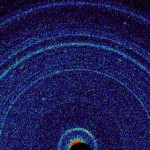
NASA/JPL After a few dry runs, the Curiosity rover has now put its chemistry set to use at a site called the Rock Garden. For the first time, we’ve operated an X-ray diffraction system on another planet, telling us something about the structure of the minerals in the Martian soil. The first results tell us the sand the rover has driven through contains some material that wouldn’t be out of place near a volcano on Earth. Curiosity comes equipped with a scoop that lets it pick up loose soil from the Martian surface and drop it into a hatch on the main body. From there, the samples can be directed into a variety of chemistry labs. Yesterday, NASA and the Jet Propulsion Laboratory revealed the first results obtained by the Chemistry and Mineralogy (or CheMin) instrument, the first time anything of this kind has been operated on another planet. We have a lot of ways to look at the composition of the material on Mars’ surface. We can look at the absorption of light by materials (including from orbit), which can tell us a lot about its likely composition. The rover itself has a number of spectrometers, which can also tell us about the chemical composition of rocks, as well as wet and dry chemistry labs. Read 5 remaining paragraphs | Comments

More:
Curiosity’s first chem test: Sands of Mars taste a lot like volcano

First look: Pandora 4.0, the new mobile frontier

Enlarge / Pandora 4.0: the new look Pandora Here comes Pandora 4.0, a big remake of the music service’s mobile listening environment. If you are a Pandora fan, get ready for expanded playlist, station-making, lyric-reading, personal profile, and social networking power on your smartphone. The new service creates a “unifying” experience across web and mobile devices, the company proclaims. It also represents about six or seven years of planning, thinking, and development for the outfit. Back in 2005, iPhone and Android mobile gadgets were gleams in the eye of Apple and Google. Pandora, however, was transforming radio and music distribution with its sophisticated “genome” powered song recommendation algorithm. Millions of users were clicking thumbs up or down to millions of tunes on, well, millions of Pandora channels. By 2007, Pandora was a huge hit. It was, however, mostly a desktop computer hit. “We started thinking about creating a mobile service in 2004,” Pandora CTO Tom Conrad told us in an interview. “We wanted to unify the Pandora experience.” That meant an experience that was easy from the start, that allowed users to individualize their environment and get more of what they wanted, and that was “ubiquitously available.” Read 16 remaining paragraphs | Comments

More here:
First look: Pandora 4.0, the new mobile frontier

Jailbreaking now legal under DMCA for smartphones, but not tablets

Yutaka Tsutano The Digital Millennium Copyright makes it illegal to “circumvent” digital rights management schemes. But when Congress passed the DMCA in 1998, it gave the Librarian of Congress the power to grant exemptions. The latest batch of exemptions, which will be in force for three years, were announced on Thursday. Between now and late 2015, there will be five categories of circumvention that will be allowed under the Librarian’s rules, one fewer than the current batch of exemptions , which was announced in July 2010. The new exemptions take effect October 28. The new batch of exemptions illustrate the fundamentally arbitrary nature of the DMCA’s exemption process. For the next three years, you’ll be allowed to jailbreak smartphones but not tablet computers. You’ll be able to unlock phones purchased before January 2013 but not phones purchased after that. It will be legal to rip DVDs to use an excerpt in a documentary, but not to play it on your iPad. None of these distinctions makes very much sense. But Congress probably deserves more blame for this than the Librarian of Congress. Read 17 remaining paragraphs | Comments

See the article here:
Jailbreaking now legal under DMCA for smartphones, but not tablets

Cisco machine gets listed by blackhat org that rents out hacked PCs

Enlarge KrebsonSecurity.com A computer running inside the corporate network of Cisco Systems is one of about 17,000 machines that is being rented out to online miscreants looking to get a foothold inside Fortune 500 companies, according to a published report. The Windows Server 2003 system uses Microsoft’s Remote Desktop Protocol so it can be remotely accessed by anyone with the login credentials. It’s listed on Dedicatexpress.com, a service that allows anyone in the world to access hacked computers at specific organizations, KrebsonSecurity reported . Remarkably, the username for the box is “Cisco” and the corresponding password is—you guessed it—”Cisco.” “Businesses often turn on RDP for server and desktop systems that they wish to use remotely, but if they do so using a username and password that is easily guessed, those systems will soon wind up for sale on services like this one,” reporter Brian Krebs wrote. Read 3 remaining paragraphs | Comments

Read More:
Cisco machine gets listed by blackhat org that rents out hacked PCs