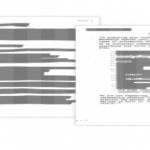
The National Security Letter spy tool has been uncloaked, and it’s bad

It took 11 years to finally unveil what the FBI demands in a National Security Letter. How it evolved over the years is shown above. (credit: ACLU ) The National Security Letter (NSL) is a potent surveillance tool that allows the government to acquire a wide swath of private information—all without a warrant. Federal investigators issue tens of thousands of them each year to banks, ISPs, car dealers, insurance companies, doctors, and you name it. The letters don’t need a judge’s signature and come with a gag to the recipient, forbidding the disclosure of the NSL to the public or the target. Nicholas Merrill (credit: Wikipedia ) For the first time, as part of a First Amendment lawsuit, a federal judge ordered the release of what the FBI was seeking from a small ISP as part of an NSL. Among other things, the FBI was demanding a target’s complete Web browsing history, IP addresses of everyone a person has corresponded with, and records of all online purchases, according to a court document unveiled Monday. All that’s required is an agent’s signature denoting that the information is relevant to an investigation. “The FBI has interpreted its NSL authority to encompass the websites we read, the Web searches we conduct, the people we contact, and the places we go. This kind of data reveals the most intimate details of our lives, including our political activities, religious affiliations, private relationships, and even our private thoughts and beliefs,” said Nicholas Merrill, who was president of Calyx Internet Access in New York when he received the NSL targeting one of his customers in 2004. Read 6 remaining paragraphs | Comments

Continued here:
The National Security Letter spy tool has been uncloaked, and it’s bad

Hey Reader’s Digest: Your site has been attacking visitors for days

Enlarge (credit: Malwarebytes ) An active hacking campaign is forcing Reader’s Digest and many other websites to host malicious code that can surreptitiously infect visitors with malware and linger for days or weeks before being cleaned up. Reader’s Digest has been infected since last week with code originating with Angler, an off-the-shelf hack-by-numbers exploit kit that saves professional criminals the hassle of developing their own attack scripts, researchers from antivirus provider Malwarebytes told Ars. People who visit the site with outdated versions of Adobe Flash, Internet Explorer, and other browsing software are silently infected with malware that gains control over their computers. Malwarebytes researchers said they sent Reader’s Digest operators e-mails and social media alerts last week warning the site was infected but never got a response. The researchers estimate that thousands of other sites have been similarly attacked in recent weeks and that the number continues to grow. “This campaign is still ongoing and we see dozens of new websites every day being leveraged to distribute malware via the Angler exploit kit,” Malwarebytes Senior Security Researcher Jérôme Segura wrote in an e-mail. “This attack may have been going on for some time but we noticed a dramatic increase in infections via WordPress sites in the past couple of weeks.” Read 3 remaining paragraphs | Comments

See the article here:
Hey Reader’s Digest: Your site has been attacking visitors for days

Raspberry Pi Zero sells out within 24 hours

(credit: Wired) The Pi Zero—the new £4 Raspberry Pi —has sold out in under 24 hours. The Raspberry Pi Foundation says that around 20,000 individual Pi Zeroes have been sold in the last day, along with a further 10,000 copies of the MagPi  magazine which had a Pi Zero on the front. “You’d think we’d be used to it by now, but we’re always amazed by the level of interest in new Raspberry Pi products,” said Eben Upton, the founder of the foundation. “Right now it appears that we’ve sold every individual Zero we made… people are scouring the country for the last few Asda, Tesco, Sainsbury and Smiths branches that haven’t sold out [of the MagPi magazine],” Upton told Wired . Upton said they are producing more Zeroes “as fast as we can” at its factory in Pencoed, Wales, but didn’t specify when more stock would be available. Read 4 remaining paragraphs | Comments

View post:
Raspberry Pi Zero sells out within 24 hours

Managing a 100-percent renewable grid, without batteries

(credit: US DOE ) Stanford researcher Mark Jacobson likes to take current thinking about renewable energy and supersize it. Rather than aiming for 50 percent renewables, like California is , he has analyzed what it would take for each of the 50 states to go fully renewable . It would apparently involve so many offshore wind turbines that hurricanes headed toward the States would be suppressed. Now, he and a few collaborators are back with a more detailed look at how to manage the grid stability issues that come with large amounts of intermittent generators, like photovoltaic panes and wind turbines. Normally, issues of intermittency are expected to be handled by fossil fuel power and batteries. But the new analysis suggests we don’t need any of that—and we don’t need biofuels or nuclear, either. Instead, it suggests we could manage a 100-percent renewable grid through a combination of hydrogen production and heat storage. None of this is entirely new. People have been talking about generating hydrogen from renewable energy for years—with a fuel cell, it can be used to power cars or generate electricity as needed. And the paper cites an existing community that’s already using solar energy to generate heat that’s stored under ground. But, as with Jacobson’s past analyses, they are taken to new scales here. Read 11 remaining paragraphs | Comments

More:
Managing a 100-percent renewable grid, without batteries

Tesla Model X production starts in earnest, pricing revealed

(credit: Tesla) Several months ago we found out pricing for the fully loaded “Signature” edition Tesla Model X electric SUV. Now, we’ve got a better idea of what the cheapest Model X will set you back: $80,000 before any options and tax rebates or incentives. That’s for the 70D, which has all-wheel drive (a motor for each axle) and a 70kWh battery (pricing for the 90D and P90D haven’t been announced). That’s $5000 more than the equivalent Model S sedan , which hits 60mph a little quicker and has a slightly longer range than the SUV but not the same funky rear doors. The distinctive Falcon wing doors are Tesla’s approach to making an SUV with all the utility of a minivan; that was how Elon Musk described the design brief back in September. By opening up and out, they’re supposed to give better access to the rear seats while taking up less space than a traditional door. There are three different interior layouts. The base 70D is a five seater, but there’s also a six seat version (three rows of two) for an extra $3000 and seven seats are yours for $4500. Tesla released the pricing information for the 70D Model X at the same time it told customers with preorders that they can begin configuring their vehicles. Screenshots of the online configurator provided by Tesla to Ars state that Model X deliveries will begin in early 2016, starting with range-topping P90D orders. “Lesser” 90D Model Xs follow by mid-year, with 70D deliveries before 2017. Read 1 remaining paragraphs | Comments

View article:
Tesla Model X production starts in earnest, pricing revealed

Android adware can install itself even when users explicitly reject it

(credit: Lookout) Two weeks ago, Ars reported on newly discovered Android adware that is virtually impossible to uninstall . Now, researchers have uncovered malicious apps that can get installed even when a user has expressly tapped a button rejecting the app. The hijacking happens after a user has installed a trojanized app that masquerades as an official app available in Google Play and then is made available in third-party markets. During the installation, apps from an adware family known as Shedun try to trick people into granting the app control over the Android Accessibility Service , which is designed to provide vision-impaired users alternative ways to interact with their mobile devices. Ironically enough, Shedun apps try to gain such control by displaying dialogs such as this one, which promises to help weed out intrusive advertisements. From that point on, the app has the ability to display popup ads that install highly intrusive adware. Even in cases where a user rejects the invitation to install the adware or takes no action at all, the Shedun-spawned app uses its control over the accessibility service to install the adware anyway. Read 4 remaining paragraphs | Comments

View original post here:
Android adware can install itself even when users explicitly reject it

Chicago issued $2.4 million in bogus traffic tickets from speed cameras

The Chicago Tribune reported Wednesday as part of an exhaustive investigation that as many as 110,000 “questionable” speeding tickets totalling $2.4 million have been issued in the past two years in Chicago as part of a speed-camera program designed to keep kids safe near parks and schools. …City Hall has systematically ticketed drivers near schools without the legally required evidence of a schoolchild in sight. A Tribune random-sample analysis puts the number of those questionable tickets at about 110,000. And while it was pitched by the mayor as a way to protect youngsters walking near parks and schools, the most prolific cameras in the 2-year-old “Children’s Safety Zone” initiative can be found along major roadways, where crash data show child pedestrians are least likely to be struck by speeders. The lengthy  report is worth a read. Among other things, the report found that Mayor Rahm Emanuel’s speed camera program issued 22,000 tickets for speeding near parks and another 11,000 tickets near parks that were closed for the night. What’s more, another 28,000 citations “were issued at cameras plagued by problems with warning signs that did not meet the minimum legal requirements.” And at least 62,000 tickets were given during the summer “when school activity is so limited that drivers are left to guess whether school is in session or not.” Read 2 remaining paragraphs | Comments

Read the original:
Chicago issued $2.4 million in bogus traffic tickets from speed cameras

Feds bugged steps of Silicon Valley courthouse

(credit: James Vaughan ) Defense attorneys have asked a federal judge to throw out more than 200 hours of conversations FBI agents recorded using hidden microphones planted on the steps of a California county courthouse. The lawyers are representing defendants accused of engaging in an illicit real estate bid-rigging and fraud conspiracy. The steps to the San Mateo County courthouse are frequently the scene of public auctions for foreclosed homes. Federal prosecutors have admitted that on at least 31 occasions in 2009 and 2010, FBI agents used concealed microphones to record auction participants as they spoke, often in hushed voices with partners, attorneys, and others. Because the federal agents didn’t obtain a court order, the defense attorneys argue the bugging violated Constitutional protections against unreasonable searches and seizures. In a court brief filed Friday in the case, attorneys wrote: Read 4 remaining paragraphs | Comments

Read More:
Feds bugged steps of Silicon Valley courthouse

Chrome to end support for Windows XP, Vista, and OS X 10.8 on April 2016

If you’re on an older operating system, your Chrome could stop getting updates in just a few months. Google’s official Chrome Blog announced it will be ending support for Windows XP, Windows Vista, and Mac OS X 10.6, 10.7, and 10.8 in April 2016. Browsers on those operating systems will continue to work, but they will stop getting updates from Google. For Windows XP, this is yet another stay of execution from Google, mirroring Microsoft’s continually extended support for the OS that just won’t die. Chrome support for XP was originally stated to end along with Microsoft’s in April 2014. Google then extended that to ” at least April 2015 ,” then all of 2015 , and now it’s going to hang around for the next five months. On the Mac side of things, Apple usually supports its three newest operating systems. So official support for 10.8 ended when 10.11 El Capitan was released, and 10.6 and 10.7 have long been put to rest by Apple. Read 2 remaining paragraphs | Comments

See the original article here:
Chrome to end support for Windows XP, Vista, and OS X 10.8 on April 2016

AT&T expands gigabit fiber to 23 cities starting at $70 (or $110)

AT&T’s updated GigaPower coverage map. (credit: AT&T ) AT&T yesterday announced expansions of its gigabit fiber Internet service into parts of 23 cities and towns. The new markets are mostly in the suburbs of big cities where AT&T already offered its fastest broadband. For example, AT&T previously brought its “U-verse with GigaPower” service to Atlanta, Chicago, Houston, Miami, Nashville, and Orlando. The expansion this week brings the service into a bunch of cities and towns within the larger metro areas. Pricing for the Internet-only 1Gbps package is either $70 a month or $110 a month, depending on where you live. As we’ve reported previously, AT&T tends to match Google Fiber’s $70 pricing , but not in areas where Google isn’t offering service. Besides that, AT&T’s lowest price in each city requires customers to opt into “Internet Preferences ,” which gives the company permission to examine each customer’s Web traffic in order to serve personalized ads. Read 4 remaining paragraphs | Comments

Continue reading here:
AT&T expands gigabit fiber to 23 cities starting at $70 (or $110)