Researchers Find New Version Of WanaDecrypt0r Ransomware Without A Kill Switch

Remember that “kill switch” which shut down the WannCry ransomware? An anonymous reader quotes Motherboard: Over Friday and Saturday, samples of the malware emerged without that debilitating feature, meaning that attackers may be able to resume spreading ransomware even though a security researcher cut off the original wave. “I can confirm we’ve had versions without the kill switch domain connect since yesterday, ” Costin Raiu, director of global research and analysis team at Kaspersky Lab told Motherboard on Saturday… Another researcher confirmed they have seen samples of the malware without the killswitch. Read more of this story at Slashdot.

Originally posted here:
Researchers Find New Version Of WanaDecrypt0r Ransomware Without A Kill Switch

Windows Server will add the Linux subsystem, join the Insider program

(credit: Microsoft) SEATTLE—When Microsoft first introduced the Windows Subsystem for Linux (WSL) at last year’s Build developer conference , it said that it was doing so to make developers who were familiar with the Linux command line feel comfortable on Windows . The immediate and inevitable question was “Well, what about Windows Server?” Development is one thing, but what if organizations wanted to occasionally deploy their Linux software on Windows? Although Windows Server 2016 and Windows 10 share many components, the Server operating system hasn’t thus far included WSL, consistent with the “developer only” rationale. But that’s going to change: at Build this week, Microsoft announced that WSL will be included in Server later this year. Microsoft still isn’t positioning this as a way of running Linux server in production on Windows; rather, the company says the addition will be useful for administrative tasks. With WSL, Windows can run scripts written for Linux. But we’re hard-pressed to see things stopping there; it seems inevitable that at some point, Windows will offer the ability to run Linux server software as one of its features. Read 3 remaining paragraphs | Comments

View original post here:
Windows Server will add the Linux subsystem, join the Insider program

Today’s Massive Ransomware Attack Was Mostly Preventable—Here’s How To Avoid It

Ransomware may be mostly thought of as a (sometimes costly) nuisance, but when it hinders the ability of doctors and nurses to help people with an emergency medical problems, that qualifies as armed robbery. Read more…

Excerpt from:
Today’s Massive Ransomware Attack Was Mostly Preventable—Here’s How To Avoid It

WCry is so mean Microsoft issues patch for 3 unsupported Windows versions

Enlarge (credit: Health Service Journal) A day after a ransomware worm infected 75,000 machines in 100 countries, Microsoft is taking the highly unusual step of issuing patches that immunize Windows XP, 8, and Server 2003, operating systems the company stopped supporting as many as three years ago. The company also rolled out a signature that allows its Windows Defender antivirus engine to provide “defese-in-depth” protection. The moves came after attackers on Friday used a recently leaked attack tool developed by the National Security Agency to virally spread ransomware known as WCry . Within hours, computer systems around the world were crippled, prompting hospitals to turn away patients and telecoms, banks and companies such as FedEx to turn off computers for the weekend. The chaos surprised many security watchers because Microsoft issued an update in March that patched the underlying vulnerability in Windows 7 and most other supported versions of Windows. (Windows 10 was never vulnerable.) Friday’s events made it clear that enough unpatched systems exist to cause significant outbreaks that could happen again in the coming days or months. In a blog post published late Friday night , Microsoft officials wrote: Read 9 remaining paragraphs | Comments

View original post here:
WCry is so mean Microsoft issues patch for 3 unsupported Windows versions

Windows 10 Timeline remembers everything you did on your PC

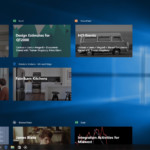
One of the more intriguing features Microsoft will include in this fall’s Windows 10 Creators Update is Timeline. As the name suggests, it’s a way for you to move backwards in time and see things you were working on in the past and resume what you were doing. Microsoft described it as a visual timeline of everything you were doing on your computer, and you can jump back into files, applications and websites where you left off. Introducing Timeline. Easily jump back in time to continue where you left off. #Windows10 #MSBuild pic.twitter.com/e3gxhXnp6W — Windows (@Windows) May 11, 2017 Timeline lives in the Windows app switcher. When you click it, you’ll see your active apps, but below that you’ll see what you were running earlier in the day. Clicking down on one of those things that you were using earlier will pop it open just as you were using it before. This works across multiple devices, as well — when you open up another Windows device where you’re signed in, you can resume the tasks you were using before. This will even work across other devices like an iPhone using the Cortana app. If you’re somewhere where you have Cortana, it’ll prompt you to continue working on whatever you were doing before. If you don’t have the specific app installed on your phone, it’ll help point you to the right app as well. At first glance, it sounds a little bit like the Time Machine backup feature that Apple has included in macOS for years now. But Time Machine is more of a file backup system that lets you go back and see earlier versions of files that you might want to restore. Microsoft’s Timeline covers applications and websites as well as just files, and it doesn’t require an external hard drive, as it’s not really a true backup system in the way Time Machine is. Indeed, Timeline appears more like Microsoft’s answer to Continuity, a feature Apple build into macOS and iOS that lets you pick up and resume work across whatever Apple device you’re using. Timeline is just one feature in the forthcoming Creators Update, which features a host of tools for using Microsoft’s software and services across devices. The “Microsoft Graph” set of APIs will let you pick up and continue work across multiple devices and will iOS and Android as well as Windows. It’ll also let you have a “universal clipboard” across your devices. Click here to catch up on the latest news from Microsoft Build 2017.

View article:
Windows 10 Timeline remembers everything you did on your PC

New Ransomware ‘Jaff’ Spotted; Malware Groups Pushing 5M Emails Per Hour To Circulate It

An anonymous reader writes: The Necurs botnet has been harnessed to fling a new strain of ransomware dubbed “Jaff”. Jaff spreads in a similar way to the infamous file-encrypting malware Locky and even uses the same payment site template, but is nonetheless a different monster. Attached to dangerous emails is an infectious PDF containing an embedded DOCM file with a malicious macro script. This script will then download and execute the Jaff ransomware. Locky — like Jaff — also used the Necurs botnet and a booby-trapped PDF, security firm Malwarebytes notes. “This is where the comparison ends, since the code base is different as well as the ransom itself, ” said Jerome Segura, a security researcher at Malwarebytes. “Jaff asks for an astounding 2 BTC, which is about $3, 700 at the time of writing.” Proofpoint reckons Jaff may be the work of the same cybercriminals behind Locky, Dridex and Bart (other nasty malware) but this remains unconfirmed. And Forcepoint Security Labs reports that malicious emails carrying Jaff are being cranked out at a rate of 5 million an hour on Thursday, or 13 million in total at the time it wrote up a blog post about the new threat. Read more of this story at Slashdot.

Read the article:
New Ransomware ‘Jaff’ Spotted; Malware Groups Pushing 5M Emails Per Hour To Circulate It

Windows Server will add the Linux subsystem, join the Insider program

(credit: Microsoft) SEATTLE—When Microsoft first introduced the Windows Subsystem for Linux (WSL) at last year’s Build developer conference , it said that it was doing so to make developers who were familiar with the Linux command line feel comfortable on Windows . The immediate and inevitable question was “Well, what about Windows Server?” Development is one thing, but what if organizations wanted to occasionally deploy their Linux software on Windows? Although Windows Server 2016 and Windows 10 share many components, the Server operating system hasn’t thus far included WSL, consistent with the “developer only” rationale. But that’s going to change: at Build this week, Microsoft announced that WSL will be included in Server later this year. Microsoft still isn’t positioning this as a way of running Linux server in production on Windows; rather, the company says the addition will be useful for administrative tasks. With WSL, Windows can run scripts written for Linux. But we’re hard-pressed to see things stopping there; it seems inevitable that at some point, Windows will offer the ability to run Linux server software as one of its features. Read 3 remaining paragraphs | Comments

Read more here:
Windows Server will add the Linux subsystem, join the Insider program

WCry is so mean Microsoft issues patch for 3 unsupported Windows versions

Enlarge (credit: Health Service Journal) A day after a ransomware worm infected 75,000 machines in 100 countries, Microsoft is taking the highly unusual step of issuing patches that immunize Windows XP, 8, and Server 2003, operating systems the company stopped supporting as many as three years ago. The company also rolled out a signature that allows its Windows Defender antivirus engine to provide “defese-in-depth” protection. The moves came after attackers on Friday used a recently leaked attack tool developed by the National Security Agency to virally spread ransomware known as WCry . Within hours, computer systems around the world were crippled, prompting hospitals to turn away patients and telecoms, banks and companies such as FedEx to turn off computers for the weekend. The chaos surprised many security watchers because Microsoft issued an update in March that patched the underlying vulnerability in Windows 7 and most other supported versions of Windows. (Windows 10 was never vulnerable.) Friday’s events made it clear that enough unpatched systems exist to cause significant outbreaks that could happen again in the coming days or months. In a blog post published late Friday night , Microsoft officials wrote: Read 9 remaining paragraphs | Comments

View article:
WCry is so mean Microsoft issues patch for 3 unsupported Windows versions

Biggest Global Cyber Attack Ever? 10 WannaCry Ransomware Facts

A global cybersecurity attack involving WannaCry ransomware crippled Microsoft Windows computers across the globe today. Here are 10 facts to know. The post Biggest Global Cyber Attack Ever? 10 WannaCry Ransomware Facts appeared first on ChannelE2E .

Continue reading here:
Biggest Global Cyber Attack Ever? 10 WannaCry Ransomware Facts

Microsoft Finally Bans SHA-1 Certificates In Its Browsers

An anonymous reader quotes ZDNet: With this week’s monthly Patch Tuesday, Microsoft has also rolled out a new policy for Edge and Internet Explorer that prevents sites that use a SHA-1-signed HTTPS certificate from loading. The move brings Microsoft’s browsers in line with Chrome, which dropped support for the SHA-1 cryptographic hash function in January’s stable release of Chrome 56, and Firefox’s February cut-off… Apple dropped support for SHA-1 in March with macOS Sierra 10.12.4 and iOS 10.3… Once Tuesday’s updates are installed, Microsoft’s browsers will no longer load sites with SHA-1 signed certificates and will display an error warning highlighting a security problem with the site’s certificate. Read more of this story at Slashdot.

View article:
Microsoft Finally Bans SHA-1 Certificates In Its Browsers