Slack To Disable Thousands of Logins Leaked on GitHub

An anonymous reader writes: Thursday one technology site reported that thousands of developers building bots for the team-collaboration tool Slack were exposing their login credentials in public GitHub repositories and tickets. “The irony is that a lot of these bots are mostly fun ‘weekend projects’, reported Detectify. “We saw examples of fit bots, reminding you to stretch throughout the day, quote bots, quoting both Jurassic Park…and Don Quixote….” Slack responded that they’re now actively searching for publicly-posted login credentials, “and when we find any, we revoke the tokens and notify both the users who created them, as well as the owners of affected teams.” Detectify notes the lapse in security had occurred at a wide variety of sites, including “Forbes 500 companies, payment providers, multiple internet service providers and health care providers… University classes at some of the world’s best-known schools. Newspapers sharing their bots as part of stories. The list goes on and on…” Read more of this story at Slashdot.

Visit link:
Slack To Disable Thousands of Logins Leaked on GitHub

‘A Beautiful Planet’ offers a bold new look at Earth in IMAX 3D

IMAX films shot in space aren’t anything new, but with A Beautiful Planet , longtime IMAX director Toni Myers still manages to show us entirely new perspectives of Earth. Shot on the International Space Station by several crews (including internet sensation Scott Kelly) and narrated by Jennifer Lawrence, it’s a groundbreaking film in many respects: It’s the first IMAX space feature to use digital cameras as well as off-the shelf shooters (the Canon EOS C500 and 1D-C). And it’s also the first film from IMAX to use SpaceX’s Dragon spacecraft to ship equipment to the ISS. While A Beautiful Planet uses converted 3D footage (it wasn’t shot with actual 3D cameras), there’s still an immense sense of depth to the imagery. The film also evokes the Spaceship Earth concept, which centers on the idea that we’re all traveling together on an organic craft with limited resources. It’s hard not to be taken aback when you see how dry the Colorado River Basin appears from space, which has led to droughts in California and surrounding states, or when you see how much of Brazil’s rainforests have been destroyed. In many ways, the film is a call to arms for the next generation of would-be environmentalists. Back when the NASA’s space shuttle was running, IMAX was able to get its large 2D and 3D cameras sent up fairly easily. But these days it’s more difficult to get material into orbit, because there’s no space shuttle for sending up large cargo. Luckily, modern digital filmmaking equipment is also far less cumbersome to deal with than it was during the days of the shuttle program. Not only are the cameras significantly smaller, but there’s no need to handle large reels of IMAX film, which weighed around 10 pounds and could record only three minutes at a time. IMAX says the data packs used today are around the size of an iPhone and can record 30 minutes of 4K video. Astronauts were trained to use the cameras by cinematographer James Neihouse, and they were tasked with getting footage from more than 100 targets (though they were also told to “shoot what they saw”). Though much more convenient, there was a bit of a tradeoff with the new hardware. IMAX’s older film cameras delivered stunning footage with a resolution comparable to 12K. But while the digital cameras might not pack in the same level of quality, their footage still looked astounding when projected in 3D on a full-size IMAX screen at Manhattan’s AMC Loews Lincoln Square theater. And despite the lower resolution, the digital cameras still managed to outdo their predecessors with their ability to handle low-light shots. “We would not have the nighttime scenes without the digital dynamic range, ” Myers said in a statement. “What the digital capture did was totally open up that night world to us, with stars, cities at night, lightning and other phenomena that you see at night, like aurora.” Those night scenes are indeed stunning. Viewing Earth in daylight conveys the immensity of the natural world, but at night you also see the impact of human civilization in cities ablaze with electricity. It’s also a reminder of how different even neighboring societies can be: South Korea is one of the brightest spots on Earth at night, but it’s almost complete darkness over the border in North Korea. On the natural side of things, the brief glimpses we get of aurora dancing across Earth’s atmosphere look more like computer-generated effects than something organic. Another first for the film: It took advantage of the International Space Station’s “Cupola, ” a dome-like arrangement of seven large windows, giving astronauts an incredibly wide view outside the craft. That was helpful for their own work taking care of the ISS, but it also allowed for a wide variety of angles for recording footage of Earth. IMAX also developed a special shield that protected the windows when they weren’t being used, which the astronauts were able to control. A Beautiful Planet gives us a clear sense of what it’s like to be on the ISS working alongside some of Earth’s most talented astronauts. We see them exercise, shower and try to maintain a sense of normalcy in a zero-gravity environment. Sure, they’re in space, but their jobs aren’t exactly glamorous. Much of their time is spent running and maintaining experiments. The astronauts also didn’t get any time off to shoot the film — they worked with what little personal time they had. At only 45 minutes, the film is more of a showcase for its incredible footage instead of a deep think piece. (At times it feels like it was written mainly for children.) Still, it makes a big impact: You’ll see things you’ve never seen before, and it gives you a broader sense of our impact on the environment. I’m sure we’ll get an even more immersive space experience with 360-degree video or virtual reality eventually ( Adr1ft comes close ), but at this point, it’s the closest thing to being in orbit.

More here:
‘A Beautiful Planet’ offers a bold new look at Earth in IMAX 3D

Cisco Finds Backdoor Installed On 12 Million PCs

Reader wiredmikey writes: Security researchers at Cisco have come across a piece of software that installed backdoors on 12 million computers around the world. Researchers determined that the application, installed with administrator rights, was capable not only of downloading and installing other tools, such as a known scareware called System Healer, but also of harvesting personal information. The software, which exhibits adware and spyware capabilities, was developed by a French online advertising company called Tuto4PC. The “features” have led Cisco Talos to classify the Tuto4PC software as a “full backdoor capable of a multitude of undesirable functions on the victim machine.” Tuto4PC said its network consisted of nearly 12 million PCs in 2014, which could explain why Cisco’s systems detected the backdoor on 12 million devices. An analysis of a sample set revealed infections in the United States, Australia, Japan, Spain, the UK, France and New Zealand.Tuto4PC has received flak from many over the years, including French regulators. Read more of this story at Slashdot.

Read More:
Cisco Finds Backdoor Installed On 12 Million PCs

SpaceX wins its first military launch contract

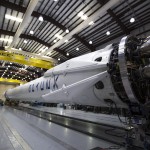
Elon Musk has been fighting to be treated with the same level of respect as Lockheed Martin and Boeing, and it looks like his persistence has paid off. Reuters is reporting that the US Air Force has handed SpaceX a contract worth $83 million to launch the next GPS satellite into orbit. It’s a big deal, because until now, only Lockheed and Boeing (through the United Launch Alliance ) have been permitted to fling objects into the heavens on the Air Force’s behalf. The launch will take place in May 2018 from Florida atop a Falcon 9 rocket, although while Musk has won the battle, he might also be well on the way to winning the war. Back in 2014, the US Air Force awarded a contract for 26 rocket launches to ULA, the space joint venture from Boeing and Lockheed Martin. Musk believed that SpaceX was able to offer a better deal, and was peeved he wasn’t even allowed the chance to bid for the business. Shortly afterward, Musk launched a lawsuit to try and block the contract, alleging that there was something fishy about the contract process. Namely that one of the officials in charge of awarding the deal was subsequently handed a cushy job at the ULA . It didn’t take long for red-faced bodies at the Pentagon to agree that it needed to improve “the competitive landscape” for “national security space launches.” Reuters is also suggesting that the ULA might not be able to compete with SpaceX and its ability to make space launches progressively cheaper. That’s not much of a surprise, since the company has struggled in recent years to deal with its upstart rival. Part of this is down to the fact that its Atlas V rockets use Russian-made rocket engines, which are cheap and reliable but politically inconvenient. In the wake of the occupation of Crimea, the US imposed trade sanctions on Russia that preclude ULA from sourcing its engines. Last week the Motley Fool published a report that said that something might be rotten in the state of the ULA more generally. Former executive Brett Tobey apparently told students at the University of Colorado that it simply couldn’t compete with SpaceX. He reportedly said that it was because of the way his former company’s pricing structure was laid out, representatives were prohibited from quoting under $125 million. Even worse is that when the subsidiary costs are also included in the calculation, the price of a ULA launch is closer to $200 million. In addition, the firm has announced that it’ll cut jobs, and could let anywhere between 375 and 500 employees go between now and 2017. By comparison, SpaceX is riding high after showing that its Falcon 9 rocket can land on a platform after being shot into space . Reusable rockets is going to massively reduce the cost for each launch, and should help make journeys into the heavens that much cheaper. In addition, Musk is pledging to get the first SpaceX capsules to land on Mars by 2018 , an ambitious goal, but one that he’s uniquely equipped to see to reality.

See the original article here:
SpaceX wins its first military launch contract

Former Tor Developer Created Malware To Hack Tor Users For The FBI

Patrick O’Neill writes: Matt Edman is a cybersecurity expert who worked as a part-time employee at Tor Project, the nonprofit that builds Tor software and maintains the network, almost a decade ago. Since then, he’s developed potent malware used by law enforcement to unmask Tor users. It’s been wielded in multiple investigations by federal law-enforcement and U.S. intelligence agencies in several high-profile cases. The Tor Project has confirmed this report in a statement after being contacted by the Daily Dot, “It has come to out attention that Matt Edman, who worked with the Tor Project until 2009, subsequently was employed by a defense contractor working for the FBI to develop anti-Tor malware.” Maybe Tor users will now be less likely to anonymously check Facebook each month… Read more of this story at Slashdot.

Follow this link:
Former Tor Developer Created Malware To Hack Tor Users For The FBI

Hubble discovers that dwarf planet Makemake has a moon

The Hubble telescope has spotted a shadowy moon with a charcoal black surface orbiting the dwarf planet Makemake. Astronomers first observed Makemake in 2005, but since it’s the second brightest icy dwarf planet after Pluto , it took some time to see a satellite that’s 1, 300 times fainter than the celestial body it’s orbiting. Also, it’s positively tiny with a diameter measuring 100 miles across, making it but a fraction of our own moon that has a diameter measuring 2, 159.2 miles. The Hubble team used the telescope’s Wide Field Camera 3 and the same technique that found Pluto’s satellite’s in 2005, 2011 and 2012 to discover Makemake’s companion that has been christened “MK 2.” NASA says its presence can tell us more about the dwarf planet, including its density. “Makemake is in the class of rare Pluto-like objects, so finding a companion is important, ” Southwest Research Institute’s Alex Parker said. “The discovery of this moon has given us an opportunity to study Makemake in far greater detail than we ever would have been able to without the companion.” Astronomers plan to look more closely into the satellite to find out if it’s the “warm region” they’ve been seeing on Makemake’s surface, which is inconsistent with its icy shell. They also intend to observe its movements: a tight orbit means it’s the product of a collision, while a wide one means it was captured from the Kuiper belt. Either way, MK 2 — just like our Earth’s own satellite — has been orbiting Makemake for billions of years. Via: Space Source: Space Telescope Science Institute , NASA

View original post here:
Hubble discovers that dwarf planet Makemake has a moon

Leaked image purportedly shows hand-off feature in Windows 10

Even before Windows 10 was released we heard about its first major update, codenamed ” Redstone .”‘ Today, a purported screenshot from a recent Redstone build suggests that Windows users will finally get a feature that OS X has enjoyed for two years now: the ability to transfer work progress from a mobile device to a computer or vice versa. According to a believable-looking screenshot posted on Reddit, nestled in the build’s settings is a specific toggle for users to “Let apps on your other devices launch apps and continue experiences” on your PC via Bluetooth. With this, you could finish emails or tasks on your PC that you started on your phone or device. This possible hand-off feature isn’t a total surprise: Microsoft introduced Project Rome back at its Build developer conference earlier this month, with early demos hinting that the tech will work much the same way as Apple Handoff. But Rome is expected to differ in several ways, like transferring data between a device and computer via WiFi in addition to Bluetooth. Like the Redstone screenshot above, Rome aims to “connect experiences, ” running apps on both devices that trigger certain activities: for example , posting a trivia question on your device after a certain point watching a film on your PC. Source: MS Power User

Link:
Leaked image purportedly shows hand-off feature in Windows 10

New ‘Image Enhance’ Lets Satellites See 2-Inch Objects on Mars

Researchers have developed a new image enhancement technique that allows them to boost the resolution of satellite images, revealing unprecedented levels of detail. Read more…

See original article:
New ‘Image Enhance’ Lets Satellites See 2-Inch Objects on Mars

Tesla Will Install More Energy Storage With SolarCity In 2016 Than The US Installed In 2015

An anonymous reader writes: Tesla is scheduled to install more energy storage capacity in 2016 with SolarCity alone than all of the US installed in 2015. It was revealed in a recent filing with the U.S. Securities and Exchange Commission (SEC) that Tesla foresees an almost 10x increase in sales to SolarCity for behind the meter storage. [From the SEC filing: “We recognized approximately $4.9 million in revenue from SolarCity during fiscal year 2015 for sales of energy storage governed by this master supply agreement, and anticipate recognizing approximately $44.0 million in such revenues during fiscal year 2016.”] This revenue projection means Tesla expects to install approximately 116 MWh of behind the meter storage. The U.S. for example installed about 76 MWh of behind the meter storage. SolarCity and Tesla Energy doubled their battery installation volume last year. What’s particularly noteworthy is that the 116 MWh expectation does not include SolarCity’s biggest project — Kauai Island’s coming 52 MWh system. Hawaii is aiming for 100% renewable energy by 2045 and has contracted with SolarCity to balance the two 12MW Solar Power plants with the Kauai Island Utility Cooperative (KIUC). By 2020, there will be 70 GWh of Tesla battery storage on the road, and Straubel expects there to be 10 GWh of controllable load in those cars. Read more of this story at Slashdot.

View article:
Tesla Will Install More Energy Storage With SolarCity In 2016 Than The US Installed In 2015

Dropbox will soon show all your cloud-based files right in the desktop

If you’re one of the 500 million people who’ve used Dropbox at some point over the last few years, you know what you’re getting in to. It’s a reliable way to back up all the files on your computer, sync them across multiple devices and share them with friends, family or coworkers. It’s fast, it works and Dropbox has added a decent set of collaboration features over the years (like its strong Microsoft Office integration) — but by and large, its core “sync and share” features have remained largely the same. But today at the Dropbox Open event in London, the company is previewing an intriguing new feature called Project Infinite. In a nutshell, it looks to close the divide between our ever-increasing cloud storage vaults like Dropbox and the corresponding decrease in hard drive sizes. Back when Dropbox first launched, plenty of computers came with 500GB (or larger) hard drives, while paid Dropbox accounts only offered 50GB of space. However, since then, things have flip-flopped a bit — $10 a month gets you 1TB of Dropbox space, while the rise of SSD means that most computers have much smaller hard drives than that. And Dropbox for Business offers essentially limitless storage space, which means you’ll have to jump back and forth between files stored on your computer and Dropbox’s web interface to see everything you might want to access. Put simply, Project Infinite lets you see everything you have access to in Dropbox via your computer’s native interface (the Mac Finder or Windows Explorer). As before, files locally stored on your computer that are synced to Dropbox will have a green checkmark next to them, but everything else you might have access to will be visible as well. Those cloud-stored files will have a cloud icon next to them, but they’ll otherwise appear in your filesystem as if they’re stored on your hard drive. And if you want to open up those cloud files, you can just double-click. Dropbox will then download and open the file as if it was on your local storage, and any changes will be synced back to the cloud. It certainly sounds like it’ll be useful, as users will be able to store most of their digital materials in Dropbox and see it all on their computer without having to jump into Dropbox’s web interface. But there are some questions we have that are yet to be answered. It’s not clear if Project Infinite will be available to those paying $10 a month for Dropbox Pro or if it’ll only be available for business users. The Dropbox press release made it sound fairly focused on businesses, but hopefully consumers will also have access to the feature when it’s ready. There’s also no word on when the feature will be available. Dropbox says it’s testing Project Infinite with “a select number of sponsor customers” and says it’ll have more updates throughout the year, but there’s no word yet on when it’ll be widely available.

See the original post:
Dropbox will soon show all your cloud-based files right in the desktop