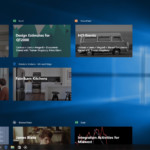
Enlarge / Project Neon in the Groove Music app. (credit: Tom Hounsell ) SEATTLE—Earlier this year, pictures of a new Windows look and feel leaked . Codenamed Project Neon , the new look builds on Microsoft Design Language 2 (MDL2), the styling currently used in Windows 10, to add elements of translucency and animation. Neon has now been officially announced, and it has an official new name: the Microsoft Fluent Design System. The awkward MDL2 name exists because the original codename for the geometric, text-centric style introduced with Windows Phone 7 and incrementally iterated ever since was subject of a trademark dispute. That look and feel was internally named Metro, but Microsoft had to stop using the Metro name after pushback from a German supermarket chain . The company didn’t initially have any particularly good name to refer to the styling formerly known as Metro, so many people continued to use that term for lack of anything better. It wasn’t until a couple of months after dropping “Metro” that a new name, “Microsoft Design Language,” was settled on. Our understanding is that Neon befell a similar fate; someone out there is using the Neon name, forcing Microsoft to pick a different appellation. This time around, however, the company has recognized that it’s important to have an official name for the style that it can talk about and describe, giving us “Microsoft Fluent Design System.” Read 6 remaining paragraphs | Comments
See more here:
New Windows look and feel, Neon, is officially the “Microsoft Fluent Design System”
 An anonymous reader writes: The Necurs botnet has been harnessed to fling a new strain of ransomware dubbed “Jaff”. Jaff spreads in a similar way to the infamous file-encrypting malware Locky and even uses the same payment site template, but is nonetheless a different monster. Attached to dangerous emails is an infectious PDF containing an embedded DOCM file with a malicious macro script. This script will then download and execute the Jaff ransomware. Locky — like Jaff — also used the Necurs botnet and a booby-trapped PDF, security firm Malwarebytes notes. “This is where the comparison ends, since the code base is different as well as the ransom itself, ” said Jerome Segura, a security researcher at Malwarebytes. “Jaff asks for an astounding 2 BTC, which is about $3, 700 at the time of writing.” Proofpoint reckons Jaff may be the work of the same cybercriminals behind Locky, Dridex and Bart (other nasty malware) but this remains unconfirmed. And Forcepoint Security Labs reports that malicious emails carrying Jaff are being cranked out at a rate of 5 million an hour on Thursday, or 13 million in total at the time it wrote up a blog post about the new threat. Read more of this story at Slashdot.