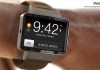
 Apple’s iWatch is the new primary focus of speculation for the company’s unannounced products, and a new article at Bloomberg today detailing its market potential also let slip that the wrist-mounted computer could arrive by the end of this year. Bloomberg’s source, which is one of the same that leaked details about the team within Apple working on the iWatch , said Apple hopes to have the device out to market “as soon as this year.” Bloomberg’s report today adds a bit more color about what we might expect to see from an Apple iWatch, too. The still-unconfirmed device would be able to make calls, check caller ID, relay map coordinates and carry a built-in pedometer and health monitoring sensors, according to the news publication’s source. That might mean another partnership with Nike for built-in fitness tracking, as we’ve seen in iPods and iPhones from the company to date. The news comes after reports from Apple supply partners and Gorilla Glass manufacturer Corning said that products based on its flexible Willow Glass product wouldn’t come to market for another three years, prompting many to assume that meant an iWatch was also at least three years out . Apple had patented a wrist-mounted computer based on flexible display tech, but that’s far from the company’s only option for producing an iWatch – it could easily take a more traditional form, like the Pebble smart watch . Bloomberg also notes that Apple’s chief product designer Jony Ive has also long had an interest in watches, and previously paid a visit with his Apple design team to Nike’s own watchmaking operations. Previously, Bloomberg reported that Apple has an internal team of as many as 100 individuals working on the iWatch project. Of course, despite the growing number of reports around the iWatch, Apple keeps its release timelines purposefully close to the chest for a reason: even if it was targeting a 2013 launch for the iWatch, missing that date wouldn’t actually constitute a delay since nothing has been officially announced. Accordingly, it’s always a good idea to treat rumors at this stage in the game with a healthy dose of skepticism, even when sourced from reputable publications. Still, Google wants to launch its own wearable computing product by year’s end , so there’s at least one reason for Apple to target the same time frame.
More here:
Apple’s iWatch Could Arrive By The End Of 2013, Says Bloomberg


 An anonymous reader writes “Gaming on Linux is growing fast right now, and most of that is thanks to Steam. Initially, Steam committed only to the most popular desktop distribution, Ubuntu, but more recently has opened the door to others. So what do you do when you want to game in Linux and you’re using something a little less popular — at least, on the desktop? If you’re a programmer called GhostSquad57, you rewrite the installer for Debian. GhostSquad57 uploaded his efforts to Github yesterday, and has since reached out to the Linux community.” Read more of this story at Slashdot.


