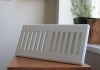
 Disrupt NY 2013′s Startup Battlefield competition is underway, and now New York native Keen Home is taking the stage to present its first-round pitch. Keen Home is a home automation startup, which aims to follow in Nest’s footsteps by building remote vents for your central air conditioning and heating systems that can be controlled from your smartphone to optimally direct air where you actually need it — and away from places you don’t. Keen just launched its crowdfunding campaign on Indiegogo . Keen Home is the brainchild of Ryan Fant and Nayeem Hussain, both of whom have experience founding companies in the home real estate and property-management space. The two believe their startup can appeal to consumers who want both more convenience in managing their home’s HVAC systems, and who want to save money and conserve energy. Keen Home’s debut product, the Keen Vent, accomplishes both. The idea came from Fant noticing that when vents were closed in other rooms, heating and cooling the one he was currently in became much easier. The problem is that those vents generally operate separately, and manually, in most homes. Even with some systems that provide a remote, like Activent, they aren’t centrally controlled in a way that makes them individually manageable from an existing device like a smartphone. “We found that just by closing four vents in an average-sized home, we’ve reduced the run time of the furnace by about 30 percent,” Fant explained in an interview. “So not only were we redirecting air to rooms that were actually in use by intelligently closing vents, we were increasing efficiency, as well.” Keen believes that the focus is always on the thermostat when it comes to home heating and cooling efficiency solutions, which is good but it ignores other parts of the problem. The Keen Vent solves that, by providing both a user-guided and automated way of opening and closing vents to change how air flows through a home. A homeowner can set a schedule for individual vents, too, and it can plug into weather data to respond intelligently to changing conditions. Fant says the Keen Vent can provide up to 32 percent reduction in run time for HVAC systems, which means lower monthly bills and less toll on the environment. Most heating and cooling vents in households are around 60 years old, Keen Home said on stage during their Disrupt Battlefield presentation on Monday. Individual vent covers will cost around $40 per vent, Keen predicts, with a $150 charge for the system in total. There’s also a recurring fee of around $4 per month for access to the cloud-based management platform, which also provides monthly reports. But Fant and Hussain plan to partner with utility companies and homebuilders to try to offer the tech initially at a discount price, perhaps with, say, six months of service rolled into a new construction. It’s the same model that satellite radio provider Sirius/XM uses to sell subscriptions with new cars. Keen Home is launching its Keen Vent product on Indiegogo today, and believes that seeking crowdfunding, as well as traditional investment, will help it get the word out and prove product viability. Its biggest challenges will be proving to users that a recurring subscription around centralized vent control is worth the cost, and in making sure that legacy players like Honeywell don’t swoop in and simply build their own similar systems. The team says that being aggressive with partnerships with big utility companies, the way others like Nest and thinkeco have done in the past, will be the key to making sure it can overcome both. Keen said on stage that the majority of its audience would be people who don’t know what a smart home is, so they tried to make sure it was as easy to install as possible. That’s why they’ve made the install process as simple as possible, and setting up the online dashboard involves only entering a code and then doing a roughly 15 question survey. In addition, they’re planning to partner with HVAC contractors to take care of more complicated installs. Battery life is expected to be around a year for the vents, so it’d be roughly equivalent to changing the power source on devices like smoke and carbon monoxide detectors.
View post:
Keen Home Launches Crowdfunding Campaign For Its Connected Central Heating And Cooling Vents

 Good news, spacefans: the image up top is real. Virgin Galactic’s rocket plane made history this morning, igniting its engines for the first time and hitting supersonic speeds. The achievement brings would-be passengers one step closer to a trip to the edge of space. Read more…
  Daniel Ryan describes his music as “a mix of Japanese folk music and glitch hop.” This isn’t normally my sort of thing — I pretty much only listen to music with words — but I played this one three times in a row this morning. There’s a lot of clever stuff going on here that I lack the vocabulary to describe but possess the aesthetic apparatus to appreciate. According to one redditor, the folk song is this track off the Samurai Champloo soundtrack. Nagasaki

 Not too long ago, Microsoft introduced its grand, pie-in-the-sky plans to maybe, someday turn your entire wall into an extension of your TV screen . Now, Microsoft Research has dropped some new details about how it all would work, and it’s shaping up to be pretty awesome . Read more…