
We get it: speeds and feeds aren’t everything. But this might be a rare case where a chip could actually make the whole story. Toshiba announced the Satellite Click today, and until you get to the spec sheet, it reads like a totally forgettable product. What we have here is a 13-inch detachable tablet with a 500GB hard drive inside the tablet and an extra battery inside the keyboard dock. Sounds like lots of other things you’ve read about, right? Well, lo and behold, the Click is actually one of the first products to ship with AMD’s Temash chip, whose graphics prowess we showed you back at CES . To be fair, this is a dual-core 1GHz A4-1200 processor with AMD Radeon HD 8180 graphics, not the quad-core one we demoed earlier. Even so, the general concept is the same: this is a system-on-a-chip tailored for tablets that makes use of AMD’s 28nm Graphics Core Next architecture, which you’ll also find inside some of AMD’s discrete GPUs. Depending on the exact chip, Temash promises to compete with Intel’s Atom processors as well as its Core i3 series. Unlike a Core i3 tablet, though, Temash allows for a fanless design, more akin to what you’d expect from an Atom or ARM-powered device. Also, it drives down the cost. The Click will go for about $599, making it $150 cheaper than the Core i3-powered HP Split x2 , which also has a 13-inch screen, dual batteries and a 500-gig hard drive in the dock. Granted, there are likely to be tradeoffs, and we suspect battery life could be one of them, if not speed. A Toshiba rep estimated runtime at three to four hours for the tablet only, and six to seven hours with the dock. That wouldn’t match up well against a new Haswell hybrid but then again, some of its competitors (like the Split x2) are based on Ivy Bridge, which isn’t so hot in the longevity department either. The Click will be available later this month exclusively at Best Buy and on Toshiba’s site. Hopefully, though, we’ll get some hands-on time later this week and see whether its graphical might is as great as promised.%Gallery-slideshow77126% Filed under: Tablets , AMD Comments
Taken from:
Toshiba’s Satellite Click detachable PC promises better graphics than your typical budget system
 UnknowingFool writes “For consumers who had hoped that Microsoft would greatly upgrade their recent entries into the tablet market, leaks and rumors have said that both machines will receive modest hardware changes. Surface Pro 2 will sport new Haswell processors which will increase battery life to 7 hours. RAM is expected to increase from 4GB to 8GB. Surface (formerly RT) will get Tegra 4 processors. The only other confirmed change will be new kickstands that have 2 positions instead of one.” Read more of this story at Slashdot.


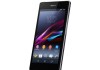 Sony has named a new flagship in its Android-powered Xperia smartphone line up which focuses on beefing up camera capabilities. The 4G Xperia Z1, roundly leaked under the moniker ‘Honami’ but officially confirmed today at Sony’s IFA press conference in Berlin, is a follow up to the 5-inch, quad-core Xperia Z unboxed at the start of the year at CES. The Xperia Z1 has a 20.7MP camera on its rump (vs the 13.1MP on the Xperia Z) coupled with a 1/2.3-inch Exmor RS CMOS image sensor, Sony’s G Lens (27mm wide angle, f2.0 aperture) and Bionz image processing engine which Sony users in its standalone cameras. There’s also 3x “clear image zoom” — with Sony claiming its optical zoom delivers “zero distortion”. Sony is making big boasts for this lens combo — claiming it offers “best in class imaging” and is the “ world’s leading camera in a smartphone ” (Nokia may however disagree; its Lumia 1020 smartphone has a 41MP lens ). NB: Sony’s odd wording here — “camera in a smartphone” — can be explained by its simultaneous attempts to extend phone camera smarts via a hardware add-on lens system that clips onto any phone , including the Xperia Z1. Sony is preloading a series of camera apps onto the Z1 to extend its camera capabilities on the software side — including Social Life, a camera streaming app to broadcast what’s going on around you to Facebook; a Timeshift burst mode to take multiple images so you can choose the best shot from several; a visual search app called Info-Eye to get more info on snapped products/landmarks; and an augmented reality app called AR Effect to overlay customised animations onto images. Sony is clearly following in the footsteps of rivals’ strategy here, including Nokia (with its PureView imaging push) and Samsung , which has also focused on making its own suite of imaging apps for flagship devices such as the Galaxy S4. But as well as making its own apps, Sony’s hoping to get developers working for it on the camera front too. “It’s built with an open SDK and we’re already working with a talented group of app developers that will extend its capabilities, ” it said today. Elsewhere, the Xperia Z1 looks to be a slightly beefed up version of its earlier sibling, with the same size 5-inch 1080p display — albeit this time including newer Sony screen tech that it has also brought to the Xperia Z Ultra phablet. Sony’s Triluminos screen tech apparently supports a greater range of colours with natural shades. The Z1 also features Sony’s X-Reality technology for improving the viewing experience of low res video. The Xperia Z1 runs Android 4.2 Jelly Bean at launch. Under the hood it has a 2.2Ghz quad-core Qualcomm Snapdragon 800 chipset. There’s also 2GB RAM, 16GB internal storage –expandable via a microSD card slot — and a 3, 000mAh battery. Design wise, the Xperia Z1 shares the look and feel of the rest of Sony’s Xperia range — with clean lines and blunt edges, although Sony says it’s evolved the design, most notably by adding a one piece aluminium casing to all the plastic. Oh and the Z1 is also waterproof, as is its predecessor. To ram that point home, Sony apparently thought it was a good idea to entertain IFA attendees by getting some ladies to cavort with some phones in some water . As sexist displays go, it’s pretty impressive — even by tech industry ‘booth babe’ standards — so well done Sony for alienating ~50% of potential buyers. It better hope the other 50% gets so distracted they end up buying two phones apiece. On the size front, neither the Xperia Z1 or its numeral-less sibling is the largest handset Sony makes, although their five inch displays sits on the cusp of phablet territory. The Sony enormo-phone award goes to its palm-stretching Xperia Z Ultra : a 6.4 inch phablet that’s so large Sony sells a Bluetooth handset accessory for it so you can comfortably take calls. Sony said the Xperia Z1 is due to hit shelves “starting this month”.