Earthquakes’ booms big enough to be detected from orbit

Artist’s impression of GOCE satellite. European Space Agency Last year, we reported on some mysterious booms in a small Wisconsin town that turned out to be small earthquakes. While it was an unusual story, it’s actually not that uncommon of an occurrence. Early in the summer of 2001, folks in Spokane, Washington started reporting similar booms. The sounds continued, off and on, for about five months. The mystery didn’t last long, as the earthquakes responsible were picked up by seismometers in the area. (A particularly loud one that took place exactly one month after the September 11, 2001 terrorist attacks in New York did rattle some nerves, however.) In total, 105 earthquakes were detected, with a couple as large as magnitude 4.0. For most of them, there wasn’t good enough seismometer coverage to really pinpoint locations, but some temporary units deployed around the city in July located a number of events pretty precisely: the earthquakes were centered directly beneath the city itself. While a dangerously large earthquake is pretty unlikely in Wisconsin, the possibility can’t be ignored in Washington. The 2011 earthquake in Christchurch, New Zealand was only a magnitude 6.3, but the damage was extensive because the epicenter was so close to the city. In L’Aquila, Italy, a swarm of small earthquakes in 2009 was followed by a deadly magnitude 6.3. (The poor public communication of risk during that swarm netted six seismologists manslaughter convictions .) Read 10 remaining paragraphs | Comments

View article:
Earthquakes’ booms big enough to be detected from orbit

The camera that captured the first millisecond of a nuclear bomb blast

These are photographs of the first few milliseconds of nuclear explosions. They lead scientists to several new discoveries as to how nuclear bombs worked. But how do you capture the first millisecond of a nuclear bomb? With several rapatronic cameras, a Kerr cell, and a little physics. More »

View original post here:
The camera that captured the first millisecond of a nuclear bomb blast

Human Rights Watch: Petition Against Robots On the Battle Field

First time accepted submitter KublaCant writes “‘At this very moment, researchers around the world – including in the United States – are working to develop fully autonomous war machines: killer robots. This is not science fiction. It is a real and powerful threat to humanity.’ These are the first words of a Human Rights Watch Petition to Presdient Obama to keep robots from the battlefield. The argument is that robots possess neither common sense, ‘real’ reason, any sense of mercy nor — most important — the option to not obey illegal commands. What with the fast-spreading use of drones et al. , we are allegedly a long way off from Asimov’s famous Three Laws of Robotics being implanted in autonomous fighting machines, or into any ( semi- ) autonomous robot. A ‘Stop the Killer Robots’ campaign will also be launched in April at the British House of Commons and includes many of the groups that successfully campaigned to have international action taken against cluster bombs and landmines. They hope to get a similar global treaty against autonomous weapons. The Guardian has more about this, including quotes from well-known robotics researcher Noel Sharkey from Sheffield University.” Read more of this story at Slashdot.
Read the original:
Human Rights Watch: Petition Against Robots On the Battle Field

Islamists In Bangladesh Demand Murder of More Bloggers

An anonymous reader writes “Days after the killing of leftist blogger Thaba Baba, mosques throughout Bangladesh called for a popular uprising to demand the killing of other bloggers who had held a rally calling for the death of Jama’at-e-Islami leaders convicted of war crimes. This happens in an atmosphere of ongoing tension between Left and Right, with the leftist government threatening to outlaw rightist parties while the right uses violence to quiet selected enemies.” Read more of this story at Slashdot.

More:
Islamists In Bangladesh Demand Murder of More Bloggers

Circular Beam of Electrons

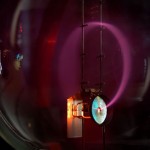
Beam of electrons moving in a circle, due to the presence of a magnetic field. Purple light is emitted along the electron path, due to the electrons colliding with gas molecules in the bulb. (Photo: Marcin Bialek ) Oh, how I love you guys. In our recent post A Fiery Dance on the Sun , Neatoramanaut PlasmaGryphon kindly took the time to explain to us the physics behind solar flares. In the explanation , there was a link to Wikipedia article on Lorentz force , where I found this fascinating image of a circular beam of electrons in a Teltron tube . Neat, huh? ( Thanks PlasmaGryphon! )

See more here:
Circular Beam of Electrons

Facebook’s Providing Free (Or Cheap) Data Around the World—For Facebook Apps

Facebook has announced that, over the coming months, it will be partnering with 18 network operators in 14 countries to provide users with free or discounted data for some of its mobile apps. More »

Taken from:
Facebook’s Providing Free (Or Cheap) Data Around the World—For Facebook Apps

Sony unveils thinnest 10.1″ tablet ever—the Xperia Tablet Z

The Sony Xperia Tablet Z, one of the hardiest and most svelte tablets we’ve seen. Sony Sony is unveiling a new Android tablet, the Xperia Tablet Z, at Mobile World Congress in Barcelona Monday. Sony claims the tablet is not only the “world’s thinnest 10.1-inch tablet” at 6.9 millimeters, but it’s apparently waterproof in up to three feet of water for 30 minutes. Inside, the Xperia Tablet Z has a quad-core 1.5GHz Qualcomm Snapdragon S4 Pro processor, 2GB of RAM, and a 1920×1200 display running Android 4.1 Jelly Bean. (Sony has gone scouts-honor that the tablet will be updated to 4.2 “after launch.”) The tablet weighs 495 grams (1.05 pounds) and it has an 8-megapixel rear and 2-megapixel front camera, plus 16GB/32GB storage configurations with a microSD slot than can take up to a 64GB card. The tablet also contains an IR blaster that works with a special version of an app Sony has created called TV SideView. TV SideView integrates with a user’s cable provider and allows users to browse the program guide as well as currently airing content. Read 2 remaining paragraphs | Comments

Read the original post:
Sony unveils thinnest 10.1″ tablet ever—the Xperia Tablet Z

Huawei Claims It Has the World’s Fastest 4G Phone—But Who Really Cares?

Huawei could add a waffle-maker to its Ascend P2, and I doubt even that would be enough to pull people over to its side of the phone stores. Unlike the Ascend D2 unveiled at CES, there’s no 3,000mAh battery lurking here (you’ll have to “make do” with a 2420 one), but there’s a CAT 4LTE chipset, meaning 4G speeds can reach 150Mbps (the iPhone 5 and S3 LTE only have CAT 3, FYI). More »

View the original here:
Huawei Claims It Has the World’s Fastest 4G Phone—But Who Really Cares?

Bees Can See the Electric Field of Flowers

Flowers are pretty and colorful to you and me, but to a bee, they’re downright electrifying. You see, bees can sense the electric field that surrounds a flower: Dominic Clarke and Heather Whitney from the University of Bristol have shown that bumblebees can sense the electric field that surrounds a flower. They can even learn to distinguish between fields produced by different floral shapes, or use them to work out whether a flower has been recently visited by other bees. Flowers aren’t just visual spectacles and smelly beacons. They’re also electric billboards. Learn how a flower’s electric field is actually also useful for bees as it tells them whether other bees have visited it before. Ed Yong of Not Exactly Rocket Science explains: Link

See more here:
Bees Can See the Electric Field of Flowers

NVIDIA Tegra 4 benchmarked, breaks all sorts of speed records (video)

When NVIDIA unveiled Tegra 4 back at CES, we scrambled to get hands-on with a reference device. And though our initial performance impressions were positive — it runs 1080p video and games smoothly — there was only so much we could say to illustrate how fast the performance is. After all, Tegra 3 already does a fine job handling games and full HD movies. What we really needed were benchmarks, some quantitative data to help show the difference between Tegra 4 devices and whatever’s currently on the market. Fortunately for all of you, we just got our chance: here at Mobile World Congress, the company has reference tablets set up expressly for the purpose of running tests. So, we did just that… over and over and over until we had a long list of scores. Meet us after the break to see how it fared. Filed under: Tablets , Mobile , NVIDIA Comments

See more here:
NVIDIA Tegra 4 benchmarked, breaks all sorts of speed records (video)