(credit: Microsoft) SEATTLE—When Microsoft first introduced the Windows Subsystem for Linux (WSL) at last year’s Build developer conference , it said that it was doing so to make developers who were familiar with the Linux command line feel comfortable on Windows . The immediate and inevitable question was “Well, what about Windows Server?” Development is one thing, but what if organizations wanted to occasionally deploy their Linux software on Windows? Although Windows Server 2016 and Windows 10 share many components, the Server operating system hasn’t thus far included WSL, consistent with the “developer only” rationale. But that’s going to change: at Build this week, Microsoft announced that WSL will be included in Server later this year. Microsoft still isn’t positioning this as a way of running Linux server in production on Windows; rather, the company says the addition will be useful for administrative tasks. With WSL, Windows can run scripts written for Linux. But we’re hard-pressed to see things stopping there; it seems inevitable that at some point, Windows will offer the ability to run Linux server software as one of its features. Read 3 remaining paragraphs | Comments
More:
Windows Server will add the Linux subsystem, join the Insider program
 Orome1 writes: In the last five months, Google’s OSS-Fuzz program has unearthed over 1, 000 bugs in 47 open source software projects… So far, OSS-Fuzz has found a total of 264 potential security vulnerabilities: 7 in Wireshark, 33 in LibreOffice, 8 in SQLite 3, 17 in FFmpeg — and the list goes on… Google launched the program in December and wants more open source projects to participate, so they’re offering cash rewards for including “fuzz” targets for testing in their software. “Eligible projects will receive $1, 000 for initial integration, and up to $20, 000 for ideal integration” — or twice that amount, if the proceeds are donated to a charity. Read more of this story at Slashdot.
 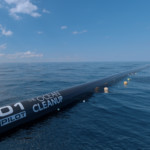 The Ocean Cleanup , a Dutch foundation that aims to deal with plastics polluting our seas, says it’s finally ready to put its technology to work. In a statement released today, the organization has revealed that it plans to start cleaning up the Great Pacific Garbage Patch in early 2018 using its newly redesigned cleaning system. That garbage patch is the biggest collection of debris in the ocean, a massive soup of visible and microscopic plastic particles poisoning marine life. The ship captain who discovered it in 2003 said he “never found a clear spot” in the week it took to cross the region. While Boyan Slat (the organization’s founder) originally envisioned trapping plastic trash with one large screen tethered to the ocean floor, the new design is smaller, sturdier and can save the group a ton of money. Instead of deploying a 60-mile stationary screen, they plan on releasing 50 smaller ones that measure 0.6 miles in length. They’ll weigh the floating screens down with anchor, so they can move with the currents like plastics do, albeit a bit slower in order to trap debris. Slat told FastCompany that he expected the original design to clean up half of the massive garbage patch in 10 years for $320 million. Now, he expects the new design to cut that timespan in half and to cost the group significantly less than that amount. Since he and his team still need to fund the project, though, they plan to use the plastic they collect to make items they can sell, such as sunglasses, chairs and car bumpers. Source: The Ocean Cleanup