An anonymous reader quotes the Bay Area Newsgroup: Wells Fargo may have opened as many as 3.5 million bogus bank accounts without its customers’ permission, attorneys for customers suing the bank have alleged in a court filing, suggesting the bank may have created far more fake accounts than previously indicated. The plaintiffs’ new estimate of bogus bank accounts is about 1.4 million, or 67%, higher than the original estimate — disclosed last year as part of a settlement with regulators — that up to 2.1 million accounts were opened without customers’ permission… The attorneys covered a period from 2002 to 2017, rather than the previously scrutinized five-year stretch from 2011 to some time in 2016 in which the bank acknowledged setting up unauthorized accounts. Wells Fargo terminated 5, 300 employees for creating fake accounts, and their CEO now acknowledges that “we had an incentive program and a high-pressure sales culture within our community bank that drove behavior that many times was inappropriate and inconsistent with our values.” In a possibly-related story, Wells Fargo plans to shut 450 branches over the next two years. Read more of this story at Slashdot.
Originally posted here:
Up To 1.4M More Fake Wells Fargo Accounts Possible
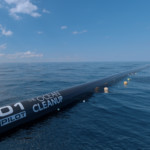 The Ocean Cleanup , a Dutch foundation that aims to deal with plastics polluting our seas, says it’s finally ready to put its technology to work. In a statement released today, the organization has revealed that it plans to start cleaning up the Great Pacific Garbage Patch in early 2018 using its newly redesigned cleaning system. That garbage patch is the biggest collection of debris in the ocean, a massive soup of visible and microscopic plastic particles poisoning marine life. The ship captain who discovered it in 2003 said he “never found a clear spot” in the week it took to cross the region. While Boyan Slat (the organization’s founder) originally envisioned trapping plastic trash with one large screen tethered to the ocean floor, the new design is smaller, sturdier and can save the group a ton of money. Instead of deploying a 60-mile stationary screen, they plan on releasing 50 smaller ones that measure 0.6 miles in length. They’ll weigh the floating screens down with anchor, so they can move with the currents like plastics do, albeit a bit slower in order to trap debris. Slat told FastCompany that he expected the original design to clean up half of the massive garbage patch in 10 years for $320 million. Now, he expects the new design to cut that timespan in half and to cost the group significantly less than that amount. Since he and his team still need to fund the project, though, they plan to use the plastic they collect to make items they can sell, such as sunglasses, chairs and car bumpers. Source: The Ocean Cleanup