iOS 8 Will Finally Allow Third Party Keyboards

Many prayers were answered on Monday, when Apple announced that iOS 8 would support third party keyboards. That means you folks complaining that Swype doesn’t work on iPhone, don’t need to complain anymore. This, in addition to the new native keyboard functionality means that typing on iOS device just got a lot better. Read more…

See original article:
iOS 8 Will Finally Allow Third Party Keyboards

Apple will let you log into other apps with TouchID

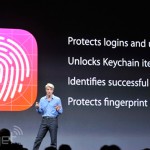
Guess what folks! With iOS 8 Touch ID will finally be useful for something besides unlocking your phone and buying apps. During the big keynote at WWDC 2014 Apple announced the debut of an API for TouchID. That means other apps will be able to use the fingerprint scanner on your iPhone for authentication. Your actual fingerprint data is still stored securely on the hardware, and is never actually exposed to developers. That means you could quickly and easily order a bombproof case for your precious phone just by holding your thumb across the home button and never worry that a bug in the Amazon app could expose your fingerprint to nefarious actors. That should relive some of the pain associated with keeping all your various accounts secure — which, as you’ve been told countless times, should all have unique passwords with a mixture of letters, numbers and special characters. Android users may have in-app access to LastPass , but simply scanning your thumbprint seems that much easier. Filed under: Mobile , Apple Comments

Read the original:
Apple will let you log into other apps with TouchID

Meet “Cupid,” the Heartbleed attack that spawns “evil” Wi-Fi networks

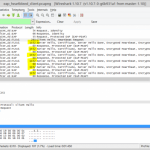
A packet capture showing Cupid attacking a wireless network. SysValue It just got easier to exploit the catastrophic Heartbleed vulnerability against wireless networks and the devices that connect to them thanks to the release last week of open source code that streamlines the process of plucking passwords, e-mail addresses, and other sensitive information from vulnerable routers and connected clients. Dubbed Cupid, the code comes in the form of two software extensions. The first gives wireless networks the ability to deploy “evil networks” that surreptitiously send malicious packets to connected devices. Client devices relying on vulnerable versions of the OpenSSL cryptography library can then be forced to transmit contents stored in memory. The second extension runs on client devices. When connecting to certain types of wireless networks popular in corporations and other large organizations, the devices send attack packets that similarly pilfer data from vulnerable routers. The release of Cupid comes eight weeks after the disclosure of Heartbleed , one of the most serious vulnerabilities to ever hit the Internet. The flaw, which existed for more than two years in OpenSSL, resides in “heartbeat” functions designed to keep a transport layer security (TLS) connection alive over an extended period of time. Read 5 remaining paragraphs | Comments

See more here:
Meet “Cupid,” the Heartbleed attack that spawns “evil” Wi-Fi networks

World’s First Fully Organic Flexible OLED Will Wrap Round Your Wrist

The idea of truly flexible displays never gets boring, and now Plastic Logic is taking us one step closer. Its latest flexible OLED is the world’s first to be made using fully organic transistors—and it’s surprisingly pleasing display could wrap around your entire wrist. Read more…

Read More:
World’s First Fully Organic Flexible OLED Will Wrap Round Your Wrist

OS X Yosemite unveiled at WWDC, features big UI overhaul

Photo by DAVID ILIFF. License: CC-BY-SA 3.0 This morning at Apple’s 2014 Worldwide Developer’s Conference, Apple SVP Craig Federighi gave us our first official look at the upcoming version of the Macintosh desktop operating system. This is the tenth formal release of OS X (which is pronounced “oh ess ten,” never “oh ess ecks”); Apple’s naming convention uses “OS X” as the brand, separate from the version, and so the brand and version of this release is indeed “OS X 10.10″—”oh ess ten ten dot ten” (or “ten point ten,” if you insist). Starting with OS X 10.9, though, Apple has given the OS California-themed names—10.9 was “OS X Mavericks,” after a famous surfing location, and this new version is “OS X Yosemite,” named after California’s Yosemite National Park. Mavericks’ branding and banners were all wave-related, after the surf theme; Yosemite’s desktop features the famous slab-sided southwest face of Half Dome , one of the park’s most recognizable rock formations. (PC gamers who cut their teeth in the late 80s and 90s will also recognize Half Dome from its role as the logo of the legendary adventure gaming company Sierra On-Line .) Translucency and new Dock icons. “Translucency” is the name of the day, with trandlucent panels and sidebars popping up all in all windows. The icons in the Dock have also gotten a big overhaul, gaining a very iOS-like appearance across the board. “You wouldn’t believe how much time we spent crafting that trash can,” joked Federighi. The revised interface can also be shifted to a “dark” mode, where windows and menus shift to light text on a smoky background instead of the Mac’s more typical black-on-white. Read 6 remaining paragraphs | Comments

Read the original:
OS X Yosemite unveiled at WWDC, features big UI overhaul

Google To Spend $1 Billion On Fleet of Satellites

An anonymous reader writes “Google is planning to spend over $1 billion on a fleet of satellites to extend Internet access to unwired regions around the world. ‘The projected price ranges from about $1 billion to more than $3 billion, the people familiar with the project said, depending on the network’s final design and a later phase that could double the number of satellites. Based on past satellite ventures, costs could rise. Google’s project is the latest effort by a Silicon Valley company to extend Internet coverage from the sky to help its business on the ground. Google and Facebook Inc. are counting on new Internet users in underserved regions to boost revenue, and ultimately, earnings. “Google and Facebook are trying to figure out ways of reaching populations that thus far have been unreachable, ” said Susan Irwin, president of Irwin Communications Inc., a satellite-communications research firm. “Wired connectivity only goes so far and wireless cellular networks reach small areas. Satellites can gain much broader access.”‘” Read more of this story at Slashdot.

More:
Google To Spend $1 Billion On Fleet of Satellites

These Extra Arms Will Help You Lift Heavy Objects Like A Super Cyborg

 It’s hard out there for men and women who are not the multi-armed goddess of destruction and rebith, Kālikā. MIT researchers have created a pair of robotic arms that connect to your shoulders and give you another pair of pinchers to help you lift heavy objects, keep objects in place while you attach them overhead, or subjugate Lord Shiva with your power to both create and destroy. Read More

Read this article:
These Extra Arms Will Help You Lift Heavy Objects Like A Super Cyborg

Acer shows off ‘Extend’ app allowing you to control your phone from your PC

For every promising concept we see, there’s one that gets scrapped before ever making it to market. That’s what happened with Acer’s ” Extend ” dock, an accessory that would have allowed you to connect your smartphone to a clamshell-style dock with a display, keyboard and a spare battery to recharge your handset. Turns out, lots of people already carry laptops, and don’t necessarily need to transform their phones into a de facto tablet or netbook. What they do need, though, is to move stuff on and off their phone, or pick up on their PC where they left off on their handset. Enter Acer — again. The company has totally re-thought its Extend concept, so that rather than use a dock, you just have to install an app on your Windows PC, allowing you to control the phone. To connect your phone, you can either use a standard USB cable, or connect wirelessly, assuming your PC and phone are on the same network. Once your phone’s homescreen appears in a phone-shaped emulator box, you can do things like drag and drop files on and off the devices. You can also, say, share a YouTube video on your phone to Acer Extend, and have it open in whatever your default browser is. Ditto for other kinds of content, like PDF files and Microsoft Office documents. If you were desperate, you could also potentially use this to bypass your company’s VPN, and access blocked sites over 3G. In the demo we saw here at Computex, the emulator ran consistently smoothly. Acer says this isn’t an accident: It’s aiming for frame rates of at least 24 fps for each device. The catch, though, is that the performance here depends partly on the phone, and apparently not every device is up to snuff. To meet that 24-fps minimum, then, Acer is only releasing the app for some of its phones — namely, flagships and some mid-range devices. So if you happen to be the lucky (?) owner of a Liquid E2 , you’re going to be left out on this one. Zach Honig contributed to this report. Filed under: Cellphones , Software , Mobile , Acer Comments

See the article here:
Acer shows off ‘Extend’ app allowing you to control your phone from your PC

Asus Goes Nuts With Their Transformer V Dual-Boot Win8/Android Laptop

 If you need a laptop that’s also a tablet that’s also a cellphone that’s also a Windows 8.1 machine that’s also an Android device, I think we found just the laptop for you. Dubbed the Asus Transformer V (as in “Five, ” not vendetta) the device dual boots into Android instantly and has a little ZenFone stuck to the back of the screen, a feature that… Read More

Visit site:
Asus Goes Nuts With Their Transformer V Dual-Boot Win8/Android Laptop

Google is building 180 satellites to spread internet access worldwide

Google’s plans for satellite-based internet access just got a little more concrete. The Wall Street Journal hears that the search firm is planning to build 180 “small, high capacity” satellites (not pictured here) that will go into low orbit and provide internet connections to underserved areas. While details aren’t forthcoming about the machines, there may be more on the way; reportedly, the company could “double” its vehicle count if all goes well. A spokeswoman didn’t confirm or deny the efforts, but did note that having an internet link “significantly improves people’s lives.” The initiative might be very expensive, with tipsters estimating a cost between $1 billion to $3 billion. However, the satellites could eventually pay for themselves. They would really be an extension of the thinking behind the balloons from Project Loon — getting more people online increases the number of people who can see ads, improving Google’s bottom line. Any orbital internet service would most likely serve as a complement to Project Loon, providing data in far-flung, sparsely populated regions while the balloons handle places with greater demand. [Image credit: NASA/GSFC/Landsat, Flickr ] Filed under: Internet , Google Comments Source: Wall Street Journal

See the original article here:
Google is building 180 satellites to spread internet access worldwide