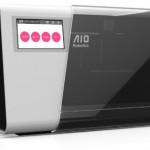
As the god of gods, Zeus has a tremendous list of assets at his disposal. A 3D printer that can also scan and transmit objects, however, has until now been out of reach. AIO Robotics is gearing up to introduce the Zeus of the modern world, an all-in-one machine that duplicates 3D objects , even when they’re not nearby. The device, which will make its Kickstarter debut on September 4th, will function in much the same way as a traditional all-in-one printer, with the obvious advantage of being able to create three-dimensional objects. Pricing has yet to be announced, but the creators expect Zeus to cost less than a Makerbot Replicator and Digitizer combo. It’s also forecasted to be “the most reliable and usable 3D printer so far, ” according to a RepRap forum post . Time will tell. Filed under: Household , Peripherals Comments Via: GigaOM Source: AIO Robotics , RepRap
Read the original post:
Kickstarter-bound Zeus copy machine prints, scans and faxes 3D objects

 Something very strange happened in the R&D lab of a UK-based electronics engineering company. A research team at Roke Manor Research was working on text-based radio frequency systems when a team member suddenly detected a signal—coming from a random bag of components off to the side. A small movement had apparently turned mechanical energy into electrical energy within the bag. After figuring out how this phenomena occurred, a Roke team subsequently harnessed it and created a new tiny tracking device. Their invention works over a greater distance than most existing tags, and here’s the killer quality that makes it really different from nearly all tracking devices: It works without batteries. The device is called Agitate and it’s a self-charging miniature device, no larger than a quarter. The agitate tag’s signal “can be tracked through walls and up to 20 kilometres in built-up areas, ” writes the company, “with an estimated range of 200 kilometres in free space.” So how does it work? Basically Agitate is made of two plates, one is metal and the other a charged material. When either of the two plates are moved, even just slightly, mechanical energy is turned into electrical and is used to transmit a radio pulse. The signal only lasts a few seconds but is more powerful than a cell phone. And it’s very precise—the shorter the radio pulse, the more precise the signal to a specific location. (more…)
  Microsoft is simplifying the way users managing multiple aliases on Microsoft accounts today, streamlining the way users add, remove, and manage multiple aliases across different Microsoft services. Read more here . Read more…

 hypnosec writes “If you are a BlackBerry owner, navigate to BlackBerry World (or just visit the website) and you will find that developer S4BB has developed over 47k apps for the BB platform. Unsurprisingly, most of them are just spammy apps that don’t add any value. Apps like ‘Restart Me Free, ‘ ‘Daily Quote, ‘ ‘Lock for SMS, ‘ ‘Search for Amazon, ‘ ‘Silent Foto Free’ are just a few among the thousands of apps on BlackBerry World that actually have no utility whatsoever. BlackBerry announced back in May that developers were increasingly interested in making apps for the platform, and that BlackBerry World had more than 120, 000 apps. This raises questions about the authenticity of the claims, and about the approval process that’s been accepting these apps. S4BB may have a few useful apps for the platform, but that doesn’t mean all of their apps are of ‘A’ quality. A statement from BlackBerry said, ‘Developers in all app stores employ a number of different monetization tactics. BlackBerry World is an open market for developers and we let market forces dictate the success or failure of these tactics.'” Read more of this story at Slashdot.
