Why scientists are redefining the kilogram

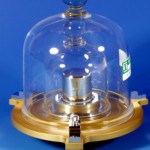
Physics is a funny thing. Despite dictating the behaviors and states of everything from atoms to stars, our interpretation of its effects are rooted in very human constructs. Meters, amperes and seconds were all defined using arbitrary terms and methods. For years, the kilogram and meter weren’t just terms, they were physical objects held in a Paris vault that some Victorian era committee just decided would be the standard. But now, for the first time since the international system of units (SI) was launched in 1960, the International Bureau of Weights and Measures (BIPM) is redefining four basic units of measurement , not by any human metric but by the immutable forces of the universe. “This is the most important decision that the BIPM has made in maybe 100 years, which may be a slight exaggeration, but at least since 1960 when they adopted the international system of units, ” Dr. Terry Quinn, Emeritus Director of the BIPM said. A committee from the BIPM met in Paris this week and voted on Friday to recommend redefining the kilogram, mole, ampere, and Kelvin. The motion will be put up for a vote at the General Conference on Weights and Measures (CGPM) next November. “For the scale that’s in your grocery store or bathroom, nothing’s going to change, ” Dr. David Newell of the National Institute of Standards and Technology (NIST) said. Instead, as Dr. Quinn explains, “it will give you the ability to make accurate measurements on scales far different from the current scale.” “This redefinition is a major overhaul, ” Newell continued, but certainly not the first. For example, we currently define the second by a specific number of cycles of radiation in a cesium-133 atom (9, 192, 631, 770 periods). It was originally considered to be the fraction 1/86400 of the mean solar day. The meter used to be a real thing that you could hold (like the kilogram still is) rather than the distance light travels in 1 / 299, 792, 458 seconds. “The SI is slowly evolving to the use of the invariance of nature, ” Newell said, rather than basing our observations on specific, physical artifacts. “What is going to change is that with this redefinition, the uncertainties of fundamental constants is either going to go to zero, ” he said. “Or the uncertainties of the related fundamental constants is going to be drastically reduced.” This means researchers will have far more accurate tools with which to make measurements. That higher fidelity will empower them to go back and reexamine the laws of physics that we believe to be correct and see if they’re as accurate as we think they are. “We may actually find that we don’t know everything, ” Newell said. Eventually, we may even take those insights and once again redefine the scientific measurement system when our technology has sufficiently advanced. Another advantage is these fundamental constants appear throughout nature, Newell explained. Researchers would no longer be tied to the kilogram and would be able to easily scale their units between the macroscopic and microscopic worlds. “Moreover the present system is explicit unit based — the second, the kilogram, the meter, the ampere — and there’s definitions for all of them, ” Newell continued. “The new system is explicitly constants-based — the transition frequency of a cesium atom is an exact number of hertz, the speed of light is an exact number of meters per second.” Take amperes for example. An ampere (or amp) is the basic unit of electrical current and is defined by the SI as the equivalent to one coulomb (the base unit of electrical charge) per second. Originally it was defined using a thought experiment . This is problematic for a couple reasons, PhysicsWorld points out. First, it relies on other units of measure — specifically kilograms, meters and seconds — for its definition. This methodology is exactly what the BIPM is trying to get away from. Second, the aforementioned “thought experiment” can never be tested in reality, since it imagines a situation with wire infinitely long, so at some point you’re going to have to approximate. Instead, the BIPM wants to define amps by the number of electrons that flow through a wire by the exact number of electrons that actually flow through a wire. Recently, a team of researchers from German National Metrology Institute (PTB) in Braunschweig developed a Single Electron Pump . Electrons are generated on one side of a circuit, become trapped as they pass through a series of gates and then are released one at a time on the other side where they can be easily counted. Using this, we can define the ampere as the specific number of single electrons passing through a wire for a given length of time. Kilograms are equally quirky. The International Prototype Kilogram (IPK) is a cylinder of platinum-iridium sitting in a Paris Vault and is what all other kilograms are measured against. Problem is, materials have a habit of gaining and losing atoms due to chemical interactions with the atmosphere. Of the six official copies of the IPK, one has lost approximately 5 micrograms while two others have gained more than 50 micrograms of mass. You’d be hard-pressed to notice if someone dropped a 50 microgram weight on your toe but for the scientific community, those fluctuations make a big difference. The IPK isn’t just susceptible to atmospheric reactions. Being a physical object, it can be stolen or damaged. However, “you can’t steal Planck’s Constant, ” Quinn quipped. “If I were to drop [the IPK] on the floor and chip a piece off, the definition of mass would have to be changed because it is defined as this hunk of metal, ” Dr. Willie May, former Director of NIST and current VP of the BIPM, said. “But, by definition, it can’t change, ” Quinn interjected. “And so what would happen, had Dr. May dropped it on the floor and knocked a piece off, it would have remained the IPK and the mass of the rest of the universe would have changed.” That’s where the Kibble Balance comes in. Now on normal balancing scales, you determine the mass of an object by adding mass to the opposite side until they are in equilibrium. In the Kibble balance, the gravitational force generated by the weight on one side is countered with electromagnetic force on the other. With this method, and a bit of math, researchers can measure something called the Planck Constant . Thus we can define kilograms in terms of the Planck Constant rather than a lump of metal. Kelvin, thankfully, is a bit more straightforward. It’s the measure of temperature, terminating at absolute zero when all molecular motion stops. That absolute nature is important, since, unlike mass, relative temperatures don’t stack. For example, smash two, 10-pound blobs of clay, each heated to 100 degrees Fahrenheit together, the result will weigh 20 pounds but it won’t be any hotter. As such, measuring temperatures in Kelvin is more accurate than Fahrenheit or Celsius though it’s still being framed in an outdated model. Should the CGPM approve the redefinition of Kelvin next year, the unit will be defined using an acoustic thermometer . These devices measure the speed of sound waves travelling through a low-gravity gas sphere. Since the speed of those waves is fixed for a set temperature, you can calculate that by measuring the frequency of the resonating sound waves and the volume of the sphere. Even the mole is getting a makeover. This fundamental unit measures the amount of substance known as the Avogadro constant. Moles are used to bridge the gap between the micro and macroscopic worlds. It provides a useable frame of reference when dealing with miniscule items. Or, as XKCD once pointed out, a mole of moles would be 602, 214, 129, 000, 000, 000, 000, 000 animals (602 trillion trillion moles). That’s also the number of sand grains needed to bury the entire UK to a depth of about 40 centimetres, according to the NPL , or the number of human cells on Earth. The Mole is currently defined using an experiment known as the “primary method” which involves weighing a material of known composition. However, because this system bases the value of the mole on the mass of the prototype kilogram, the CGPM is considering redefining the unit. Instead, the group wants to drop carbon (the reference substance for moles) altogether and replace it with a 1Kg, 94-mmm wide, nearly spherical mass of 99.9995-percent pure silicon-28. Since the physical characteristics of the sphere — weight, diameter, size of the individual crystal lattices — are known, as well as how much a single silicon atom weighs, these measurements can be used to calculate the total number of atoms in the sphere and, in turn, a revised Avogadro’s constant . This isn’t the end of the BIPM’s efforts. The group is eyeing the atomic second ahead of the unit’s 50th anniversary of being tied to the radiation cycles of Cesium-133. “At the time we used the best atomic clock we could possibly have, ” Quinn explained. “But a lot of science has taken place and there are now ways of making atomic clocks 100 times better. And in the next ten years, I would say, there will be a new definition of the atomic second that is 100 times better.” Such an advancement will have implications in everything from space exploration and cutting edge physics research to more accurate GPS navigation in your car. “If we allow the art of the possible, ” May said, “you open up the future to things you’ve never even thought of.”

Read the article:
Why scientists are redefining the kilogram

WeWork Employees Caught Spying on Competition

An anonymous reader shares a report: The battle in the red-hot co-working space business is heating up. WeWork, the No. 1 player in the sector, allegedly sent two spies to infiltrate rival Knotel — to steal info and some customers, Knotel claimed. The spies showed up at seven Knotel properties in Manhattan last month in a “systematic attempt to pilfer Knotel’s proprietary information and trade secrets, ” according to a cease-and-desist letter the smaller company sent to WeWork. The Post has obtained a copy of the letter. The corporate espionage rookies may have pulled off the caper except, in a totally random happening, a Knotel employee recognized one of them as a friend of a friend, according to sources close to Knotel. While the pair used fake names to gain entry, according to the letter, a call to the Knotel worker’s pal got the spy’s real name — and a couple of social media inquiries turned up the fact that he worked for rival WeWork, sources said. The letter to WeWork asks for a reply by Oct. 13 — but so far Knotel hasn’t heard a peep from its rival, according to CEO Amol Sarva. While inside the Knotel offices, visited Sept. 12-14, the luckless spies posed “as the founders of a fast-growing startup” and said they needed space for their six-person company, according to the letter. Read more of this story at Slashdot.

See more here:
WeWork Employees Caught Spying on Competition

FBI tried and failed to unlock 7,000 encrypted devices

In an 11-month period, the FBI failed to gain access to around 7, 000 encrypted mobile devices, BBC News reports , which is about half of those targeted by the agency according to FBI Director Christopher Wray. In a speech given at the Association of Chiefs of Police conference yesterday, he said that device encryption was “a huge, huge problem, ” for the agency. The FBI publicly went after Apple following the 2015 San Bernardino terror attack as it sought access to the shooter’s locked iPhone 5c — a request that Apple staunchly refused . It eventually got around the issue by paying an undisclosed vendor reportedly $900, 000 for software that gave the agency access to the phone. While that incident garnered a lot of attention, it certainly wasn’t the first time the FBI made it clear that encrypted smartphones were a headache for the agency. In 2014, then Director James Comey said that secure communications could lead to “a very dark place” and called on Congress to change the Communications Assistance for Law Enforcement Act accordingly. Further, while the FBI presented the San Bernardino attacker’s phone as a special case of national security, the Wall Street Journal reported that the Department of Justice was pursuing nine similar requests around the same time. Wray said at the conference, “I get it, there’s a balance that needs to be struck between encryption and the importance of giving us the tools we need to keep the public safe.” But as cybersecurity expert Alan Woodward told BBC News , encryption is here to stay. “Encryption that frustrates forensic investigations will be a fact of life from now on for law enforcement agencies, ” he said. “Even if the equipment manufacturers didn’t build in such encryption it would be possible to obtain software that encrypted data in the same way.” Source: BBC News

View the original here:
FBI tried and failed to unlock 7,000 encrypted devices

Stephen Hawking’s PhD thesis now online

If you’re craving some light reading, might I suggest Stephen Hawking’s 1965 doctoral thesis ” Properties of Expanding Universes .” In celebration of “Open Access Week 2017,” Cambridge University Library has made Hawking’s 117-page thesis freely available online. “By making my PhD thesis Open Access, I hope to inspire people around the world to look up at the stars and not down at their feet; to wonder about our place in the universe and to try and make sense of the cosmos,” Hawking says . “Anyone, anywhere in the world should have free, unhindered access to not just my research, but to the research of every great and enquiring mind across the spectrum of human understanding. “Each generation stands on the shoulders of those who have gone before them, just as I did as a young PhD student in Cambridge, inspired by the work of Isaac Newton, James Clerk Maxwell and Albert Einstein. It’s wonderful to hear how many people have already shown an interest in downloading my thesis – hopefully they won’t be disappointed now that they finally have access to it!” From the thesis abstract: Some implications and consequences of the expansion of the universe are examined. In Chapter 1 it is shown that this expansion creates grave difficulties for the Hoyle-Narlikar theory of gravitation. Chapter 2 deals with perturbations of an expanding homogeneous and isotropic universe. The conclusion is reached that galaxies cannot be formed as a result of the growth of perturbations that were initially small. The propogation and absorption of gravitational radiation is also investigated in this approximation. In Chapter 3 gravitational radiation in an expanding universe is examined by a method of asymptotic expansions. The ‘peeling off’ behaviour and the asymptotic group are derived. Chapter 4 deals with the occurrence of singularities in cosmological models. It is shown that a singularity is inevitable provided that certain very general conditions are satisfied.

See the original article here:
Stephen Hawking’s PhD thesis now online

Returning to Second Life

Seriously, this once happened. A decade ago, dozens of media outlets and technologists discovered “The Next Internet.” An original cyberspace science fiction fantasy had finally come to fruition as the world gained a second digitized reality. In a short period of time, countries  established embassies , media companies  opened bureaus , one of Earth’s biggest rock bands played a concert , political campaigns took to its streets, and people became real-world millionaires plying their skills in this new arena. That much hyped “Next Internet?” You may remember it better by its official name—Second Life. For many modern Internet users, the platform has likely faded far, far from memory. But there’s no denying the cultural impact Second Life had during the brief height of its popularity. Explaining Second Life today as a MMORG or a social media platform undersells things for the unfamiliar; Second Life became an entirely alternative online world for its users. And it wasn’t just the likes of Reuters and U2 and Sweden embracing this platform. Second Life boasted 1.1 million active users at its peak roughly a decade ago. Even cultural behemoth Facebook only boasted 20 million at the time. Read 38 remaining paragraphs | Comments

See original article:
Returning to Second Life

2 Million IoT Devices Enslaved By Fast-Growing BotNet

An anonymous reader writes: Since mid-September, a new IoT botnet has grown to massive proportions. Codenamed IoT_reaper, researchers estimate its current size at nearly two million infected devices. According to researchers, the botnet is mainly made up of IP-based security cameras, routers, network-attached storage (NAS) devices, network video recorders (NVRs), and digital video recorders (DVRs), primarily from vendors such as Netgear, D-Link, Linksys, GoAhead, JAWS, Vacron, AVTECH, MicroTik, TP-Link, and Synology. The botnet reuses some Mirai source code, but it’s unique in its own right. Unlike Mirai, which relied on scanning for devices with weak or default passwords, this botnet was put together using exploits for unpatched vulnerabilities. The botnet’s author is still struggling to control his botnet, as researchers spotted over two million infected devices sitting in the botnet’s C&C servers’ queue, waiting to be processed. As of now, the botnet has not been used in live DDoS attacks, but the capability is in there. Today is the one-year anniversary of the Dyn DDoS attack, the article points out, adding that “This week both the FBI and Europol warned about the dangers of leaving Internet of Things devices exposed online.” Read more of this story at Slashdot.

Read More:
2 Million IoT Devices Enslaved By Fast-Growing BotNet

Five-minute allergy test passes the FDA’s scrutiny

A few years ago, researchers from the Swiss Federal Institute of Technology in Lausanne ( EPFL ) started developing what they eventually dubbed the “world’s most rapid” allergy test. Now, that test has received the FDA’s approval and will start telling you what you’re allergic to in as fast as five minutes next year. Abionic, the EPFL spinoff that took over the test’s development in 2010, created the abioSCOPE platform and its accompanying single-use test capsules to be able to detect your allergies with just a single drop of blood. After combining the blood with a reagent, the tester will place the mixture on the platform’s DVD-like mounting plate (see above) and allow it to form complex molecular complexes with the test capsules. Initial results will pop up on abioSCOPE’s screen in five minutes — the full results are due three minutes later. The system uses the integrated fluorescent microscope’s laser to check for the presences of those complexes, so you can quickly find out if you’re allergic to dogs, cats, common grass and tree pollens. Sure, the system can only test for four kinds of allergens, but at least you don’t have to undergo anything uncomfortable or invasive just to find out you’re allergic to your lawn. Source: EPFL , Abionic (1) , (2)

Visit site:
Five-minute allergy test passes the FDA’s scrutiny

Arkansas Will Pay Up To $1,000 Cash To Kids Who Pass AP Computer Science A Exam

theodp writes: The State of Arkansas will be handing out cash to high school students who pass an Advanced Placement test in computer science. “The purpose of the incentive program is to increase the number of qualifying scores (3, 4, or 5) on Advanced Placement Computer Science A exams, ” explained a press release for the Arkansas Advanced Placement Computer Science A Incentive Program (only 87 Arkansas public school students passed the AP CS A exam in 2016, according to College Board data). Gov. Asa Hutchinson added, “The Arkansas Department of Education’s incentive for high scores on the AP Computer Science A exam is a terrific way to reward our students for their hard work in school. The real payoff for their hard work, of course, is when they show their excellent transcripts to potential employers who offer good salaries for their skills.” The tiered monetary awards call for public school students receiving a top score of 5 on the AP CS A exam to receive $1, 000, with another $250 going to their schools. Scores of 4 will earn students $750 and schools $150, while a score of 3 will result in a $250 payday for students and $50 for their schools. The program evokes memories of the College Board’s Google-funded AP STEM Access program, which rewarded AP STEM teachers with a $100 DonorsChoose.org gift card for each student who received a 3, 4, or 5 on an AP exam. DonorsChoose.org credits were also offered later by tech-bankrolled Code.org and Google to teachers who got their students coding. Read more of this story at Slashdot.

More:
Arkansas Will Pay Up To $1,000 Cash To Kids Who Pass AP Computer Science A Exam

A new IoT botnet called Reaper could be far more virulent than Mirai

In 2016, an Internet of Things worm called Mirai tore through the internet , building botnets of millions of badly designed CCTVs, PVRs, routers and other gadgets, sending unstoppable floods of traffic that took down major internet services from Paypal to Reddit to Dyn. (more…)

See the article here:
A new IoT botnet called Reaper could be far more virulent than Mirai

First Class Travel, 1930s-Style: What Were the Interiors/Floorplan Like Inside the Hindenburg?

In the 1920s, if you wanted to cross the Atlantic you got on a ship. Then Germany set up the world’s first transatlantic air service for passengers, launching the Graf Zeppelin , the world’s largest airship at the time. In 1930 it could fly you all the way from Germany to Brazil. You’d leave Friedrichshafen on Saturday night and arrive in Rio de Janeiro on Thursday morning. By 1936 Germany had produced an even bigger blimp, the Hindenburg , which began shuttling passengers, cargo and mail from Frankfurt to New Jersey and back. The ship could carry 50 (later 72) passengers and had a crew of 40 to 60 people. The trip took about four days in each direction, and make no mistake, it was for rich passengers only; a one-way ticket was $400, which translates to about $7, 050 in 2017 dollars. It’s bizarre seeing the swastika flying over New York City. 1937, folks. So what did you get for your money? First off, the travel time was almost a day faster than going by ship, plus there was no chance you’d get seasick. The lift-off procedure was so gentle that passengers who weren’t paying attention reportedly didn’t realize that they’d left the ground. Once in flight, the voyage was said to be so smooth that you could balance a pencil on a table. Speaking of tables, you ate the kind of luxury chow that “one might find at a traditional, high-end European hotel, ” according to Atlas Obscura , pointing out that the chef on the final Hindenburg voyage was from the Ritz in Paris. NPR lists “Beef Broth with Marrow Dumplings and Rhine Salmon a la Graf Zeppelin” as an example of a typical Hindenburg meal. The tables could alternatively be arranged in banquet style The tables could alternatively be arranged in banquet style If you had a European palate, the food probably tasted delicious. Airplane food sucks because the high altitudes deaden our taste buds. But the Hindenburg flew just 330 to 650 feet off of the ground! The passenger areas were not pressurized (except for a single room, we’ll get to that in a moment) and you could even open the windows. Those windows were on the promenades locating on the port and starboard sides, inbound of which were a lounge and the dining room. The lounge even contained a grand piano, made from aluminum to save weight. The lounge The lounge Downside of being in the lounge: Portrait of Hitler on the wall Although weight was spared wherever possible–you’ll note further down that they’re using ladders perforated with holes–it wasn’t to keep the blimp in the air, it was presumably so that they could haul more cargo. The lifting capacity of the blimp was such that they could even transport cars. The kitchen was downstairs, and all heat sources were electric. Food was shuttled upstairs by a dumbwaiter that led to a pantry off of the dining room. The passenger cabins were pretty tight and utilitarian, featuring two bunks, like in the sleeper compartment of a train. Each room did, however, have its own sink with both hot and cold running water. The toilets and a shower were downstairs, as was the bar. Yes, you could booze on this baby. The bar The bar Beyond the bar was a two-door airlock that led to the single pressurized room. This was, incredibly, a smoking room where you could puff on cigarettes, cigars or pipes–while riding in something that was kept aloft by 5, 000, 000 cubic feet of highly flammable hydrogen. The room was pressurized so that hydrogen could not enter it. Even still, the lighters provided were electric, as they didn’t want to risk open flame. The smoking room The smoking room The smoking room The Hindenburg’s operators were experimenting with a very cool feature: They rigged up a trapeze-like aircraft hook-on point. The idea was that as they approached their destination, customs officials would fly out to them, board, and process the passengers in the air, so that the passengers wouldn’t have to wait to do it on the ground. Two experiments with the aircraft hook-up, in March and April of 1937, ran into problems with turbulence. Then, before they had a chance to iron those kinks out, this happened in May: The ship was carrying 36 passengers and 61 crew members; what’s amazing is that 23 passengers and 39 crew members actually survived that. To this day, no one knows precisely what caused the initial explosion. The Hindenburg Disaster, as it came to be known, put an end to the era of blimp passenger flights. But for a short while you could cruise a couple of hundred feet above the Atlantic Ocean at 80 miles per hour, chowing down on marrow dumplings and salmon. See Also: What You Didn’t Know About Dirigibles

View post:
First Class Travel, 1930s-Style: What Were the Interiors/Floorplan Like Inside the Hindenburg?