7 More Viral Photos That Are Totally Fake

Everything is fake. Or at least it’s starting to feel that way. With the American campaign season still going strong, and the internet still, well… existing, we’ve been seeing a lot of suspicious photos in our social media streams. But don’t fall for any of these. They’re all fake. Read more…

Original post:
7 More Viral Photos That Are Totally Fake

Google To Deprecate SSLv3, RC4 in Gmail IMAP/POP Clients

Michael Mimoso, reporting for Threatpost: Google said that it will initiate on June 16 a gradual deprecation of SSLv3 and RC4 for Gmail IMAP/POP mail clients. Both the crypto protocols cipher are notoriously unsafe and are being phased out in big chunks of the Internet. Google, for its part, had already announced in May that it would no longer support SSLv3 and RC4 connections for Gmail SMTP. Google does note that most mail clients already default to safer TLS connections, and most will not be affected by the impending changes.”Unlike Gmail SMTP, this change will be rolled out as a gradual change, where it may take longer than 30 days for users to be fully restricted from connecting to Gmail from SSLv3 or RC4 connections; however, we recommend updating your clients soon in order to avoid any potential disruption, ” Google said in an announcement. Read more of this story at Slashdot.

Read More:
Google To Deprecate SSLv3, RC4 in Gmail IMAP/POP Clients

Run Android on an iPhone – with some heavy engineering and caveats

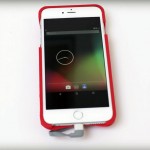
Familiar with cramming one operating system into somewhere it doesn’t belong , developers at Tendigi have just created a homemade iPhone case that lets you run Android on your iOS smartphone. (Well, kind of). Fortunately, because of the Android Open Source Project , it gave Nick Lee the freedom to clone the mobile OS and build his own local hardware. Before he went that far, Lee decided to test the concept — streaming Android across to an iPhone through a cable — with a Nexus 5. He needed tools that could communicate with iOS, as well as services that let USB cables play nice with an iPhone. Lee also crafted software that transmitted what was happening on the Android devices’ screen to the iPhone, while also send touch-input back. The next challenge: cramming it all into an iPhone “case”. See it working after the break. He then made his own tiny Android development board (all the technical specifics are here ), linking it to the soon-to-be franken-iPhone and its own power supply, prototyping and 3D-printing an enclosure to house it all and attach to the iPhone. It’s not the prettiest case, and really you’re ‘streaming’ Android to your iPhone screen, but it’s the man-hours thought that counts, right? Source: Tendigi

More:
Run Android on an iPhone – with some heavy engineering and caveats

Marshmallow is now on 10 percent of Android devices

The latest version of Android just hit a big, big milestone. Google’s early June developer stats have revealed that Marshmallow is now on just over 10 percent of Android devices, representing a huge jump from just 2.3 percent in March . Notably, only some of that surge can be credited to people upgrading from Lollipop. While the not-quite-current version’s adoption did go down (to 35.4 percent), the biggest declines in usage were for Jelly Bean and KitKat. In essence: many of those moving to Marshmallow may well have been replacing devices that were 3 or more years old. The timing isn’t coincidental, as you might have gathered. In the three months since we last looked back, numerous smartphone makers have delivered Marshmallow phones in force. The Galaxy S7 is the big kahuna, but you can also point to phones like the HTC 10 , LG G5 and Sony’s newer Xperias as factors. If you bought a brand new device this spring, especially if it was reasonably high-end, it might have been hard to avoid Marshmallow. To us, the big unknown is how well Marshmallow will fare by the time its successor rolls around in a few months, around Marshmallow’s first anniversary. Lollipop took a year and a half to become the dominant Android flavor. Although Marshmallow isn’t necessarily going to repeat history, its year-one figures should give you a good idea as to whether or not it’s doing as well as its predecessor. Source: Android Developers

Visit site:
Marshmallow is now on 10 percent of Android devices

Microsoft Could Turn Every PC Into an Xbox

For the past few years, Microsoft has been trying to mold Xbox One system’s user interface and functionalities to resemble that of Windows 8 and Windows 10’s Modern UI. But the company has also hinted that we will be seeing a closer integration in the coming months. It is expected to unveil some of that at E3 tradeshow next week. Long-time Microsoft watcher Tom Warren reports for The Verge: Microsoft is currently working on a secret project internally, codenamed Helix. Kotaku originally reported on the Project Helix name, and the work is designed to more closely combine Xbox and Windows 10. Some of that work has started, but more of it is due later this year and next year with future upgrades to Windows 10. Microsoft wants to enable features like streaming PC games to the Xbox One, but sources familiar with the company’s plans also tell us there are greater ambitions to make Xbox One games playable on a PC without needing a console for streaming. Part of this could involve bringing the full Xbox One UI and system directly into desktop versions of Windows 10. The latest Xbox One dashboards are built on top of Windows 10, so most of the work involved would be customizing the interface towards keyboard and mouse. Bringing the Xbox One UI over to Windows 10 machines would effectively turn every PC into an Xbox One, especially if they’re also capable of running the latest console games. Read more of this story at Slashdot.

Continue reading here:
Microsoft Could Turn Every PC Into an Xbox

FAA Warns of GPS Outages This Month During Mysterious Tests on the West Coast

Starting today, it appears the US military will be testing a device or devices that will potentially jam GPS signals for six hours each day. We say “appears” because officially the tests were announced by the FAA but are centered near the US Navy’s largest installation in the Mojave Desert. And the Navy won’t tell us much about what’s going on. Read more…

Read More:
FAA Warns of GPS Outages This Month During Mysterious Tests on the West Coast

‘Alarming’ Rise In Ransomware Tracked

An anonymous reader quotes a report from BBC: Cyber-thieves are adopting ransomware in “alarming” numbers, say security researchers. There are now more than 120 separate families of ransomware, said experts studying the malicious software. Other researchers have seen a 3, 500% increase in the criminal use of net infrastructure that helps run ransomware campaigns. The rise is driven by the money thieves make with ransomware and the increase in kits that help them snare victims. Ransomware was easy to use, low risk and offered a high reward, said Bart Parys, a security researcher who helps to maintain a list of the growing numbers of types of this kind of malware. Mr Parys and his colleagues have now logged 124 separate variants of ransomware. Some virulent strains, such as Locky and Cryptolocker, were controlled by individual gangs, he said, but others were being used by people buying the service from an underground market. A separate indicator of the growth of ransomware came from the amount of net infrastructure that gangs behind the malware had been seen using. The numbers of web domains used to host the information and payment systems had grown 35-fold, said Infoblox in its annual report which monitors these chunks of the net’s infrastructure. A lot of ransomware reached victims via spear-phishing campaigns or booby-trapped adverts, he said, but other gangs used specialized “crypters” and “packers” that made files look benign. Others relied on inserting malware into working memory so it never reached the parts of a computer on which most security software keeps an eye. Ars Technica reports that drive-by attacks that install the TeslaCrypt crypto ransomware are now able to bypass Microsoft’s EMET. Read more of this story at Slashdot.

Read More:
‘Alarming’ Rise In Ransomware Tracked
Apple Offers No Explanation for 7-Hour Outage

Apple services went offline for up to 7 hours Thursday — and the company has yet to offer an explanation. An anonymous reader writes: The outage affected the App Store, iTunes in the Cloud, Apple TV, Mail Drop, Find my iPhone, and Photos. During the outage, Apple responded to complaints on Twitter, “Thank you for the information. We’re aware of this issue and are investigating, ” Tech Times reports that the iCloud Music Library had also experienced an outage on Wednesday, and that just weeks ago Apple released an operating system update which bricked several iPad Pros. And yesterday Amazon also experienced a service outage. Read more of this story at Slashdot.

Read the original post:
Apple Offers No Explanation for 7-Hour Outage

US Army’s smart earplugs spare soldiers from loud noises

As you might imagine, soldiers can’t just use garden variety earplugs to protect their ears. It might tone down the sounds of explosions and gunshots, but it’ll also prevent them from hearing a crucial command or an enemy on the other side of a doorway. It’s less of an issue for the US Army these days, though. The military branch has been gradually rolling out a smart earplug, TCAPS (Tactical Communication and Protective System), that adapts to the audio realities of war. The smartphone-linked device softens louder noises, but amplifies quieter ones; if your squad leader needs to issue a command, you’ll hear it over the din of battle. It’s a relatively simple system, but it’s very flexible. Some versions link to a soldier’s existing communications, and it’ll play nicely with hearing aids . TCAPS is far from ubiquitous. Only 20, 000 of the earplugs are in the field, and it’s doubtful that every single person in the infantry will get one when they cost around $2, 000 a pop. However, it stands a relatively good shot of catching on. More than anything, the technology provides confidence — you know you’ll get crucial audio cues without going deaf. Source: NPR

More:
US Army’s smart earplugs spare soldiers from loud noises

How to Listen to and Delete Everything You’ve Ever Said to Google

Here’s a fun fact: Every time you do a voice search, Google records it. And if you’re an Android user, every time you say “Ok Google, ” the company records that, too. Don’t freak out, though, because Google lets you hear (and delete) these recordings. Here’s how. Read more…

Read More:
How to Listen to and Delete Everything You’ve Ever Said to Google