VMware’s dual-persona smartphones phones finally available to purchase

The first two phones to run VMware’s dual-persona software. VMware At long last, VMware’s dual-persona software for smartphones is available on actual devices. Today, VMware and Verizon Wireless announced that the Android-based LG Intuition and Motorola Razr M can now be purchased with VMware’s Horizon Mobile software, which separates the device into isolated partitions that keep a user’s work applications and data separate from personal stuff. VMware began promising virtualized smartphones in 2010 , claiming they would be available for sale in 2011. Samsung promised to support VMware’s virtualized phone vision in September 2011, and VMware started promising virtualization for iPhones and iPads in August 2012. We called it ” vaporware .” Samsung and Apple devices still aren’t running the dual-persona software, but it’s nice to see VMware phones finally materialize. VMware and Verizon said the Intuition and Razr M are immediately available for sale with Horizon Mobile software. Perpetual licenses to Horizon Mobile start at $125 per user and “can be purchased through local resellers of VMware and Verizon Wireless,” the companies said. Read 5 remaining paragraphs | Comments

See more here:
VMware’s dual-persona smartphones phones finally available to purchase

Feds seize money from Dwolla account belonging to top Bitcoin exchange Mt. Gox

jurvetson The Department of Homeland Security has apparently shut down a key mobile payments account associated with Mt. Gox, the largest Bitcoin exchange. Chris Coyne, the co-founder of online dating service OKCupid, tweeted out an e-mail he received from Dwolla this afternoon. The e-mail states that neither Coyne, nor presumably any other Dwolla user, will be able to transfer funds to Mt. Gox. Dwolla confirmed the change to the New York Observer , which first reported the story. Dwolla received a seizure warrant from a federal court. Read 4 remaining paragraphs | Comments

See the original post:
Feds seize money from Dwolla account belonging to top Bitcoin exchange Mt. Gox

The British ‘Atlantis’ is mapped in detail

Dunwich Beach Sutterstock A professor of physical geography has put together the most detailed map yet of the sunken medieval town of Dunwich using underwater acoustic imagining. The port town, often referred to as “the British Atlantis,” was a hub of activity up until its collapse in the 1400s. This was brought about after a series of epic storms battered the coastline in the 1200s and 1300s, causing repeated flooding, submerging parts of the town, and flooding the harbor and river with silt. Today it stands as a small village, but up until its demise it was around the same size as medieval London. Despite still existing at depths of just three to 10 meters (or, 9.8 ft to 32.8 ft) below sea level, the murky conditions have made investigating what lies beneath particularly tricky. Since 2010, however, Southampton’s David Sear—along with the GeoData Institute, the National Oceanography Center, Wessex Archaeology, and local divers from North Sea Recovery and Learn Scuba—has been exploring the muddy depths using dual-frequency identification sonar (DIDSON) acoustic imaging. Read 8 remaining paragraphs | Comments

Read More:
The British ‘Atlantis’ is mapped in detail

How hackers allegedly stole “unlimited” amounts of cash from banks in just hours

Wikipedia Federal authorities have accused eight men of participating in 21st-Century Bank heists that netted a whopping $45 million by hacking into payment systems and eliminating withdrawal limits placed on prepaid debit cards. The eight men formed the New York-based cell of an international crime ring that organized and executed the hacks and then used fraudulent payment cards in dozens of countries to withdraw the loot from automated teller machines, federal prosecutors alleged in court papers unsealed Thursday. In a matter of hours on two separate occasions, the eight defendants and their confederates withdrew about $2.8 million from New York City ATMs alone. At the same times, “cashing crews” in cities in at least 26 countries withdrew more than $40 million in a similar fashion. Prosecutors have labeled this type of heist an “unlimited operation” because it systematically removes the withdrawal limits normally placed on debit card accounts. These restrictions work as a safety mechanism that caps the amount of loss that banks normally face when something goes wrong. The operation removed the limits by hacking into two companies that process online payments for prepaid MasterCard debit card accounts issued by two banks—the National Bank of Ras Al-Khaimah PSC in the United Arab Emirates and the Bank of Muscat in Oman—according to an indictment filed in federal court in the Eastern District of New York. Prosecutors didn’t identify the payment processors except to say one was in India and the other in the United States. Read 3 remaining paragraphs | Comments

Taken from:
How hackers allegedly stole “unlimited” amounts of cash from banks in just hours

Obama orders agencies to make data open, machine-readable by default

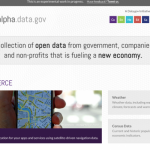
Alpha.data.gov, an experimental data portal created under the White House’s Open Data Initiative. Data.gov President Barack Obama issued an executive order today that aims to make “open and machine-readable” data formats a requirement for all new government IT systems. The order would also apply to existing systems that are being modernized or upgraded. If implemented, the mandate would bring new life to efforts started by the Obama administration with the launch of Data.gov four years ago. It would also expand an order issued in 2012 to open up government systems with public interfaces for commercial app developers. “The default state of new and modernized Government information resources shall be open and machine readable,” the president’s order reads. “Government information shall be managed as an asset throughout its life cycle to promote interoperability and openness, and, wherever possible and legally permissible, to ensure that data are released to the public in ways that make the data easy to find, accessible, and usable.” The order, however, also requires that this new “default state” protect personally identifiable information and other sensitive data on individual citizens, as well as classified information. Broadening the “open” mandate The president’s mandate was initially pushed forward by former Chief Information Officer of the United States Vivek Kundra. In May of 2009, Data.gov launched with an order that required agencies to provide at least three “high-value data sets” through the portal. Read 6 remaining paragraphs | Comments

Link:
Obama orders agencies to make data open, machine-readable by default

Network Solutions seizes over 700 domains registered to Syrians

While Syria’s Internet connection is back up, many of the sites hosted in Damascus have lost their domain names. As Brian Krebs of Krebs on Security reports , the domain registrar Network Solutions LLC has taken control of 708 domain names in the .com, .org, and .net top-level domains registered to Syrian organizations. The organizations affected by the seizure include the state-supported hacker group Syrian Electronic Army. Usually when there’s a domain name seizure, it’s the work of government agencies like Immigrations and Customs Enforcement or the FBI, or domains are shut down with the help of US Marshals as part of a court-sanctioned seizure related to malware. But in this case, Network Solutions appears to have seized the domains in question without coordinating with federal authorities, though its action was guided by federal regulations—domain name registration is one of the services explicitly banned in US trade sanctions enacted against Syria last year. Network Solutions has marked the seized domains with the notation “OFAC Holding,” indicating they were taken over in accordance with regulations propagated by the Department of the Treasury’s  Office of Foreign Assets Control , a unit of Treasury’s Office of Terrorism and Financial Intelligence. The vast majority of the seized domains were pointed at IP addresses assigned to the Syrian Computer Society. As we’ve reported previously, Syrian President Bashar al-Assad, who was an Army doctor and ophthalmologist before being groomed to take over for his father, was head of the Syrian Computer Society in the 1990s. He became president in 2000. The Syrian Computer Society acts as Syria’s domain registration authority and regulates the Internet within Syria, and is also believed to be connected to Syria’s state security apparatus. The Syrian Computer Society registered .sy domain names for the Syrian Electronic Army’s servers, giving the hacker group a national-level domain name (sea.sy) rather than a .com or other non-government address, signifying its status as at least a state-supervised operation. Read 1 remaining paragraphs | Comments

See the article here:
Network Solutions seizes over 700 domains registered to Syrians

Senate passes Internet sales tax in final vote, 69-27

Flickr user: 401(K) 2012 The US Senate passed an online sales tax in a vote this afternoon after a heated final round of debate. A small group of anti-tax Republicans, as well as Democratic Senators from states without sales tax like Montana and Oregon, argued vociferously against the bill—but to no avail. The final vote was 69-27, not much different than the 74-20 procedural vote that took place two weeks ago. The proposal has hardly changed at all in two weeks. The Marketplace Fairness Act, S.743, would allow states and localities to make Internet retailers collect sales tax from their customers if they do more than $1 million per year in out-of-state online sales. “Today the senate is voting to take a few more inches off the little guy,” said Senator Ron Wyden (D-OR), who has fought the bill hard. “You saw ads taken out by some of the biggest businesses in the country. It’s easy to see why Mr. President. With this vote, what you have is big businesses being given the ability to force new regulations onto the start-ups, onto the small businesses.” Read 9 remaining paragraphs | Comments

Visit site:
Senate passes Internet sales tax in final vote, 69-27

AT&T opens trade-in program for old smartphones

AT&T is now accepting smartphone trade-ins as vouchers toward new phone purchases on its network, according to a press release from the company in Monday. Customers who bring in old smartphones can receive “at least $100” off of a new smartphone. Even better, the discounts are stackable, even off-contract. In the event that customers are looking to get a new phone that costs $99.99 or less, a traded-in smartphone will get them that phone for free. Trade-ins can be valued at more than $100 and can be applied immediately to an in-store purchase. Customers may also opt to trade their phone in online, though they will have to wait four weeks for approval and their “Promotion Card” to come in the mail with the credit. In the press release, AT&T does not explicitly state whether the credits apply only to phones that are purchased on a new two-year contract or whether the credits are able to be applied to off-contract purchases. Still, the language of the press release seems to favor that scenario and an AT&T spokesperson told Ars that the trade-in discounts do stack and do not require a new contract. So if you bust up your current phone but complete a scavenger hunt for five functioning old smartphones, you might save yourself a little money. Read 1 remaining paragraphs | Comments

View post:
AT&T opens trade-in program for old smartphones

Why Apple added debt to its $145 billion cash hoard

Anton TwAng Apple is making headlines with rumors of a record-sized bond sale. According to reports, Cupertino is likely taking advantage of historically dirt-cheap interest rates on corporate debt by raising about $17 billion from a series of six types of bond papers. It’s not the largest non-bank bond sale in history, but it does rank near the top. Automaker General Motors raised $17.5 billion in bond financing a decade ago, for example. Then again, GM’s financing arm, then known as GMAC, sort of made a bank out of the car builder. Pharma giants Abbott Laboratories and Roche Holdings also issued $14.7 billion and $16 billion in bond debt fairly recently. Record-level or not, Apple’s sale certainly ranks right up there with the big boys. Read 13 remaining paragraphs | Comments

Read this article:
Why Apple added debt to its $145 billion cash hoard

Opera claims former employee gave stolen trade secrets to Mozilla

Opera has been busy repositioning itself as a middleware player for the mobile Web recently, but that isn’t stopping the company from defending its investment in browser technology. The company has filed a 20 million Kronor ($3.4 million) lawsuit against a former employee and consultant, claiming that he stole company secrets and incorporated them into a mobile browser for Mozilla. According to a report by Norwegian IT site Digi.no , Opera has filed suit against Trond Werner Hansen, a Norwegian musician and designer who worked for Opera from 1999 to 2006 as a user interface designer and developer before  leaving to pursue his music career . Hansen also worked for Opera as an outside consultant from 2009 to 2010. Last year, Hansen was involved with the development of the Mozilla prototype “Junior” browser for Apple iOS . Hansen and Alex Limi —former Firefox UI head and now manager of Mozilla’s product design strategy—demonstrated the browser prototype in a video on Air Mozilla last June. Hansen said in the video, “I spent almost seven years trying to simplify Opera and didn’t really succeed. Simplification of something that already exists is really hard. That’s way beyond product design issues—it’s company issues. I feel like we failed in making something really easy.” Limi credited Hansen with the invention of a number of Mozilla UI features, including the browser search—”the source of all our revenue,” Limi said—and the “speed dial” feature that allows users to pick frequently visited pages from a new browser tab. “Pretty much everything he’s invented, they’re now in all browsers,” Limi continued. Read 1 remaining paragraphs | Comments

See more here:
Opera claims former employee gave stolen trade secrets to Mozilla