US budget has NASA planning to capture an asteroid, USAF reviving DSCOVR (video)

Many have lamented the seeming decline of the US space program. While we’re not expecting an immediate return to the halcyon days, the President’s proposed federal budget for fiscal 2014 could see some renewed ambition. NASA’s slice of the pie includes a plan that would improve detection of near-Earth asteroids, send a solar-powered robot ship (like the NASA concept above) to capture one of the space rocks and tow it back to a stable orbit near Earth, where researchers could study it up close. The agency would have humans setting foot on the asteroid by 2025, or even as soon as 2021. It’s a grand goal to say the least, but we’d potentially learn more about solar propulsion and defenses against asteroid collisions. If NASA’s plans mostly involve the future, the US Air Force budget is looking into the past. It’s setting aside $35 million for a long-discussed resurrection of the Deep Space Climate Observatory satellite, also known as DSCOVR — a vehicle that was scuppered in 2001 due to cost overruns, among other factors. Run by NOAA once aloft, the modernized satellite would focus on warning the Earth about incoming solar winds. That’s just one of the satellite’s original missions, but the November 2014 launch target is relatively realistic — and we’ll need it when the satellite currently fulfilling the role is overdue for a replacement. Filed under: Robots , Science Comments Via: Space.com Source: NASA , AP (Yahoo)

Original post:
US budget has NASA planning to capture an asteroid, USAF reviving DSCOVR (video)

Hydrogel Process Creates Transparent Brain For Research

First time accepted submitter jds91md writes “Scientists at Stanford have developed a technique to see the structural detail of actual brains with resolution down to the cellular and axonal/dendritic level. The process called CLARITY allows a ‘transparent’ view of the brain without having to slice or section it in any way. From the article: ‘Even more important, experts say, is that unlike earlier methods for making the tissue of brains and other organs transparent, the new process, called Clarity by its inventors, preserves the biochemistry of the brain so well that researchers can test it over and over again with chemicals that highlight specific structures within a brain and provide clues to its past activity. The researchers say this process may help uncover the physical underpinnings of devastating mental disorders like schizophrenia, autism, post-traumatic stress disorder and others.'” Read more of this story at Slashdot.

Continue reading here:
Hydrogel Process Creates Transparent Brain For Research

Scifi Remodel: People Who Have Converted Their Homes into Imaginary Worlds

As they sing in the Rocky Horror Picture Show , “Don’t dream it — be it.” That’s what these fans have done, by turing rooms and even whole apartments into the sets from their favorite science fiction shows and movies. Read more…        

See the article here:
Scifi Remodel: People Who Have Converted Their Homes into Imaginary Worlds

BitCoin Value Collapses, Possibly Due To DDoS

hydrofix writes “The Bitcoin-to-USD exchange rate had been climbing steadily since January 2013, from around 30 USD to over 250 USD only 24 hours ago. Now, the value bubble seems to have burst, at least partially. The primary trading site MtGox reported a drop in value all the way down to 140 USD today, a loss of almost half in real value. With many sites unreachable or slow, there are also news of a possible DDoS attack on MtGox: ‘Attackers wait until the price of Bitcoins reaches a certain value, sell, destabilize the exchange, wait for everybody to panic-sell their Bitcoins, wait for the price to drop to a certain amount, then stop the attack and start buying as much as they can. Repeat this two or three times like we saw over the past few days and they profit.'” Read more of this story at Slashdot.
See the article here:
BitCoin Value Collapses, Possibly Due To DDoS

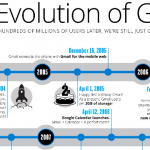
The Evolution of Gmail, Visualized

On April Fools Day 2004, Google launched Gmail, and it wasn’t long before @gmail.com email addresses usurped the kingdom of Hotmail. Google just posted a nice visualization of the service’s evolution from a humble beta to a Google Goliath. More »        

View article:
The Evolution of Gmail, Visualized

Apple said to be ditching Samsung in favor of TSMC for A7 CPU

The fact that Apple relies upon Samsung, its arch-rival , for a healthy amount of its components, is one of the biggest paradoxes in the tech industry. Still, if The Korea Times is to be believed, the unhappy marriage between the two could rapidly be heading towards a divorce. While Apple has previously splashed out several billion per year on Samsung components, the newspaper is suggesting that Cupertino will turn to TSMC to produce its next generation of mobile CPUs — a rumor that’s been making the rounds recently. It’s source, and executive at one of Samsung’s partners, claims the manufacturer has been cut out of development of the A7 CPU, adding a little bit more credence to those claims. What’s more, the same source reports that TSMC is gearing up its 20-nanometer production line to crank out the hardware ready for 2014. Comments Via: The Next Web Source: Korea Times

Read the original:
Apple said to be ditching Samsung in favor of TSMC for A7 CPU

IRS Can Read Your Email Without Warrant

kodiaktau writes “The ACLU has issued a FOIA request to determine whether the IRS gets warrants before reading taxpayers’ email. The request is based on the antiquated Electronic Communication Protection Act — federal agencies can and do request and read email that is over 180 days old. The IRS response can be found at the ACLU’s website. The IRS asserts that it can and will continue to make warrantless requests to ISPs to track down tax evasion. Quoting: ‘The documents the ACLU obtained make clear that, before Warshak, it was the policy of the IRS to read people’s email without getting a warrant. Not only that, but the IRS believed that the Fourth Amendment did not apply to email at all. A 2009 “Search Warrant Handbook” from the IRS Criminal Tax Division’s Office of Chief Counsel baldly asserts that “the Fourth Amendment does not protect communications held in electronic storage, such as email messages stored on a server, because internet users do not have a reasonable expectation of privacy in such communications.” Again in 2010, a presentation by the IRS Office of Chief Counsel asserts that the “4th Amendment Does Not Protect Emails Stored on Server” and there is “No Privacy Expectation” in those emails.'” Read more of this story at Slashdot.

See more here:
IRS Can Read Your Email Without Warrant

Teehan+Lax releases easy-to-use hyperlapse tool, blows everyone’s goddamn mind

Have you ever been clicking along a particularly stunning stretch of road in Google Street View and thought: damn, how awesome it would be if you could stitch all these individual images together and turn them into a video? Well… sit down. Clear your schedule. There’s something you need to see. Read more…        
Visit site:
Teehan+Lax releases easy-to-use hyperlapse tool, blows everyone’s goddamn mind

3D printed synthetic tissue folds itself into shapes

University of Oxford chemists custom-built a 3D printer that fabricates “synthetic tissue,” or rather structures with tissue-like functions. Eventually, the technology could be used to crank out replacement tissue that could replace damaged human tissue or be used in new drug delivery systems. The material consist of a network of water droplets encapsulated in lipids, or fat molecules. “The droplets… form pathways through the network that mimic nerves and are able to transmit electrical signals from one side of a network to the other,” says Oxford University chemistry professor Hagan Bayley. Amazingly, the material can be chemically “programmed” to fold into various shapes as water is transferred around in the network. (Video above.) ” 3D printer can build synthetic tissues ” (Univ of Oxford, via Science News ) ” A Tissue-like Printed Material ” (Science)        

See the original post:
3D printed synthetic tissue folds itself into shapes

GE Is Freeing Up ‘Thousands’ Patents to Fuel Your Imagination

Today, at an event in New York, GE announced that it will open up “thousands” of patents from its library of some 20,000 to inventors using Quirky’s crowdsourced product development platform. That means that if you’re bright enough, you can use a GE patent to invent something. GE will still collect royalties on your brain power, but they promise not to sue you. More »        

Read More:
GE Is Freeing Up ‘Thousands’ Patents to Fuel Your Imagination