FBI denied permission to spy on hacker through his webcam

Sorry FBI, you can’t randomly hijack someone’s webcam. Stefano Maffei A federal magistrate judge has denied (PDF) a request from the FBI to install sophisticated surveillance software to track someone suspected of attempting to conduct a “sizeable wire transfer from [John Doe’s] local bank [in Texas] to a foreign bank account.” Back in March 2013, the FBI asked the judge to grant a month-long “ Rule 41 search and seizure warrant ” of a suspect’s computer “at premises unknown” as a way to find out more about this possible violations of “federal bank fraud, identity theft and computer security laws.” In an unusually-public order published this week , Judge Stephen Smith slapped down the FBI on the grounds that the warrant request was overbroad and too invasive. In it, he gives a unique insight as to the government’s capabilities for sophisticated digital surveillance on potential targets. According to the judge’s description of the spyware, it sounds very similar to the RAT software that many miscreants use to spy on other Internet users without their knowledge. (Ars editor Nate Anderson detailed the practice last month.) Read 10 remaining paragraphs | Comments

View article:
FBI denied permission to spy on hacker through his webcam

Turn an iPad Retina Display Into a High Resolution PC Monitor

The iPad’s retina display offers one of the most pixel-dense screens you can buy, but unfortunately it’s attached to your iPad and can’t double as a high-resolution display for your PC. That is, unless you buy the part and convert it like Andrzej, an engineering student in Warsaw. Read more…        

See the original post:
Turn an iPad Retina Display Into a High Resolution PC Monitor

TechShop: an industrial revolution for $125 a month

Someone, Mark Hatch, if I had to guess, has left a Square reader just to the left of where we’ve set up our cameras. It’s on a table next to a small, but exceptionally diverse array of gadgets. There’s a wooden book that unfolds into a desk lamp and a polymer incubation blanket for infants that’s “on track to save 100,000 children’s lives,” according to Hatch, TechShop’s spikey-white-haired CEO. But it’s the little white plastic dongle that’s the star of this show, through the power of sheer ubiquity, popping up in coffee shops and taxicabs everywhere. Square’s modest undertaking has since ballooned to a roughly 300-person operation. The project was born in this very space, eventually moving to a building in San Francisco’s SoMa district a block or so away, the mobile payment company having opted not to travel too far from the place where it was first conceived. When it comes to proximity, Square is by no means an anomaly — if anything, the company’s strayed a bit away from the pack. TechShop’s overseers have, quite cannily, begun to offer up a portion of the warehouse’s 17,000 square feet as office space, giving its members a shot at some prime San Francisco real estate, a flight of stairs up from an impressive array of machine tools — laser cutters, water jets and more 3D printers than most mortals have seen in one place. “Literally everything you need to make just about anything on the planet,” says Hatch, in typically definitive terms. And while there’s arguably still some sense of hyperbole in the notion of the “next industrial revolution” (as 3D-printing evangelist Bre Pettis loves to put it), it’s hard to stand here in the well-lit warehouse amongst the buzz of machinery and ideas and not appreciate the sentiment. Comments

Continue reading here:
TechShop: an industrial revolution for $125 a month

Apple supercharges R&D with extra $500 million spent in last six months

Apple product sales are flattening out a bit compared to last year, save for iPads. Casey Johnston Apple boosted its research and development spending by 33 percent in the second quarter of 2013 compared to the same period last year, according to a quarterly report filed with the Securities Exchange Commission. If the rate of spending continues, Apple could drop over $4 billion on R&D this fiscal year. During the quarter ending March 30, 2013, Apple spent $1.119 billion on R&D, compared to $841 million from a year ago. In the first six months of its fiscal year, Apple has spent $2.129 billion total on R&D, while it spent only $1.599 billion last year. Apple stated that the spending for the quarter was up 33 percent due to “an increase in headcount” and “expanded R&D activities.” The statement went on to say that the “focused investments” in R&D are “directly related to timely development of new and enhanced products that are central to the Company’s core business strategy. As such, the Company expects to make further investments in R&D to remain competitive.” Read 1 remaining paragraphs | Comments

Read the original:
Apple supercharges R&D with extra $500 million spent in last six months

Smartphone Used To Scan Data From Chip-Enabled Credit Cards

An anonymous reader sends this news from the CBC: “Using a Samsung Galaxy SIII — one of the most popular smartphones available in Canada — and a free app downloaded from the Google Play store, CBC was able to read information such as a card number, expiry date and cardholder name simply holding the smartphone over a debit or credit card. And it could be done through wallets, pockets and purses. … Although the NFC antennas in current smartphones need to be very close to a card in order to work — no farther than 10 cm — that could change with the next generation of Android smartphones. Legary said the Samsung Galaxy S4, set to go on sale this spring, might have a much more capable NFC antenna, which could not only read credit cards from a greater distance, but could also be able to read the chips embedded in enhanced driving licenses and passports.” Read more of this story at Slashdot.

More here:
Smartphone Used To Scan Data From Chip-Enabled Credit Cards

More evidence that Haiti’s cholera epidemic started with UN Peacekeepers

Haiti has been battling a massive cholera outbreak since, roughly, around the time international aid groups arrived in the country following the 2010 earthquake. Now, genetic evidence links the strain of cholera in Haiti to a rare strain native to Nepal — further proof that it was Nepalese UN Peacekeepers who brought cholera to Haiti . This news comes two months after the UN claimed immunity from any financial liability relating to the outbreak, writes Stacey Singer at the Palm Beach Post.        

See the original article here:
More evidence that Haiti’s cholera epidemic started with UN Peacekeepers

New US$100 bill in circulation 10/8

The new US$100 bill will go into circulation on October 8, 2013. New security features include a “3-D Security Ribbon” woven into the paper. The image changes from bells to 100s with the viewing angle, and “color-shifting” bell graphic that changes from copper to green, “an effect which makes the bell seem to appear and disappear within the (copper-colored) inkwell.” ” The Redesigned $100 Note ”        

Follow this link:
New US$100 bill in circulation 10/8

Federal Magistrate Rules That Fifth Amendment Applies To Encryption Keys

Virtucon writes “U.S. Magistrate William Callahan Jr. of Wisconsin has ruled in favor of the accused in that he should not have to decrypt his storage device. The U.S. Government had sought to compel Feldman to provide his password to obtain access to the data. Presumably the FBI has had no success in getting the data and had sought to have the judge compel Feldman to provide the decrypted contents of what they had seized. The Judge ruled (PDF): ‘This is a close call, but I conclude that Feldman’s act of production, which would necessarily require his using a password of some type to decrypt the storage device, would be tantamount to telling the government something it does not already know with “reasonably particularity” — namely, that Feldman has personal access to and control over the encrypted storage devices. Accordingly, in my opinion, Fifth Amendment protection is available to Feldman. Stated another way, ordering Feldman to decrypt the storage devices would be in violation of his Fifth Amendment right against compelled self-incrimination.'” If the government has reasonable suspicion that you have illicit data, they can still compel you to decrypt it. Read more of this story at Slashdot.

Read this article:
Federal Magistrate Rules That Fifth Amendment Applies To Encryption Keys

This Is the Camera That Found Dzhokhar Tsarnaev

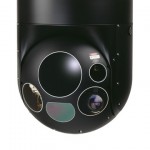
Law enforcement didn’t pull any punches during its manhunt for the Boston Marathon bombers, going so far as to lock down an entire metropolis while they searched. Even when officers thought they had the second suspect cornered in Watertown boat, they confirmed their suspicions with a camera that can spot people from up to 10 miles away. Just to be sure. More »        

More:
This Is the Camera That Found Dzhokhar Tsarnaev