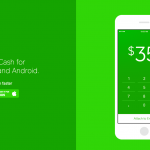
Square has just announced that it has acquired Evenly , a company that was built to make it easy for friends to send and receive payments for splitting bills and other expenses. The company was founded in 2012, and was similar in concept to Venmo, an NYC-based startup that was acquired by Braintree last year . Evenly offered a mobile app that let people send and receive requests for funds from their contacts list, organized around events and experiences. For each participant in a pool, it would list what a user owed and what they’d already paid, if any, and you could see progress towards the total cost of an event displayed visually, as well as send reminders to all parties involved that they have to pay up. There’s also an activity feed that tracks progress and adds a social element to the bill sharing. Evenly will remain open and active until January 15, 2014 for existing users, and the team says on its own blog that it will give existing users “plenty of time” to get money out of the app and finish collections. Users can find out more here at an FAQ designed to guide those who will be transitioning off of the service. The app has been removed from the App Store, however, and new user registrations are turned off completely. On Square’s Engineering blog, the payment company’s Product Engineering Lead Gokul Rajaram says that the Evenly team will be working on “seller initiatives,” and it seems likely this is designed to bring Evenly’s talented five-person engineering and design team into the fold to boost Square Cash and help it continue to ‘square’ off against the now Braintree-owned Venmo and Google Wallet.
Visit site:
Square Acquires Evenly, A Venmo Competitor For Sending And Receiving Payments With Friends

 The maintainers of the security-conscious FreeBSD operating system have declared that they will no longer rely on the random number generators in Intel and Via’s chips , on the grounds that the NSA likely has weakened these opaque hardware systems in order to ease surveillance. The decision is tied to the revelations of the BULLRUN/EDGEHILL programs, wherein the NSA and GCHQ spend $250M/year sabotaging security in standards, operating systems, software, and networks. “For 10, we are going to backtrack and remove RDRAND and Padlock backends and feed them into Yarrow instead of delivering their output directly to /dev/random,” FreeBSD developers said. “It will still be possible to access hardware random number generators, that is, RDRAND, Padlock etc., directly by inline assembly or by using OpenSSL from userland, if required, but we cannot trust them any more.” In separate meeting minutes, developers specifically invoked Snowden’s name when discussing the change. “Edward Snowdon [sic] — v. high probability of backdoors in some (HW) RNGs,” the notes read, referring to hardware RNGs. Then, alluding to the Dual EC_DRBG RNG forged by the National Institute of Standards and Technology and said to contain an NSA-engineered backdoor, the notes read: “Including elliptic curve generator included in NIST. rdrand in ivbridge not implemented by Intel… Cannot trust HW RNGs to provide good entropy directly. (rdrand implemented in microcode. Intel will add opcode to go directly to HW.) This means partial revert of some work on rdrand and padlock.” “We cannot trust” Intel and Via’s chip-based crypto, FreeBSD developers say [Dan Goodin/Ars Technica]


