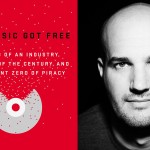
MP3. It’s the format that revolutionized the way music’s been consumed since the late ’90s. When Karlheinz Brandenburg, a German acoustics engineer, discovered that an audio file could be compressed down to one-twelfth of its original size without distortion, he created the file-shrinking technology. Stephen Witt’s debut book, How Music Got Free , traces all digital music piracy back to the invention of that format, which inadvertently made it possible for people to download and share music illegally. The book details the science and struggle behind the widely used audio technology. And his investigation uncovers the politics and the manipulative men who kept MP3 files from seeing the light of computer screens for years. When the MP3 format became accessible, after a long corporate battle, it eventually led to the rise of music piracy and simultaneous demise of CDs. But Witt reveals more than just the technology that systematically tore the music industry to pieces. He narrows the story down to two men at opposite ends of the same spectrum: Doug Morris, one of the most powerful record label CEOs in the industry, who made rap music top the charts and eventually led the fight against piracy; and Dell Glover, a factory worker at a Universal Music CD-manufacturing unit in North Carolina, who leaked about 2, 000 albums, made Eminem change his album release date and became one of the biggest pirates in the largest underground scene, Rabid Neurosis (RNS). When pirated music found its way online in the ’90s and early 2000s, almost all of it came through RNS, which relied on Glover’s access to the CDs weeks before release. Tech-savvy teens spent hours scouring the internet and loved having access to music before it hit the record stores, even if that meant jeopardizing the careers of the very artists they worshiped. At the time, it became virtually impossible to not download the MP3 files or know someone who did. Witt’s book is filled with nostalgic moments for a generation that grew up on piracy. But it’s also informative for people who skipped that phase completely. He draws parallels between the inventions, the decisions and the theft that led to the downfall of the booming music industry — an industry that never quite regained its glory. I caught up with the author to get the lowdown on his expansive work on digital piracy and his views on music streaming. When and why did you get interested in music piracy? I showed up at [the University of Chicago] in 1997 with a 2GB hard drive and by the end of the year, I filled it with pirated MP3s. This was really the first time in history that you could do it. Even a couple of years earlier the technology wasn’t there. Over the next decade, I was a serial media pirate. I just hoarded tons of stuff. I was on all the underground pirate networks. It was such a thoughtless action to go and take something from the internet; I never really thought about who might have put it up there in the first place. As I got older, around 2010-2011, I wondered where all this stuff came from. When I started investigating it, I found all this fascinating stuff that turned into this book. The original iPod from 2001 Your book underscores the technology that led to music piracy and the corporate drama behind it. It was fascinating and frustrating to know that half a dozen German engineers sat on a gold mine but couldn’t share it with the world for years because their invention was systematically and viciously suppressed. Why was the music industry snubbing MP3 even though it was clearly a superior format to the MP2, which was widely accepted? The music industry was [made up of] technophobes. When this information [about the MP3] first became available, they rejected it multiple times. The pirates [started] providing leaked compressed music through the internet and filling a vacuum that the music industry would not. The music corporations could’ve done that. They ended up being forced to do it much later anyway. But for a long time, they had to be dragged screaming into the modern era. Now I think anyone who owns a music company is thinking 20 years ahead about distribution. They’ve learned their lesson. But at the time they were totally clueless. There’s a moment when Ricky Adar, an entrepreneur, asks Brandenburg, “Do you realize what you’ve done? You’ve killed the music industry.” Did the invention of the MP3 really destroy the industry or did it, in fact, push it to change and adopt a new way? It was a bit of both. Adar was trying to push a service similar to what we call Spotify today. This was in 1995. He faced enormous resistance from the industry and at the time it wasn’t even clear such a thing was technologically possible. When he saw the MP3, it was the first time he saw a device that actually shrunk music, but made it listenable. Previous devices did it, but they sounded pretty crappy. Why did he say it killed the industry? I think once the stuff got out, it wouldn’t be copy protectable, people would start trading it online, which is exactly what happened. The profits would disappear because you could get it for free. It pushed the industry into the future, but even today they’re only operating at about half the size that they were at the peak of compact discs in 2000. Still, it’s not clear if they’re ever gonna recover. They actually shrunk last year, even with Spotify. The music industry eventually fought back against piracy. They went after Napster for copyright infringement. The RIAA also sued Diamond Multimedia , the company that created the first-ever commercially successful MP3 player. What was going on with these lawsuits? “Apple almost acted like a money launderer for the spoils of Napster.” The judges ruled Napster was illegal, so the industry won that one. The legality of Napster wasn’t obvious at first. Now it’s clear that it was in violation of the law, but at the time there was no basis for ruling that. Simultaneously, there was a lawsuit against [Diamond] — the earliest version of the MP3 player. But the judges ended up ruling that the MP3 player was just a hard drive and they could not limit its sales. So the music industry lost that suit. When it happened there were all these music files everywhere and then [the lawsuit] made all these portable players available. Essentially, the music industry won the wrong lawsuit. Daniel Ek, founder of Spotify Napster had the potential to shrink the massive profits that the music industry was making from CD sales, but for a time it wasn’t impacting the sales at all. People couldn’t go anywhere with their downloaded files. But when the MP3 player won the lawsuit (RIAA vs. Diamond), it made digital piracy portable and even led to the launch of the iPod , right? For sure. Apple came kind of late to this. iTunes debuted in 2001. The iPod came in [later that year]. It didn’t make an impact right away, but eventually people wanted to take all these files and make them portable. The iPod made that possible. So for a time it became the best-selling gadget ever. Apple’s retail store had the highest sales per square foot of any retail business in history and a lot of it was from these $200-300 iPods. Eventually they moved to iPhone, but you can trace these developments in the global market all the way to the earliest days of piracy. It’s like I say in the book, Apple almost acted like a money launderer for the spoils of Napster. At one point in the book you say: “Controversy was temporary. Royalties were forever.” I couldn’t help but wonder how you perceive the aggressive shift from downloading to streaming services like Spotify and Tidal ? The stuff in the book is really nostalgia now. That era is closing and we’ve moved on to a new form. Instead of owning files, we license them from a large corporation; we’re at their mercy. The trade-off is that artists get paid and we get access to everything ever written instantly. It’s a pretty nice deal, but it limits the freedom of the user. What’s going on right now is that there’s more than half a dozen companies attempting to crack the music-streaming space. All of them are losing money and artists are making very little from these sites. But if they can get hundreds of millions of users to subscribe, it can work. They just have to make people willing to pay $120 a year. Half of Spotify’s subscribers are under the age of 27 and these are people who grew up with piracy, including me. I wonder if there’s an all-powerful Doug Morris-type of the streaming world? Daniel Ek — the CEO of Spotify. He’s Swedish and he founded the company in 2008 during the height of Pirate Bay frenzy. His entire mission statement for the company was to get people to pay for music again. Surprisingly enough, I would say he’s been successful in doing that. Spotify is not a sustainable business right now. It’s losing about $200 million a year and it’s paying its artists a pittance. It’s possible in the future it could evolve into a commercially viable model. It’s not there yet. But for consumers it’s been great. If they can get their goal of 40 million [paid] subscribers, which is the size of the music industry right now, they might save everyone. This interview has been condensed and edited. [Images: Viking Press (top image); 37prime/Flickr (First gen iPod); Taylor Hill/FilmMagic (Daniel Ek, Spotify)] Filed under: Internet , Apple Comments
Read the original:
How a file format brought an industry to its knees

 The Kindle Paperwhite just updated to a higher resolution screen for the same $120 price. I probably don’t need to tell you it’s better than the last Paperwhite. It definitely is. Read more…
 An anonymous reader writes: Experts in materials science at MIT have developed a new process for creating lithium-ion batteries that will drop the associated production costs by half. The researchers say fundamental battery construction techniques have been refined over the past two decades, but not re-thought. “The new battery design is a hybrid between flow batteries and conventional solid ones: In this version, while the electrode material does not flow, it is composed of a similar semisolid, colloidal suspension of particles. Chiang and Carter refer to this as a ‘semisolid battery.’ This approach greatly simplifies manufacturing, and also makes batteries that are flexible and resistant to damage, says Chiang. … Instead of the standard method of applying liquid coatings to a roll of backing material, and then having to wait for that material to dry before it can move to the next manufacturing step, the new process keeps the electrode material in a liquid state and requires no drying stage at all. Using fewer, thicker electrodes, the system reduces the conventional battery architecture’s number of distinct layers, as well as the amount of nonfunctional material in the structure, by 80 percent.” Read more of this story at Slashdot.

 You know that company that builds all your electronics? The one that makes your iPhone and your Xbox and your Kindle and has to install anti-suicide nets to deter miserable workers from ending their lives? It’s a company known to Americans as Foxconn, and it’s the 10th largest employer in the world. Read more…
