Facebook Switching To HTTPS By Default

Trailrunner7 writes “Facebook this week will begin turning on secure browsing be default for its millions of users in North America. The change will make HTTPS the default connection option for all Facebook sessions for those users, a shift that gives them a good baseline level of security and will help prevent some common attacks. Facebook users have had the option of turning on HTTPS since early 2011 when the company reacted to attention surrounding the Firesheep attacks. However, the technology was not enabled by default and users have had to opt-in and manually make the change in order to get the better protection of HTTPS.” Read more of this story at Slashdot.

See the article here:
Facebook Switching To HTTPS By Default

Reading and Calculating With Your Unconscious

lee1 writes “Using special techniques that present information to one eye while hiding the information from the conscious mind (by masking it with more distracting imagery presented to the other eye), researchers have shown two new and very unexpected things: we can read and understand short sentences, and we can perform multi-step arithmetic problems, entirely unconsciously. The results of the reading and calculating are available to and influence the conscious mind, but we remain unaware of their existence. While we have known for some time that a great deal of sensory processing occurs below the surface and affects our deliberative behavior, it was widely believed until now that the subconscious was not able to actually do arithmetic or parse sentences.” Read more of this story at Slashdot.

See original article:
Reading and Calculating With Your Unconscious

Artificial Muscles Pack a Mean Punch

sciencehabit writes “Here’s a twist: Scientists have designed a flexible, yarn-like artificial muscle that can also pack a punch. It can contract in 25 milliseconds—a fraction of the time it takes to blink an eye—and can generate power 85 times as great as a similarly sized human muscle. The new muscles are made of carbon nanotubes filled with paraffin wax that can twist or stretch in response to heat or electricity. When the temperature rises, the wax melts and forces the nanotubes to contract. Such artificial muscles, the researchers say, could power smart materials, sensors, robots, and even devices inside the human body.” Read more of this story at Slashdot.

Read More:
Artificial Muscles Pack a Mean Punch

Google Engineers Open Source Book Scanner Design

c0lo writes “Engineers from Google’s Books team have released the design plans for a comparatively reasonably priced (about $1500) book scanner on Google Code. Built using a scanner, a vacuum cleaner and various other components, the Linear Book Scanner was developed by engineers during the ’20 percent time’ that Google allocates for personal projects. The license is highly permissive, thus it’s possible the design and building costs can be improved. Any takers?” Adds reader leighklotz: “The Google Tech Talk Video starts with Jeff Breidenbach of the Google Books team, and moves on to Dany Qumsiyeh showing how simple his design is to build. Could it be that the Google Books team has had enough of destroying the library in order to save it? Or maybe the just want to up-stage the Internet Archive’s Scanning Robot. Disclaimer: I worked with Jeff when we were at Xerox (where he did this awesome hack), but this is more awesome because it saves books.” Read more of this story at Slashdot.

More here:
Google Engineers Open Source Book Scanner Design

Man in coma uses his thoughts to tell doctors, ‘I’m not in pain’

Back in 2010, neuroscientists confirmed that it was possible to communicate with some patients locked in a vegetative state by using an fMRI scanner . Though limited, the breakthrough suggested that more meaningful dialogue with patients in a coma could someday be possible. And now, two years later, it has finally happened. A Canadian man in a vegetative state has used his thoughts to tell scientists that he is not in any pain, marking the first time a patient in such a condition has relayed information relevant to their care. More »

Continue Reading:
Man in coma uses his thoughts to tell doctors, ‘I’m not in pain’

This Creepy Facial Recognition System Knows How Often You Visit a Store

You might want to think twice about how often you hang out at your local Best Buy in the future. In Japan, NEC has developed a new facial recognition system geared towards retailers that determines the age and gender of shoppers, and tracks how long and how often they visit a given store. More »

Visit link:
This Creepy Facial Recognition System Knows How Often You Visit a Store

Cloaking device demonstrated

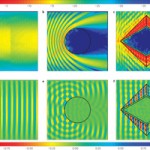
After years of research, “perfect” invisibility cloaks are finally a reality — at least so long as you are a tiny cylinder. In 2006, the development of metamaterials resulted in a working example of a cloaking device, an essential accoutrement for young wizards and evil Klingon generals alike. Practical complexities, however, meant the material offered no more than a “simplifying approximation” of the desired functionality. Now, however, researchers Nathan Landy and David R. Smith have described a “perfect” implementation in A full-parameter unidirectional metamaterial cloak for microwaves , a new study published by Nature : “Here, we design and experimentally characterize a two-dimensional, unidirectional cloak that makes no approximations to the underlying transformation optics formulation, yet is capable of reducing the scattering of an object ten wavelengths in size. We demonstrate that this approximation-free design regains the performance characteristics promised by transformation optics.” In other words, the cloaked object is completely invisible, unlike previous attempts in which reflections were visible: good enough for the Predator’s interstellar hunting trips , but not for the Center for Metamaterials and Integrated Plasmonics in Durham, N.C. While this is the first successful demonstration of the original 2006 paper’s claims, that’s not to say that there’ll be practical implementations any time soon. The effect still only worked when viewed from one direction, and on a perfectly cylindrical object.

Read this article:
Cloaking device demonstrated

MOOC Mania

theodp writes “Online education has had a fifty-year road to ‘overnight’ success. MIT Technology Review calls the emergence of free online education, particularly massive open online courses (MOOCs), The Most Important Education Technology in 200 Years. ‘If you were asked to name the most important innovation in transportation over the last 200 years,’ writes Antonio Regalado, ‘you might say the combustion engine, air travel, Henry Ford’s Model-T production line, or even the bicycle. The list goes on. Now answer this one: what’s been the single biggest innovation in education? Don’t worry if you come up blank. You’re supposed to.’ Writing about MOOC Mania in the Communications of the ACM, Moshe Y. Vardi worries that ‘the enormous buzz about MOOCs is not due to the technology’s intrinsic educational value, but due to the seductive possibilities of lower costs.’ And in MOOCs Will Eat Academia, Vivek Haldar writes, ‘MOOCs will almost certainly hollow out the teaching component of universities as it stands today…But all is not lost, because the other thing universities do is research, and that is arguably as important, if not more, than teaching.’ So, are MOOCs the best thing since sliced bread, or merely the second coming of 1920s Postal Course Mania?” Read more of this story at Slashdot.

View the original here:
MOOC Mania

Urine-powered generator produces six hours of electricity per bathroom break

We’ve all heard the expression “haste makes waste,” but how about waste making energy? At the fourth annual Maker Faire Africa in Lagos, Nigeria, a quartet of teenage girls ages 14 through 15 have created a urine-powered generator. This eco-friendly energy source cranks out six hours of electricity for every liter of human bodily fluid by separating the excretion’s hydrogen with an electrolytic cell. While this method of human waste disposal seems promising, the device has the potential to be a pee-powered biobomb and will need more than its limited safety measures before you’re able to pick one up at your local hardware store. However, if this can help us save a few bucks on our energy bill, then we need to introduce these girls to these guys posthaste. Filed under: Science , Alt Urine-powered generator produces six hours of electricity per bathroom break originally appeared on Engadget on Thu, 08 Nov 2012 22:24:00 EDT. Please see our terms for use of feeds . Permalink   Psfk  |  Maker Faire Africa  |  Email this  |  Comments

Excerpt from:
Urine-powered generator produces six hours of electricity per bathroom break

What destroyed the Maya? We have a new clue, in the form of an ancient stalagmite.

The Maya civilization was among the most advanced in history, and its disintegration has perplexed researchers for ages. One of the most compelling theories to date suggests that a shifting climate, playing puppeteer to sociopolitical marionettes, had a devastating role in the Maya’s downfall. Now, researchers have combined remarkably detailed climate data — recorded in a Central American stalagmite — with historical records to help determine what really happened to this mysterious Mesoamerican society. More »

Continue Reading:
What destroyed the Maya? We have a new clue, in the form of an ancient stalagmite.