Posted by kenmay on March - 28 - 2012
We recently saw Stephen Wolfram reveal what he called the personal analytics of his life (built from decades of meticulous data collection), and it looks like Google is now going some way towards making that easier for you to do yourself. It rolled out its new Account Activity feature today, an opt-in tool (still technically in beta) that tracks your activity across Google’s services and delivers a report each month on your internet use. That includes things like the number of emails sent and received, your most contacted email addresses, information about your search history (if you have it enabled), stats from Google Latitude, and the different browsers and devices you’ve used to sign into Google services. What’s more, that’s apparently just the beginning — Google says it plans to incorporate even more services over the next few months. Google dives into personal analytics with new Account Activity feature originally appeared on Engadget on Wed, 28 Mar 2012 11:53:00 EDT. Please see our terms for use of feeds . Permalink | Official Google Blog | Email this | Comments
Categories: Uncategorized
Posted by kenmay on March - 28 - 2012
After a supernova a neutron star is left over. It’s made up of absurdly dense material, a teaspoon full of which would weigh somewhere in the order of 5,500,000,000,000 kilos. That’s about nine hundred times the weight of the Grand Pyramid of Giza. The star itself would be smaller than New York City and would be very difficult to move, especially with a spoon.
Categories: Uncategorized
Posted by kenmay on March - 28 - 2012
If you’re an avid Box user, what we’re about to say is apt to have a great, positive impact on your life. For everyone else — well, chances are you aren’t about to swap out of whatever cloud ecosystem you’re already entrenched in. In an effort to create a somewhat unique take on iCloud and Dropbox, Box has introduced OneCloud for iOS, a self-proclaimed “enterprise mobile framework to bring together your mobile content and the mission-critical apps designed to work with it.” For now, it’ll support over 30 iOS programs, four of which add “round-trip” integration; in other words, OneCloud will enable you to open a document in QuickOffice, edit it, and save it back without ever having to manually switch programs. To its credit, this is about as close as one could come to being genuinely productive on a device that tends to have productivity a bit lower on the priority rungs, but the video after the break still shows just how clunky the whole operation is. For our money, an ultralight laptop still makes more sense for business professionals on the go, but it’s certainly not a bad backup to have around for making tweaks in a pinch. Continue reading Box OneCloud learns from Dropbox and iCloud, allows simpler document editing on-the-go (video) Box OneCloud learns from Dropbox and iCloud, allows simpler document editing on-the-go (video) originally appeared on Engadget on Wed, 28 Mar 2012 10:42:00 EDT. Please see our terms for use of feeds . Permalink The Verge | Box , App Store | Email this | Comments
Categories: Uncategorized
Posted by kenmay on March - 28 - 2012
We’re generally satisfied with our internet performance, but we wouldn’t say no to a speed boost. A Microsoft blog post reveals plans to enable just that, with the company’s proposed “HTTP Speed + Mobility” approach to HTTP 2.0. Have you thought about what life would be like with a faster internet? MS says Y-E-S! “There is already broad consensus about the need to make web browsing much faster,” the company proclaimed. Juicy . The suggested protocol will, well, focus on achieving greater speed, but Microsoft hasn’t detailed exactly how it will accomplish that, beyond mentioning that it’s based on the Google SPDY protocol, which on its own aims to reduce latency and congestion by prioritizing requests and removing the limit on simultaneous streams over a single TCP connection. For its part, MS says it will be expanding on SPDY to “address the needs of mobile devices and applications,” which we presume would be in Google’s best interests as well. It’s safe to say that Microsoft’s being a bit more forthcoming during its meetings with the Internet Engineering Task Force (IETF) this week — the organization responsible for creating HTTP 2.0 — so perhaps we’ll be hearing more about this fabled faster internet before we turn anew to Q2. Microsoft’s ‘HTTP Speed + Mobility’ aims to make the web faster, could be the next big ping originally appeared on Engadget on Tue, 27 Mar 2012 17:27:00 EDT. Please see our terms for use of feeds . Permalink Webmonkey | Microsoft | Email this | Comments
Categories: Uncategorized
Posted by kenmay on March - 28 - 2012
An anonymous reader writes “A team of MIT researchers has come up with a very different approach to solar collectors: building cubes and towers that extend solar cells upward in three-dimensional configurations. The results from the structures they’ve tested show power output ranging from double to more than 20 times that of fixed flat panels with the same base area (abstract, full pre-print). The biggest boosts in power were seen in the situations where improvements are most needed: in locations far from the equator, in winter months and on cloudier days.” Read more of this story at Slashdot.
Categories: Uncategorized
Posted by kenmay on March - 28 - 2012
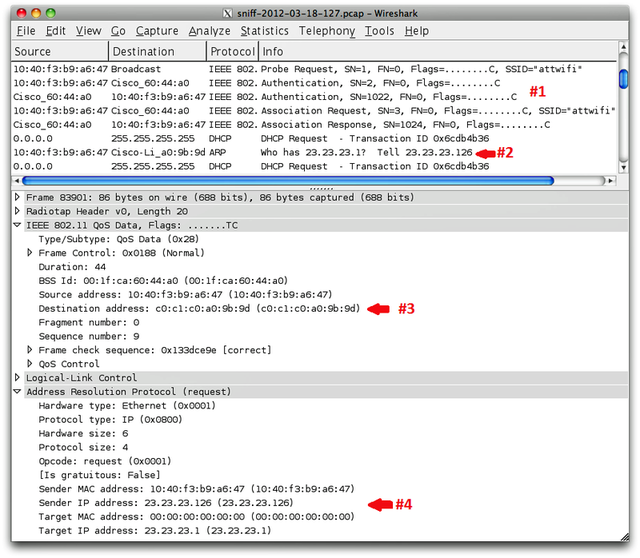
An Ars story from earlier this month reported that iPhones expose the unique identifiers of recently accessed wireless routers , which generated no shortage of reader outrage. What possible justification does Apple have for building this leakage capability into its entire line of wireless products when smartphones, laptops, and tablets from competitors don’t? And how is it that Google, Wigle.net, and others get away with publishing the MAC addresses of millions of wireless access devices and their precise geographic location? Some readers wanted more technical detail about the exposure, which applies to three access points the devices have most recently connected to. Some went as far as to challenge the validity of security researcher Mark Wuergler’s findings. “Until I see the code running or at least a youtube I don’t believe this guy has the goods,” one Ars commenter wrote . According to penetration tester Robert Graham, the findings are legit. Read the comments on this post
Categories: Uncategorized