Xen Patches 7-Year-Old Bug That Shattered Hypervisor Security

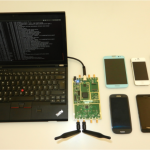
williamyf writes: ArsTechinca, The Register, and other outlets are reporting that today the XEN project patched a vulnerability in the ParaVirtualized VMs that allowed a guest to access the control OS of the hypervisor. Qubes researchers wrote: “On the other hand, it is really shocking that such a bug has been lurking in the core of the hypervisor for so many years. In our opinion the Xen project should rethink their coding guidelines and try to come up with practices and perhaps additional mechanisms that would not let similar flaws to plague the hypervisor ever again”. Read more of this story at Slashdot.

View post:
Xen Patches 7-Year-Old Bug That Shattered Hypervisor Security

Android 6 Vs. iOS 9: The Showdown

It wasn’t too long ago that we put the major mobile operating systems head to head, but with big updates from both Google and Apple in the meantime, we think it’s worth another look at where they both stand. Is there a clear winner? Or are they barely distinguishable any more? Read more…

Link:
Android 6 Vs. iOS 9: The Showdown

Windows 10 will be made an automatic “recommended” update early next year

The Windows 10 free upgrade program has so far concentrated on those Windows 7 and 8 users who reserved their copy in the weeks leading up to the operating system’s release. Over the coming months, Microsoft will start to spread the operating system to a wider audience . The Windows 10 upgrade will soon be posted as an “Optional Update” in Windows Update, advertising it to anyone who examines that list of updates. Then, early next year, it will be categorized as a “Recommended Update.” This is significant, because it means that systems that are configured to download and install recommended updates—which for most people is the safest option—will automatically fetch the upgrade and start its installer. The installer will still require human intervention to actually complete—you won’t wake up to find your PC with a different operating system—but Windows users will no longer need to actively seek the upgrade. This mirrors an accidental change that Microsoft did earlier this month. The Windows 10 upgrade was showing up for some people as a recommended update and the installer started automatically. Read 3 remaining paragraphs | Comments

View post:
Windows 10 will be made an automatic “recommended” update early next year

Windows 10 upgrade push changes things for IT pros and bootleggers

Microsoft mistakenly pushed Windows 10 upgrades to existing Windows 7/8 users through the Update process earlier this year, but next year it will do it on purpose . That’s just one of several changes coming to the update process, as it targets IT professionals doing mass upgrades, and even people running less-than-legit copies of Windows. The office IT guys out there will appreciate a future update to the Media Creation Tool so it can create a single image capable of upgrading older Windows PCs whether they’re 32-bit, 64-bit, Home or Pro, and even wipe a system to do clean installs. Also coming soon to users in the US (and later in other countries), will be an easy one-click activation process to “get Genuine” via the Windows Store, even with a code purchased elsewhere. Of course, even if you don’t fall into those categories and just want to keep your old version of Windows, you’ll need to be more careful starting in 2016. Source: Blogging Windows

Visit link:
Windows 10 upgrade push changes things for IT pros and bootleggers

Here’s Why Perfectly-Timed Synthesized Music Can Sound Slightly Wrong

Music, if it is to be perfect, can’t be perfectly timed. A perfectly timed musical composition may sound mistimed to our stupid human brains, especially if it’s synthesized. Read more…

See more here:
Here’s Why Perfectly-Timed Synthesized Music Can Sound Slightly Wrong

Hundreds of city police license plate cams are insecure and can be watched by anyone

Dave Maass from the Electronic Frontier Foundation writes, “Earlier this year, security researcher John Matherly alerted us to potentially massive vulnerabilities in a certain vendor’s automated license plate reader systems. We dug into the data and found that, sure enough, hundreds of LPR systems were potentially vulnerable, with many openly accessible online.” (more…)

Read More:
Hundreds of city police license plate cams are insecure and can be watched by anyone

Low-cost IMSI catcher for 4G/LTE networks tracks phone’s precise locations

Enlarge (credit: Shaik, et al. ) Researchers have devised a low-cost way to discover the precise location of smartphones using the latest LTE standard for mobile networks , a feat that shatters widely held perceptions that it’s immune to the types of attacks that targeted earlier specifications. The attacks target the LTE specification , which is expected to have a user base of about 1.37 billion people by the end of the year. They require about $1,400 worth of hardware that run freely available open-source software. The equipment can cause all LTE-compliant phones to leak their location to within a 32- to 64-foot (about 10 to 20 meter) radius and in some cases their GPS coordinates, although such attacks may be detected by savvy phone users. A separate method that’s almost impossible to detect teases out locations to within an area of roughly one square mile in an urban setting. The researchers have devised a separate class of attacks that causes phones to lose connections to LTE networks, a scenario that could be exploited to silently downgrade devices to the less secure 2G and 3G mobile specifications. The 2G, or GSM, protocol has long been known to be susceptible to man-in-the-middle attacks using a form of fake base station known as an IMSI catcher  (like the Stingray). 2G networks are also vulnerable to attacks that reveal a phone’s location within about 0.6 square mile . 3G phones suffer from a similar tracking flaw . The new attacks, described in a research paper published Monday, are believed to be the first to target LTE networks, which have been widely viewed as more secure than their predecessors. Read 12 remaining paragraphs | Comments

See original article:
Low-cost IMSI catcher for 4G/LTE networks tracks phone’s precise locations

Lexus, Mazda, and Yamaha wow Tokyo with stunning concept cars

Mazda The RX-Vision. Mazda calls this design language KODO. 11 more images in gallery We make no apologies for our love of the concept car at Ars Technica, and this year’s Tokyo auto show has just delivered another fix. Home turf for companies like Mazda, Toyota, and Yamaha means they usually push the boat (or in this case the car) out with something special, and 2015 is no exception. First up is Mazda’s RX-Vision, which announces to the world that the company has not given up on the rotary engine. The RX-Vision is a front-engined, rear-wheel drive sports car that has RX-7 fans salivating at the prospect of a replacement for the iconic car. Although Mazda says it has no plan to put the car into production, we wouldn’t be surprised if a groundswell of popular opinion eventually changed its mind. Read 2 remaining paragraphs | Comments

See the original article here:
Lexus, Mazda, and Yamaha wow Tokyo with stunning concept cars

Microsoft Outlook Is Getting Ready To Cannibalize Calendar App Sunrise

Microsoft’s been upping its app game for awhile now, and the one that’s received the most attention is Outlook. Earlier this year, Microsoft redesigned Outlook to look just like Acompli , an email client it bought months earlier. Now Sunrise, a super-great calendar app recently acquired by Microsoft, will also be sacrificed for the Outlook greater good. Read more…

Read More:
Microsoft Outlook Is Getting Ready To Cannibalize Calendar App Sunrise

How dynamic resolution scaling keeps Halo 5 running so smoothly

Digital Foundry’s analysis shows how occasional resolution drops keep Halo 5 running at 60fps. Over the years, gamers have gotten used to highly detailed games that drop frames and get distractingly choppy when the action gets too intense (a deep pain I’ve personally been suffering through since at least  Gradius III on the SNES ). Now it seems some developers are toying with the idea of dropping a few pixels of resolution in those cases in order to keep the frame rate silky smooth. The technique is called dynamic resolution scaling, and a recent analysis by Digital Foundry goes into some detail about how it works in Halo 5: Guardians . Basically, the developers at 343 have prioritized hitting 60fps consistently through the entire game, a big boon for a twitchy first-person shooter (and a first for the Halo series). The level of graphical detail in some game scenes, though, means that such a high frame rate can only be delivered at resolutions well below the Xbox One’s highest 1080p standard. Instead of just statically setting a low resolution ceiling for the entire game, though, Halo 5 dynamically changes the resolution based on the detail of the current in-game scene. This on-the-fly adjustment takes place on both the X and Y axes, with resolutions jumping from as low as 1152×810 to as high as 1536×1080 in Digital Foundry’s analysis. The apparent on-the-fly change in resolution wasn’t even noticeable to my eye during some recent testing. Read 5 remaining paragraphs | Comments

Original post:
How dynamic resolution scaling keeps Halo 5 running so smoothly