A Tower Grown From Fungus Is Coming to NYC This Summer

Buildings “grown” from fungus and other organic materials may seem like a far-off concept to some. But this summer, a group of young Brooklyn architects are planning to demonstrate just how real the technology is—by building a tower out of bricks “grown” from mycelium, a root-like fungus, in the courtyard of MoMA P.S.1. Read more…        

Follow this link:
A Tower Grown From Fungus Is Coming to NYC This Summer

Spectacular new Martian impact crater spotted from orbit

NASA/JPL/University of Arizona Yesterday, the team that runs the HiRISE camera on the Mars Reconnaissance Orbiter released the photo shown above. It’s a new impact crater on Mars, formed sometime early this decade. The crater at the center is about 30 meters in diameter, and the material ejected during its formation extends out as far as 15 kilometers. The impact was originally spotted by the MRO’s Context Camera , a wide-field imaging system that (wait for it) provides the context—an image of the surrounding terrain—for the high-resolution images taken by HiRISE. The time window on the impact, between July 2010 and May 2012, simply represents the time between two different Context Camera photos of the same location. Once the crater was spotted, it took until November of 2013 for another pass of the region, at which point HiRISE was able to image it. Higher-resolution photos, as well as a map of the crater’s location on Mars, are available from the HiRISE website. Read on Ars Technica | Comments        

Continued here:
Spectacular new Martian impact crater spotted from orbit

Sony sells its VAIO PC business, makes TV arm its own subsidiary

Sony said it was ” addressing various options ” as recently as yesterday when it came to its VAIO PC and laptop arm, and while announcing its financial results for Q3 2013, it’s apparently come to a decision. Amid reforming its TV arm (and splitting it into a stand-alone entity), it’s going to sell its PC business and VAIO brand to Japan Industrial Partners (JIP), with the final deal set to be done by the end of March 2014. The company has reported a drop in demand for its PCs in prior financial statements, and (barring the VAIO Flip 11A ), Sony didn’t have much to show from its VAIO range at this year’s CES. Sony is now no longer designing and developing PC products, while manufacturing and sales will wrap up after the company’s final VAIO range goes on sale globally. The company explains that it decided to focus on mobile products (smartphones and tablets), meaning that it had to make big decisions with less successful parts of the business. Bloomberg is reporting that Sony will cut 5, 000 jobs worldwide by the end of the 2014 fiscal year, while the new PC company has stated that it will hire around 250 to 300 Sony employees, encompassing design, development manufacturing and sales, and will be based in Nagano — where Sony’s current VAIO HQ resides. The company is promising to fulfill all its aftercare warranties. Sony is signed up to invest 5 percent of the new company’s capital to support its launch and smooth over the transition. According to Sony’s predictions, it reckons the changes will ensure the TV business returns to profitability within the financial year of 2014. Developing… Filed under: Laptops , Sony Comments Source: Sony

Link:
Sony sells its VAIO PC business, makes TV arm its own subsidiary

Your car’s computer system can be compromised with off the shelf parts

Unless there’s an electric vehicle parked in your driveway, you probably don’t think of your car in a computer – but a pair of Spanish security researchers sure do. In preparation for next month’s Black Hat Asia security conference in Singapore, Javier Vazquez-Vidal and Alberto Garcia Illera have assembled a small electronic device that can leave a vehicle’s computer system open to attack. “It can take five minutes or less to hook up and then walk away, ” Vidal says. It can also be built from off-the-shelf components for less than $20. What the gizmo can actually do depends on the car. The team says that they’ve wired the CAN Hacking Tool (named for the Controller Area Network bus it exploits) into four vehicles, and have used it to wirelessly manipulate lights, set off alarms, control power windows and even activate the vehicle’s breaks. By the conference starts they hope to outfit the prototype with a GSM radio, making it possible to control vehicle systems from virtually anywhere. Still, Vidal says they don’t want to enable people to hack their neighbor’s vehicles – the device’s source code is going to remain unreleased- – but they hope their demonstration at Black Hat Asia will get the attention of automakers. “A car is a mini network, ” Illera said. “And right now there’s no security implemented. Filed under: Transportation Comments Source: Forbes

See the original article here:
Your car’s computer system can be compromised with off the shelf parts

Dried Meat "Resurrects" Lost Species of Whale

sciencehabit writes “A gift of dried whale meat—and some clever genetic sleuthing across almost 16, 000 kilometers of equatorial waters—has helped scientists identify a long-forgotten animal as a new species of beaked whale. The ‘resurrection’ raises new questions about beaked whales, the most elusive and mysterious of cetaceans. Overall, the saga shows ‘that there are probably even more species of beaked whales that we don’t know about, ‘ says Phil Clapham, a marine mammalogist at the National Marine Mammal Laboratory in Seattle, Washington. ‘We don’t see them because they’re very deep-diving and live far from land.’ They also live in a poorly surveyed part of the ocean, Baker says, where very few people dwell on remote atolls.” Read more of this story at Slashdot.

View article:
Dried Meat "Resurrects" Lost Species of Whale

Google tweaks its search results to throw more YouTube music videos at you

As clever as Google’s search is, finding official YouTube music videos is often harder than it should be, hampering efforts to successfully get your soft rock fix. In a new change rolling out now, the search giant has made it easier to surface such videos by giving the top playable link its very own card. While Google cunningly displays a video player as the top result, it actually directs you to YouTube (and other sites like Vimeo or Dailymotion) to serve legitimate uploads by music labels and the inescapable VEVO . It’s definitely a step in the right direction, but Google hasn’t totally nailed the implementation and often displays fan-made videos or doesn’t show one at all. Despite the rise in legal music streaming sites, Google’s well aware YouTube still beats Spotify et al in terms of total users, which is probably why it’s readying its own music subscription service . Filed under: Internet , Google Comments Source: Search Engine Watch

See the article here:
Google tweaks its search results to throw more YouTube music videos at you

Last Month’s Massive Target Hack Was the Heating Guy’s Fault

The source of the massive Target security breach that allowed hackers to swipe the credit and debit card data of up to 40 million customers may have finally been tracked down. The culprit? One extremely unfortunate HVAC repairman. Read more…        

Read More:
Last Month’s Massive Target Hack Was the Heating Guy’s Fault

Fire Destroys Iron Mountain Data Warehouse, Argentina’s Bank Records Lost

cagraham writes “A fire at Iron Mountain’s data warehouse in Buenos Aires left the facility ‘ruined’ and killed nine first-responders, according to the Washington Post. The origin of the fire is unknown. The facility was supposedly equipped with sprinkler systems, fire control systems, and had a private emergency team on standby. Among the records destroyed are Argentina’s bank archives, the loss of which could have some surprisingly far-reaching implications.” Read more of this story at Slashdot.

Read the original:
Fire Destroys Iron Mountain Data Warehouse, Argentina’s Bank Records Lost

Amos Chapple’s Photographs of the Coldest Town on Earth

Globetrotting photographer Amos Chapple has shot in sixty countries, eventually working his way up to be named Cathay Pacific’s Travel Photographer of the Year for ’09. More recently, New Zealand native Chapple recently photographed a region with weather very opposite from that of his home country: Oymyakon, Russia, where the average winter temperature is negative-58 Fahrenheit (negative-50 Celsius). As Chapple told Weather.com , “occasionally my saliva would freeze into needles that would prick my lips, ” and “focusing the lens would sometimes be as challenging as opening a pickle jar.” Viewing these photos officially means you can never complain about being cold ever again. The temperature is so brutal that Oymyakon residents’ lives are structured around surviving it, with inconveniences aplenty. For example: No wearing eyeglasses outdoors, unless you want them to stick to your skin. Even worse, there’s no indoor plumbing. It’s impossible to keep underground pipes from not freezing, so guess where you’ll go when you need to use the bathroom: Then there’s the gas situation: When you stop your car, to run into a store for instance, you cannot turn the car off, or it won’t start again. So everyone leaves their cars running (except at night, when they’re parked in heated garages)… (more…)

See the original article here:
Amos Chapple’s Photographs of the Coldest Town on Earth

​Why a Single-Molecule LED Could Be a Big Deal

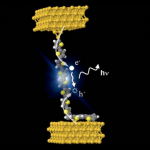
Technologically speaking, smaller is virtually always better. So it’s perhaps no surprise that scientists have developed the first ever single-molecule LED . But why is it potentially such a big deal? Read more…        

Read More:
​Why a Single-Molecule LED Could Be a Big Deal