Jawbone’s fitness trackers will track more of your fitness

“Basically, we’re fixing all of the things that people hate, ” is how one Jawbone rep here at IFA 2015 describes this mid-lifecycle update to Jawbone’s range of wrist-worn fitness trackers. When we reviewed the Up3 earlier this year, we described it as a feature-packed disappointment, since while the wearable had potential to be useful, the execution was bungled. That’s why the company has spent the last few months working on a firmware upgrade that, it’s hoped, will make the device much more attractive to new customers. Slideshow-317496 One of the biggest annoyances that we had with the Up3 is that the device only took your resting heart rate when you woke up. The company had originally said that the single daily measurement was the best indication of your heart’s health, but it’s not as useful as continuous or regular tracking. With this new firmware update, the Up3 and Up4, the mobile-payments variant of the Up3 , will now take your passive heart rate during the day. The idea is that whenever you sit down, it’ll see how your heart is holding up every 20 minutes or so. If you’re worried that all of this extra effort will send you racing to the recharge socket, don’t stress — we’re told that the change will have no detrimental effect on battery life. In addition, if you’re rocking an Up2 or an Up3/4, you’ll no longer have to touch the device’s cap (the solid plastic panel) to enter and leave sleep tracking mode. The company believes that now the gear will be able to detect all of that automatically within seconds of you hitting the hay. The only thing that you’ll have to do with the cap now is to tap it to dismiss alarm clock and inactivity alerts. The company has also addressed complaints over the Up2’s strap, which now comes in a rope-style design rather than the full band that was previously available. Meanwhile, the Up3 now comes in new colors like Sand Twist (beige, but the company is saying it’s closer to champagne gold) and Teal. As before, the Up3 is priced at $179.99, while the Up2 with its new lightweight band remains $99.99 and both, as of right now, are available to pre-order from Jawbone’s online store. Check out all the news from Berlin at our IFA 2015 hub . Filed under: Wearables Comments Source: Jawbone Tags: 2015, Fitness, IFA, IFA2015, Jawbone, SleepTracking, Up2, Up3

Read the original post:
Jawbone’s fitness trackers will track more of your fitness

AT&T offers a plug-in WiFi hotspot for your car

Your existing car probably doesn’t have a built-in WiFi hotspot , but AT&T will soon have a way to add one and deliver that sweet, on-demand internet access. The carrier is launching the ZTE Mobley, a WiFi hotspot that plugs into your car’s OBD-II port and shares an LTE data link with everyone inside. Yes, you could just tether your phone, but AT&T is counting on simplicity to reel you in — the hotspot goes live shortly after you turn your car on, and you don’t have to worry about battery life. It won’t cost you much to give this concept a shot, at least. The Mobley will be available for ‘free’ on a 2-year contract, or $100 outright. The biggest expense is the data itself, which will cost you $20-plus for stand-alone service or $10 if you add the Mobley to a shared plan. Filed under: Transportation , Wireless , Networking , Mobile , AT&T Comments Source: AT&T Tags: att, car, hotspot, mobilepostcross, mobley, obd-ii, router, transportation, wifi, wireless, zte

More:
AT&T offers a plug-in WiFi hotspot for your car

What to expect from Apple’s ‘Hey Siri’ iPhone event

Gosh, is it September already? The impending leaf death and the moaning of young’uns going back to school are usually accompanied by shiny new Apple gewgaws to gawk at, and this year is no exception. We’ll be schlepping cross-country to bring you all the news from Apple’s “Hey Siri” event at 10AM Pacific/1PM Eastern on Wednesday, but before we grab our boarding passes and all our cameras, let’s recap what we think the company’s got in store for us. New iPhones with a familiar twist Anyone hoping for a massive design overhaul has at least a year to wait — the two new iPhones, the 6s and the 6s Plus, should look just about identical to the models we’ve already got . The only major exterior differences are subtle ones, like a near-imperceptibly thicker waistline, a new rose gold finish and a shift toward the same 7000 Series aluminum used in the Apple Watch Sport. Sorry. Still, that just means we’re getting plenty of under-the-hood improvements. Expect to see some new silicon in the form of a new A9 processor made by Samsung coupled with 2GB of RAM (finally bringing it in line with the iPad Air 2). We don’t know how fast the A9 is going to be clocked, but snappier performance is table stakes in a game like this and at least one sketchy rumor claims it’s about 20 percent more powerful than last year’s A8. Meanwhile, a tipster on Weibo first posted details of the new iPhones’ 12-megapixel camera back in July, a notion that’s been accepted and expanded on in recent weeks. The camera upgrade also means the new iPhones will be able to shoot 4K video, a feature that’s already found its way into most flagship Android phones. Throw in a screen-based selfie flash and a modestly improved FaceTime camera and you’ve got the photographic situation in a nutshell. And then, of course, there’s Force Touch. We’ve already gotten a taste of it in the Apple Watch and a slew of updated MacBooks, but the feature is expected to get a little more nuanced when it makes its way to these new iPhones. 9to5Mac reports that the 6s and 6s Plus will be able to pick up three distinct levels of pressure — a tap, a press and a deep press — with a little help from an updated version of Apple’s Taptic Engine. Let’s not mince words: This has the potential to be the biggest change in how we interact with iPhones since the launch of the App Store seven years ago. Reports suggest that Force Touch will be very subtly integrated into the system as a whole, acting as a way to access actions and shortcuts for supported apps. This might not sound like a huge deal, but developers will flock to it and it’s in line with the “get things done faster” philosophy Apple embraced with its Watch. The iPad finally goes Pro The first mention of a super-sized “Pro” iPad model started floating around in 2013, and it looks like its time has finally come. If all those rumors hold true, we’ll be looking at a tablet with an enormous 12.9-inch display onstage soon — that’s even larger than the Surface Pro’s spacious screen. While we’re talking Surface similarities, Apple reportedly has a keyboard cover and a Force Touch-sensitive stylus ready to go with this premium slab, although you’ll probably have to buy them separately. A pro-level version of the iPad will need more than just a big screen to set itself apart from its punier siblings, and that’s where 9to5Mac says the new A9X chip comes into play. It’s said to be a big step forward from the already-powerful A8X chipset in the existing iPad Air 2, but the big question is how much more oomph does it pack than the A9 found in the iPhone 6s. Here’s hoping the answer is “loads.” This thing should also come with a lot of custom iOS 9 enhancements to put that screen to good use; among other things, we’re hearing it can run two full-size iPad apps side by side. Alas, don’t expect to waltz into an Apple Store and buy one the day after the event: Production delays have been part of the iPad Pro narrative for months and the best guesses now have pegged a late fall launch. Then there’s the slightly neglected iPad Mini line, which was hardly touched last time — all it got was a new color and a Touch ID-laden home button. Feh. The scuttlebutt this time ’round suggests Apple’s tiny tab will sport the same specs and sleek design we got in last year’s iPad Air 2. Better late than never, we guess. The OS-man cometh New hardware also means new software to power it, and we’ve already got a solid grasp on what’s new in iOS 9. Now all that’s left to wait for is an official release date, which Apple will probably drop toward the end of the event tomorrow. We’ll also likely get a firm launch window for watchOS 2 as well, which brings a handful of new watch faces and support for native Watch apps to your wrist. Does anyone care to make a bet? Reaching deeper into your living room The Apple TV is no “hobby” — not anymore. It’s a cheap, easy-to-use Trojan horse that funnels more of Cupertino’s content into our lives and it’s getting a pretty hefty upgrade. On a hardware level, the next-gen Apple TV should be bumped to either 8GB or 16GB of internal storage and get the same A8 brain as the current generation iPhones. That trademark black chassis should shed a few millimeters in the process, but the really neat physical changes might happen on that once-chintzy silver remote. TechCrunch suggests it’ll have embedded Wii-like motion-control sensors , which developers will probably have a field day with as they build apps for display in the platform’s new App Store. And yeah, as you probably guessed, the unholy combination of a motion-sensing controller and an app store means we’re likely to see gaming take on renewed importance onstage tomorrow. Waggling your remote isn’t the only new way you’ll be able to interact with an Apple TV. In addition to having a touch-sensitive pad wedged into its top quarter, the remote will have a microphone so you can chat up Siri. If reports hold true, you can ask Siri to search for specific actors or titles with your voice — it’ll then scour multiple sources for content that fits the bill. The age of universal search is upon us, and it couldn’t have happened soon enough. After all, pecking out titles like Scrotal Recall with the d-pad on existing Apple TV remotes was always, always a pain in the ass. In a way, the Apple TV is being molded into something more like the NVIDIA Shield TV set-top box; you won’t hear us complaining about that. The thing is, this new version of Apple’s squarish hockey puck isn’t expected to play nice with 4K video content. The move isn’t completely insane — there’s still a dearth of ultra-high-res content out there — but it is a little puzzling considering the new iPhones should be able to record at that resolution just fine. In the end… This represents the lion’s share of what Apple will probably talk up in a massive auditorium tomorrow, but there’s always the chance CEO Tim Cook will pull out something completely random. The only way to know for sure is to park it here and join us bright and early(ish) tomorrow — let’s just take it all in together, shall we? Filed under: Mobile , Apple Comments Tags: apple, event, ios, ios9, ipad, ipadpro, iphone, iphone6, iphone6plus, iphone6s, iphone6splus, mobilepostcross, preview, whattoexpect

See more here:
What to expect from Apple’s ‘Hey Siri’ iPhone event

Android Lollipop is the OS of choice for one in five users

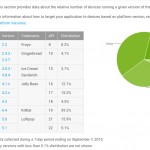
If you own an Android device, find four similarly outfitted friends and line up, shoulder-to-shoulder. Look to your left. Look to your right. Chances are, one of you has Lollipop, the latest Android mobile operating system. Twenty-one percent of Android devices use Lollipop, according to the company’s own breakdown . This figure is up significantly from May, when Android reported just nine percent of its devices used the new OS. The largest share of the Android OS pie goes to Kit Kat, with 39 percent, followed by Jelly Bean with 32 percent. Android’s next update is called ” Marshmallow ” and while it doesn’t yet have a release date, it should hit devices soon. Marshmallow’s focus is ” polish and quality , ” according to Google CEO Sundar Pichai. We checked out the M Preview version in June and found that ” when M works well, it works really well .” A few notes regarding today’s numbers: The Nexus 9 , Samsung Galaxy S6 and S6 Edge all come with Lollipop right out of the box. Also, Android’s figures reflect “devices running the latest Google Play Store app, which is compatible with Android 2.2 and higher.” That means older devices, or those without Google Play, aren’t counted in this particular survey. Filed under: Gaming , HD , Google Comments Via: VentureBeat Source: Android Tags: android, google, hdpostcross, lollipop, marshmallow, OS

Continue Reading:
Android Lollipop is the OS of choice for one in five users

Root password flaw leaves wireless Seagate drives open to attack

Own a wireless hard drive? Was it made by Seagate ? You’ll want to download an update. Researchers at Tangible security have discovered a vulnerability in certain Seagate wireless drives that could give unauthorized users root access to the device. The flaw? A default username and password that activates undocumented Telnet services. It’s a terrifyingly simple vulnerability. Luckily, the fix is almost as simple — all you have to do is patch your drive’s firmware. Security researchers say the vulnerability can be found in Seagate Wireless Mobile storage, Wireless Plus Mobile Storage and LaCie FUEL drives dating back to last October, but warns that other drives may be affected as well. The report also highlights two other possible attacks that exploit the firmware’s file-sharing protocols. Seagate has already tested and confirmed the flaws, and issued firmware update 3.4.1.105 as a fix. Have a Seagate drive? Why are you still readying this? Click here and update, already. Comments Via: CERT Source: Seagate , Tangible Security Tags:

Continue reading here:
Root password flaw leaves wireless Seagate drives open to attack

Shuttleworth Says Snappy Won’t Replace .deb Linux Package Files In Ubuntu 15.10

darthcamaro writes: Mark Shuttleworth, BDFL of Ubuntu is clearing the air about how Ubuntu will make use of .deb packages even in an era where it is moving to its own Snappy (‘snaps’) format of rapid updates. Fundamentally it’s a chicken and egg issue. From the serverwatch article: “‘We build Snappy out of the built deb, so we can’t build Snappy unless we first build the deb, ‘ Shuttleworth said. Going forward, Shuttleworth said that Ubuntu users will still get access to an archive of .deb packages. That said, for users of a Snappy Ubuntu-based system, the apt-get command no longer applies. However, Shuttleworth explained that on a Snappy-based system there will be a container that contains all the deb packages. ‘The nice thing about Snappy is that it’s completely worry-free updates, ‘ Shuttleworth said.” Read more of this story at Slashdot.

More here:
Shuttleworth Says Snappy Won’t Replace .deb Linux Package Files In Ubuntu 15.10

Samsung jumps into Ultra HD Blu-ray, as Fox provides the movies

Today Samsung is the first company to announce an Ultra HD Blu-ray player, taking the lead in 4K and HDR video. Following up on its big Ultra HD push at CES and the movie streaming/ download tech that has arrived in the months since, Samsung is ready to push super high resolution movies (four times the resolution of Blu-ray, and 64 times as many colors) on discs too. There’s not much detail available on its new player, although we expect it will cost less than the $1, 000 price its first Blu-ray player commanded nearly a decade ago and it should launch early next year. Joining the tech company on its IFA 2015 stage are Fox execs, with president Mike Dunn proclaiming the studio is committed to releasing its slate of upcoming movies in Ultra HD with HDR day-and-date with the Blu-ray and Digital HD releases. That includes Fantastic Four , Maze Runner , Kingsman: The Secret Service and more. Samsung’s Ultra HD Blu-ray player is curved to match its TVs , and also includes a number of UHD streaming services. The other news today at IFA is that Samsung’s TVs will be the first ones getting a software update to support HDMI 2.0a , necessary to receive HDR info from the new Blu-ray players. As far as that UHD Alliance the tech industry and Hollywood are creating to push their new video standards, Fox CTO Hanno Basse said it has tripled in size, and hopes to share more details in “the coming months.” Filed under: Home Entertainment , HD , Samsung , Microsoft Comments Tags: 4K, Blu-ray, Fox, hdpostcross, HDR, IFA, IFA2015, microsoft, MikeDunn, samsung, SUHD, UltraHD, UltraHDBlu-ray

Taken from:
Samsung jumps into Ultra HD Blu-ray, as Fox provides the movies

Sony’s Xperia Z5 family includes the world’s first 4K smartphone

To say that Sony’s mobile division has had a tough time lately would be an understatement. As the company puts out half-hearted efforts like the Z3 and Z3+, sales have been dropping steadily. We’re now at the point where Sony is losing more than $1 million per day just keeping the division going. Something has to change. Sony has to take smartphones seriously, and this is its attempt to do just that. Meet the Xperia Z5 family, which includes the world’s first 4K phone display, “next-generation” cameras and some tiny, tiny fingerprint scanners. Slideshow-316694 For what seems like the first time in ages, Sony is announcing a trio of flagship phones at the same time. From big to small, we’ve got the Z5 Premium, the Z5 and the Z5 Compact. The trio share many attributes, but thanks to one spec, the Premium is by far the most interesting. The world’s first 4K phone display I’m totally besotted with the Premium’s display. It’s got a truly ridiculous, world-beating 5.5-inch 4K (3, 840 x 2, 160) panel, with rich colors and deep blacks. We’ll need to spend more time than the few hours we’ve had with the new lineup to give a proper verdict, but right now we can say for sure that it looks great. I’m not sure I want a 4K display in my phone, but I am sure that the allure of an 806-ppi display will be enough to win some over. Sony’s thrown down the gauntlet, and at least in pixel density, the Z5 Premium is the phone to beat. Unfortunately, Sony’s saved all of its new screen tech for the Premium, with the regular Z5 retaining the same 5.2-inch 1080p unit as the Z3 and Z3+, and the Z5 Compact getting a slightly larger — 4.7 inches vs. the Z3 Compact’s 4.6 inches — but still 720p display. Apart from their displays, the devices are almost identical. As far as specs go, though, the displays are pretty much the only things distinguishing the Z5 Premium from the Z5 and Z5 Compact. All three have Qualcomm’s Snapdragon 810 processor inside, up to 32GB of internal storage (expandable by microSD), high-res audio chips and “up to two-day battery life.” That’s a cute way Sony found to say “you only need to charge this one once a day.” How they eke out that battery life differs of course, with the Premium having a 3, 430mAh battery, the Z5 a 2, 900mAh and the Z5 Compact a 2, 700mAh. The only other differentiator is RAM: The Z5 Premium and Z5 have 3GB; the Z5 Compact only has 2GB. The same, but different The Z5s’ power buttons house fingerprint sensors. If you’ve seen any Sony phone made in the last couple of years, I’m sure you’ve already noticed the Z5 family is a very familiar one. Sony’s “OmniBalance” design theme has been knocking around since the Xperia Z1, and it’s really difficult to get excited about: They’re rectangular slabs with clean line; they’re waterproof; and they’re uncomplicated. That said, this is probably the tightest iteration on that theme. The Z5 Premium and Z5 both feel very polished, with carefully considered color schemes and materials. The Z5 Compact feels sturdier and a little chunkier, but not necessarily in a bad way. The Z5 Premium is available in black, gold or chrome, all with a mirrored glass back, while the Z5 has white, black, gold and a subdued green, with a frosted glass back. Sony’s clearly targeting the younglings with the Compact, especially with some of the bright and “fun” colors. It comes in the usual white and black, but also vibrant yellow and coral (pink) — again with frosted glass at the back. Of course they’re all different sizes too; The Z5 Premium has a 5.5-inch display and is 7.8mm thick; the Z5 has a 5.2-inch display and is 7.3mm thick; while the Compact has a 4.7-inch display and is 8.3mm thick. The Z5 Premium in chrome makes for a very effective mirror. I think the yellow Z5 Compact is probably my favorite of the bunch; the bright color wrapping around the edge of the black display frames the device really well. The green Z5 is also kinda classy looking, and it’s a nice step away from the staid colors we’re used to from flagships. Also, big shout out to the chrome Z5 Premium, which is essentially a mirror with a phone attached to the back. It’s ostentatious; it’s ridiculous; and it’s impossible to keep clean, but I kinda love it. So all these new Xperias are familiar, but changed. The same, but different. Those coming from a previous-generation Z will notice how nicely this latest bunch feels to hold, as well as some neat design additions. There’s now a little “Xperia” wordmark etched into the phones’ metallic sides, and the series’ small circular power button is no more, replaced by an oval-shaped button that somehow squeezes in a tiny fingerprint reader. Taking care of number one All three phones share the same camera setup. Sony’s new sensor is exclusive to Xperias, for now. Sony’s image sensors are everywhere. Of course you’ll find them in the company’s own smartphones, mirrorless and SLT cameras, but they’re also in high-end Nikon and Fujifilm models. Not to mention flagship smartphones like the Samsung Galaxy S6 and LG G4. Put simply, they’re considered some of the finest in the business, and one of the increasingly few areas that Sony is a market leader in. Not all sensors are created equal, though, and this time, Sony’s keeping the best smartphone sensor for itself. All of the Z5s have a 1/2.3-inch Exmor RS 23-megapixel image sensor. It’s brand-new, and Sony says it’ll be exclusive to Xperias, at least for a while. Click image for original 7MB file. Shot by Sony at f/2.0, 1/2500s, ISO 40. This fancy new sensor is backside illuminated and has embedded phase-detection pixels. It’s housed in Sony’s first mobile camera module with a closed-loop actuator, and in front of the sensor is a new six-element 24mm lens with a wide f/2.0 aperture. If you’re unsure what all of this means, I’ll break it down for you: Sony says that, thanks to the phase-detection pixels, the Z5 family can autofocus in as little as 0.03 second, claiming it’s the “world’s fastest autofocus in a smartphone.” All we can say is it’s very quick. The actuator helps with this by swiftly moving the lens to focus, and because it’s closed-loop, it’ll also offer better image stabilization, especially for video. As you’d expect, all three will shoot movies in 4K, although evidently the Z5 Premium is the only one capable of playing footage back natively on the phone itself. Sony says the new sensor is capable of oversampling images (PureView style) for digital zoom “without loss of image quality.” Take that claim with an ocean’s worth of salt, of course, but the zoomed images definitely seemed good enough for a Facebook or Twitter share. Click image for original 3MB file. Shot by Sony at f/2.0, 1/30s, ISO 250. All of this adds up to… well, no one knows yet. What I can say is that Sony’s sensors are the envy of the business; Sony’s “unedited” sample images look fantastic; and, in my brief time with the Z5s, I took some quite pretty images that I’m sadly unable to share with you. But it’s too early to say whether this new camera represents a huge leap forward, or even if it’s at the front of the pack. A fresh start Although it’s not quite stock, Sony has all but removed its Android skin. On the software side, the Z5 family runs Android 5.1.1, and Sony says “stay tuned” about an Android M update. The good news for virtually everyone but the most die-hard of Sony fans, though? The company’s Android skin is no more. Instead, the devices all run a virtually stock Android experience. Sure, there are some differences in iconography, but the general look-and-feel isn’t too far from a Nexus device. That’s a huge step forward from current Xperias, which feel like they’re stuck in the past despite many of them actually being on the latest version of Android. Google won’t officially bake in fingerprint support to its OS until Android M is released this fall. Like other manufacturers, though, Sony already has things up and running. I wasn’t able to test out the functionality myself, but the placement seems very natural, and I watched Sony staff unlocking their devices with various fingers and thumbs at a 100 percent success rate. The big questions A close-up of the Xperia Premium’s etched metal wordmark. I’m pretty impressed with Sony’s new lineup. But there are still three lingering questions that Sony needs to answer. First, there’s the small matter of price. So far, we’ve got this from Sony: “Pricing will reflect the premium quality of the smartphone.” Make of that what you will, but Sony isn’t exactly known for producing budget devices. In the age of the OnePlus 2 and the Moto X Pure, you can get a lot of smartphone for a few hundred dollars. Second is battery life and performance. The chip inside all three, the Snapdragon 810, has had some well-reported issues with overheating, and is not known to be very frugal when it comes to battery life. Couple that chip with a 4K display, and it’s easy to question Sony’s claim of “up to two-day” endurance when it comes to the Premium. The company points to its on-display memory (which effectively switches off the processor when the screen isn’t moving), and other battery-saving tech as proof it can hit that target. Many will remain unconvinced until the phone’s been properly tested. Third, and perhaps most importantly for Sony’s shot at a global success, is availability. The Z5 and Z5 Compact will be “globally” available in October, with the Z5 Premium following in November. But Sony has really struggled to persuade carriers to push its devices. That’s especially true in the US, where sometimes it feels like Sony doesn’t exist. If a 4K display doesn’t pique the US carriers’ attention, nothing will. You could argue that this is Sony’s fault. Several generations of Xperias have come and gone, all of which looked pretty much the same, and none of which blew the competition out of the water. They’ve been solid phones, but plenty of companies make solid phones. Why should carriers put their weight behind Sony when Samsung et al. offer the same basic package? With iPhone season fast approaching, there’s a real chance Sony could be left by the wayside again. At least with the Z5 Premium, Sony has clearly put everything it can into a single device, short of a new design. If the world’s first 4K smartphone doesn’t get the attention of AT&T, Verizon, Sprint and T-Mobile, nothing will. Check out all the news from Berlin at our IFA 2015 hub . Filed under: Cellphones , Mobile , Sony Comments Tags: 4k, exmor, hands-on, ifa, ifa2015, mobilepostcross, sony, xperia, xperiaz5, z5

Read more here:
Sony’s Xperia Z5 family includes the world’s first 4K smartphone

Intel Invests In Qnovo’s Battery Boosting Tech

 Qnovo, a Newark, California-based firm that’s been developing battery charging enhancement technology since 2010, is today announcing an $8.6 million Series B funding round, with Intel Capital joining as a strategic investor, alongside existing investors RockPort Capital, US Venture Partners and Blue Run Ventures. Read More

More:
Intel Invests In Qnovo’s Battery Boosting Tech

Newer Android Wear Watches Now Work On iOS

 More than a year after the launch of the first Android Wear watches, Google is now finally bringing iOS support to its smartwatch platform with the launch of its Android Wear mobile app in Apple’s App Store today. This probably doesn’t come as a huge surprise, given that Huawei spoiled this launch by announcing iOS support for its upcoming Android Wear watch last week, … Read More

View original post here:
Newer Android Wear Watches Now Work On iOS